If you’ve ever stood on a construction site—whether it’s a small residential build on a crisp suburban morning, a highway expansion that stretches over miles, or a commercial warehouse that’s rising from a patch of dirt—you’ve heard it: the low, steady rumble of a construction compressor. For anyone who’s never worked in this industry, that noise might just feel like background static. But for us, as a construction compressor supplier, it’s the sound of work getting done. It’s also the sound of an unspoken question that I hear on almost every site visit: How efficient is this thing, really? Construction Compressor
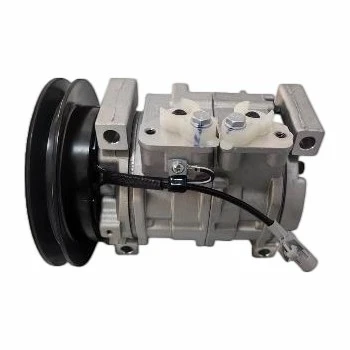
I get it. Construction budgets are tight, timelines are non-negotiable, and every piece of equipment you bring to a job either makes you money or costs you it. A compressor that’s wasting fuel, overheating too often, or failing mid-shift isn’t just a hassle—it’s a project delay, a hit to your bottom line, and a headache for every crew member relying on it. Efficiency isn’t just a buzzword for us; it’s the difference between a job that wraps up on schedule and one that eats into your profits. Over the past 12 years working with construction compressors, I’ve learned that efficiency isn’t a single number you can pull off a spec sheet. It’s a mix of mechanical design, how you use the machine, the conditions you work in, and even the maintenance you skip (or nail) on a weekly basis. Let’s break this down, straight from the perspective of someone who’s helped hundreds of contractors pick compressors that actually work for their jobs.
First, let’s get one thing clear: when we talk about construction compressor efficiency, we’re not just talking about fuel efficiency. That’s a big part of it, sure—diesel is expensive, and if you’re running a 185 CFM (cubic feet per minute) compressor 8 hours a day, 5 days a week, a 10% better fuel efficiency adds up to thousands of dollars a year. But there’s way more to it. At its core, compressor efficiency is about how much energy you put into the machine versus how much useful compressed air you get out. Compressed air doesn’t just run nail guns or jackhammers, either. It powers things like rebar cutters, concrete vibrators, paint sprayers, and even the small tools that a electrician or plumber brings to a site. If your compressor is wasting energy just to push air, that means those tools aren’t getting the consistent pressure they need to work at their best—and that slows every task down.
Let’s start with the basics of how a construction compressor works, because that’s where efficiency begins. Most portable construction compressors are reciprocating (piston) or rotary screw models. For jobs that need constant, steady air flow—like running multiple tools all day—rotary screw compressors are almost always the right call. Here’s why: rotary screw compressors use two interlocking rotors to compress air, rather than the back-and-forth motion of pistons. That motion creates less friction, which means less energy lost as heat. Friction is a huge efficiency killer. Every part of a machine that rubs against another uses energy that could be turned into compressed air. A well-designed rotary screw compressor will have precision-machined rotors, tight clearances between moving parts, and a lubrication system that keeps those parts moving smoothly without wasting extra oil. I’ve seen cheap, off-brand rotary screw compressors that have loose rotors after a year of use, leading to air leaks inside the machine that waste up to 15% of the energy they put in. That’s the kind of efficiency hit you don’t see until your fuel bill is way higher than it should be.
Another big factor in compressor efficiency is the duty cycle. This is a simple number that tells you how much of the time the compressor is actually running at full capacity, versus idling or running at partial load. For construction jobs, duty cycle is measured over a 10-minute period, and it’s usually written as a percentage. A 100% duty cycle compressor can run non-stop, full throttle, all day long without overheating. A 70% duty cycle compressor will only run at full load for 7 out of 10 minutes in that window, and then it has to idle to cool down. That might not sound like a big deal, but if you’re running a 70% duty compressor on a job that needs it to run 10 hours straight, it’s going to overheat, shut down, and force you to wait for it to cool down every few hours. That’s lost productivity, and it’s also wasted energy from idling. I had a contractor come to me last year who was using a 185 CFM compressor on a road job that required 12-hour shifts. He’d been running that 70% duty model for two weeks, and he was constantly dealing with breakdowns and fuel costs that were $800 over budget per week. We swapped him out for a 185 CFM compressor with a 100% duty cycle, and his fuel costs dropped by 12% that same month, with zero unplanned downtime. That’s the kind of efficiency that matters to actual jobs.
Air leaks are another massive, often overlooked efficiency killer. I once worked on a residential site where the crew was running a 90 CFM compressor for three nail guns, and they were wasting almost 40 CFM through small leaks in the hoses, connections, and even the nail guns themselves. That meant the compressor was working twice as hard to push air that was leaking out before it ever got to the tools. Studies from the Compressed Air and Gas Institute (CAGI) say that on average, construction sites lose 20-30% of their compressed air to leaks. That’s not just a minor inefficiency—it’s like buying a tank of gas and watching a quarter of it spill out on your drive to the job. The good news is that fixing leaks is cheap and easy. A quick check of all connections every week, replacing worn hoses, and tightening loose fittings can boost your compressor’s efficiency by 10% or more, no new machine needed. But that’s only if your compressor is powerful enough for your tools in the first place. If you’re using an undersized compressor, you’ll almost always have air leaks because the machine is running at full load just to keep up, making leaks worse and wasting even more energy.
Now, let’s talk about real-world efficiency numbers, not just spec sheet jargon. The overall efficiency of a construction compressor is usually measured as brake specific fuel consumption (BSFC), which is how much fuel (in gallons) the machine uses to produce a certain amount of compressed air (in CFM). For a well-designed, modern rotary screw construction compressor, the BSFC is usually between 0.10 and 0.13 gallons per 100 CFM. That means a 185 CFM compressor will use between 0.185 and 0.24 gallons of fuel per hour at full load. A lower BSFC means better efficiency. Older, poorly designed compressors can have a BSFC as high as 0.20 gallons per 100 CFM, which is a huge difference when you’re running the machine 8 hours a day. Let’s do the math: a 185 CFM compressor running 40 hours a week at full load. A machine with a BSFC of 0.12 uses 0.222 gallons per hour, so 8.88 gallons a week. At $3.50 a gallon, that’s $31.08 a week. A machine with a BSFC of 0.20 uses 14.8 gallons a week, for $51.80 a week. That’s a difference of almost $1,000 a year for just one compressor. Multiply that across all the machines on a large construction site, and you’re talking tens of thousands of dollars a year in unnecessary fuel costs. But wait—this isn’t just about BSFC. There’s also isentropic efficiency, which measures how well the compressor converts mechanical energy into air pressure. A good rotary screw compressor will have an isentropic efficiency of around 75-85%, while older piston compressors are usually around 50-65%. That gap adds up fast, especially on jobs where you need consistent pressure to power heavy tools.
Weather and job site conditions also play a big role in compressor efficiency, something I learned the hard way early in my career. A few years back, I had a contractor who was running a compressor on a job in the Arizona desert in July. Temperatures hit 115 degrees every day, and his compressor would keep overheating and shutting down every 2 hours. Turns out, that compressor was designed for cooler climates, and the hot air around it meant it had to work harder to pull in cool air for compression. We swapped him for a compressor with a high-temperature cooling system, and he was able to run it all day without issues. Cold weather is another factor—diesel can thicken, and lubricants in the compressor can get sticky, leading to higher friction and lower efficiency in temperatures below freezing. That’s why the best compressors have adjustable cooling systems and temperature sensors that adjust performance based on the environment. It’s not just a “set it and forget it” piece of equipment; the machine has to work with the conditions of the job, not against them.
Maintenance is the final piece of the efficiency puzzle, and it’s one that so many contractors skip to save a little time (or money) week to week. A compressor’s air filter gets clogged with dust and debris on a job site, and if you don’t replace it every 200-300 hours, the engine has to work harder to pull air in, lowering efficiency and increasing fuel use. Oil changes, too—running old, dirty oil leads to more friction in the rotors and moving parts, just like driving a car with old oil. I’ve seen compressors that were on a 500-hour oil change interval, when they should have been on 250 hours, that had fuel costs 15% higher than they should have been, just from neglect. Even something as simple as cleaning the cooling fins on the compressor every week can prevent overheating, which means the machine runs at peak efficiency instead of idling to cool down. Maintenance isn’t a chore; it’s an investment in keeping your compressor efficient, reliable, and working for you.
Now, let’s get to the part that matters most to you as a contractor or project manager: how do you actually get an efficient compressor for your job? It starts with matching the machine to your specific needs, not just buying the cheapest one on the market. First, calculate how much CFM you need for all your tools, plus a 20-25% buffer. That buffer covers air leaks, partial load operation, and future tools you might add to the job. If you size the compressor exactly to your needs, you’ll end up running it at full load 100% of the time, which is inefficient—most compressors run best at 60-80% of their maximum capacity, so a buffer lets you hit that sweet spot. Next, check the duty cycle: for jobs that run 8 hours or more a day, always go for a 100% duty cycle compressor, even if it costs a little more upfront. The savings in fuel and downtime will pay for the difference in a year or less. Look for models with variable speed drives (VSD), if your job has fluctuating air demand. A VSD compressor adjusts the speed of the rotors based on how much air you need, so it doesn’t waste energy idling when you’re only using a fraction of its capacity. I’ve seen VSD compressors cut fuel use by 30% on jobs where air demand varies a lot—like a residential job where you only need half the compressor’s capacity for the first few weeks of framing, then more for the finishing work.
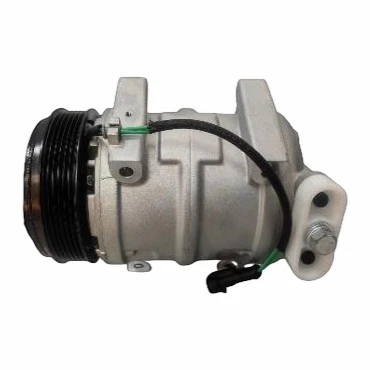
At the end of the day, construction compressor efficiency isn’t just about numbers on a spec sheet. It’s about having a machine that shows up when you need it, doesn’t cost you extra in fuel or repairs, and helps you stay on schedule. I’ve been in this industry long enough to know that the best equipment isn’t the most expensive—it’s the one that works with your job, not against it. If you’re tired of compressor breakdowns eating into your profits, or fuel bills that keep creeping up, let’s talk. Whether you’re a small contractor working on a single home build or a large construction company managing highway projects, we can help you find a compressor that’s efficient, reliable, and tailored to your needs. Don’t let an inefficient compressor hold your next project back—reach out to chat through your requirements.
Construction Compressor References
Compressed Air and Gas Institute. (2021). Compressed Air System Efficiency Guide.
International Organization for Standardization. (2018). ISO 1217: Compressors for General Use—Acceptance Tests.
Construction Industry Institute. (2020). Equipment Efficiency and Productivity on Construction Sites.
Jiangsu Nuoyan New Energy Vehicle Air Conditioning Co., Ltd.
With abundant experience, we are one of the most professional construction compressor manufacturers and suppliers in China. We warmly welcome you to buy customized construction compressor at competitive price from our factory. Also, quotation is available.
Address: No. 7 Xingyuan Road, Huangqiao Economic Development Zone, Taixing City, Jiangsu
E-mail: nuyantech2026@163.com
WebSite: https://www.nuyantech.com/
