If you’ve ever coordinated a logistics or industrial project, you know that down time equals lost revenue—and nothing stalls operations or cuts into profit like waiting for new equipment to arrive and get set up. As a supplier of automated weighbridges, I get asked one question more than any other: “How long does installation take?” The answer isn’t a one-size-fits-all number, though. It depends on a dozen factors, from site prep to customizations to regulatory checks, and over the 12 years I’ve been working in this field, I’ve learned that rushing the process almost always leads to costly mistakes later on. Today, I want to break down exactly what goes into an automated weighbridge installation, timeline by timeline, to help you plan your next project without the guesswork. Automated Weighbridge
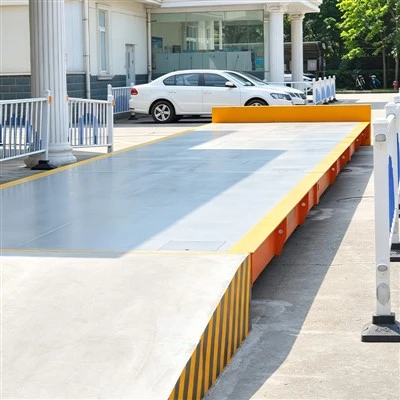
First, let’s get clear on what an automated weighbridge actually is, because that shapes the entire process. Unlike old analog systems that required a driver to manually record weights and a operator to log data, modern automated weighbridges run on integrated software: they connect to cameras, license plate readers, access control systems, and cloud-based tracking tools. A truck drives onto the platform, sensors measure its weight, the system matches it to pre-registered vehicle data, and the weight is logged automatically—no staff hovering over the platform, no manual data entry errors. For mines, ports, grain elevators, and large distribution centers, this automation cuts weigh-time per truck from 5 minutes to 90 seconds, which makes the installation worth every minute you invest upfront.
Now, let’s start from the moment you sign the purchase agreement, because that’s when our team’s clock starts ticking. The first stage is site assessment and planning, and this is the most critical phase to get right—skip steps here, and you’ll run into delays later. Most companies expect this to take a week, but in reality, it can take anywhere from 3 to 10 days, depending on how much prep work your site already has. Our installation team doesn’t just show up with a truck and tools; first, we send a lead technician to walk the site. We check three non-negotiables: the load-bearing capacity of the ground under the weighbridge, the slope of the approach roads, and access to power and internet (since automated systems need consistent connectivity). We also ask questions most buyers don’t think of: Are you planning to expand your fleet in the next two years? Do you need the system to integrate with your existing ERP or inventory software? Will you need to add extra lanes for outbound and inbound trucks? All of these answers change the installation plan.
For example, last year we had a grain elevator customer in Iowa who thought their existing concrete pad would work for a 70-ton weighbridge. When our team showed up, we did a core test and found the pad had cracks and was only rated for 50 tons. That meant we had to adjust the installation plan: instead of bolting the platform directly to the existing pad, we had to add steel reinforcement and a new concrete base, which added 12 days to the timeline. If we’d skipped the site assessment, we would have shown up ready to install, only to turn around and order materials, pushing their go-live date back three weeks. That’s why we never skip this step—even for repeat customers. We once worked with a mining company that had installed three manual weighbridges before switching to automated, and they thought their existing power lines would work. Our assessment found the lines could only support half the load needed for the new system, so we coordinated with their electrician to upgrade lines during the initial planning phase, avoiding a 10-day delay once installation started.
Once the site assessment is done, and the plan is finalized and approved, we move to the pre-installation prep, which usually takes 1 to 3 days before the crew even arrives on-site. For most suppliers, this is where assembly of the weighbridge parts happens, but since we manufacture most of our components in-house, we also test the entire system in our warehouse first. This is a step I’ve fought hard to keep in place over the years. I’ve seen competitors skip factory testing to save time, and then they show up on-site to find a faulty sensor, a misaligned data cable, or a software glitch that takes days to fix. For us, we run a full 48-hour test: we put a test load of equivalent weight on the platform, run 50 simulated truck transactions, check data sync to the cloud, and test all connected tools—license plate readers, access gates, alarm systems. If something breaks in that test, we fix it at our facility, not at your site, which cuts down on on-site delays. That pre-installation stage also includes coordinating permits: we handle all the local engineering and building permits, as well as any electrical or environmental permits required for heavy construction, which adds another 2 to 5 days, depending on your local government’s turnaround time. In areas with strict industrial zoning, that permit process can take up to two weeks, so we always start this paperwork on the day the contract is signed, not after.
Now, the on-site installation itself—this is the part most people picture, and it takes anywhere from 3 to 7 days for a standard truck scale. But again, custom projects take longer. A standard 70-ton, single-lane automated weighbridge for a small distribution center is a straightforward job: our 3-person crew will lay the base concrete (if it’s prepped), install the steel platform, connect the load cells, mount the control cabinet and camera system, and run all the wiring. We use bolted connections, not welded ones, so we can disassemble and move the weighbridge later if needed, but that also takes a bit more time to align each bolt perfectly. For a dual-lane weighbridge, which can handle two trucks at once for high-volume ports or warehouses, that installation time jumps to 8 to 12 days, because we have to build two separate platforms, connect all the traffic management tools between lanes, and test the sync between both systems.
But here’s the part most people don’t account for: the plumbing and road prep that happens at the same time. For example, during the on-site installation, our crew will also fix any small grading issues on the approach roads, because a sloped road can throw off weight readings by up to 2%, which is a big deal for a business that’s moving thousands of tons of product a day. Last quarter, we had a construction materials customer who had a small dip on their inbound approach; instead of making their trucks slow down and risk inaccurate weights, our team graded and paved that dip during the installation, which added an extra day but saved them from having to come back a month later to fix it. We also take time during installation to set up proper drainage around the weighbridge platform—if water pools under the scale, it can damage the load cells over time, so we install small drainage channels that take an extra half-day to lay correctly.
The next stage is system calibration and testing, which is non-negotiable for accuracy and compliance with trade regulations. In most regions, automated weighbridges have to be certified by a local weights and measures authority before they can be used commercially, and that calibration phase takes time. This is where we adjust the load cells to ensure the weight readings are within legal tolerance—usually within 0.1% of the actual weight. We do two types of calibration: static calibration, where we use a set of calibrated test weights (or equivalent load) to adjust each cell, and dynamic calibration, where we drive test trucks over the scale at normal speed to make sure the automated system reads moving weight correctly. For a standard single-lane system, this takes 2 to 3 days, because we have to run multiple test transactions, cross-check data with the weights and measures authority, and fix any small glitches. For a custom system with integrated ERP or inventory software, this calibration time can extend to 5 to 7 days, because we have to test data transfers between the weighbridge, your existing software, and any other tools you use.
Once calibration is done, we move to the operator training phase, which is often overlooked but critical to making sure you get full value from your automated system. Even the most advanced automated weighbridge only works if your staff know how to use it. We offer two types of training: on-site training for your day-to-day operators, who will troubleshoot minor issues like camera blurriness or data sync errors, and advanced training for your maintenance team, who will handle quarterly inspections and software updates. For most small to mid-sized businesses, this takes half a day, but for larger operations with 10+ operators, it can take 2 full days. I always tell customers not to cut this step short—we once had a mining client who skipped operator training to save time, and a month later, their operator accidentally deleted 3 weeks of weight data, leading to a $12,000 discrepancy in their inventory. The training only takes a few days, but it prevents costly mistakes like that.
Now, let’s put this all together to give you a realistic timeline, not the generic “2 weeks” number you’ll get from some suppliers. For a standard, single-lane automated weighbridge for a small to mid-sized logistics or agricultural operation:
- Site assessment and planning: 3 to 5 days
- Permit and pre-installation prep (including factory testing): 3 to 5 days
- On-site installation: 3 to 5 days
- Calibration and regulatory certification: 2 to 3 days
- Operator training: Half a day
Total timeline: 11.5 to 18 days.
For a custom dual-lane system for a high-volume port or mining operation:
- Site assessment and planning: 7 to 10 days (more coordination for power, access, and lane layout)
- Permit and pre-installation prep: 5 to 7 days (longer lead times for industrial permits)
- On-site installation: 8 to 12 days (two platforms, integrated traffic management)
- Calibration and regulatory certification: 5 to 7 days (multiple lanes, integration with port systems)
- Operator training: 2 full days
Total timeline: 27 to 36 days.
Of course, there are variables that can shift this timeline. The biggest one is site readiness: if your site has a prepped concrete pad, existing power and internet, and approved permits already, we can cut the initial site assessment and permit time by half. On the flip side, if your site requires major groundwork, like filling in a low-lying area or reinforcing the entire base, that can add 10 days or more. Another variable is customization: if you need special features, like a remote management portal, integration with a specific ERP, or heavy-duty platforms for 100-ton mining trucks, that adds time to the factory testing and calibration phase.
I also want to be transparent about the delays that are out of our control, because I know frustration when installation runs longer than expected. Weather is a big one—if we have heavy rain or snow during the on-site installation phase, we can’t work on concrete or electrical wiring, so we have to pause, which adds 2 to 3 days. Local regulatory inspectors can also have backlogs; if your weights and measures authority is booked for 10 days, that pushes back the calibration phase. We always build 10% buffer time into our timeline for these unexpected delays, but it’s something to plan for.
At the end of the day, the speed of installation should never come at the cost of accuracy or compliance. A rush job that saves a week but leads to incorrect weight readings, failed regulatory certification, or downtime a month later is not worth it. As an automated weighbridge supplier, my goal isn’t to install a system as fast as possible—it’s to install a system that works, that meets your operational needs, and that is ready to generate revenue for you from day one.
If you’re planning an automated weighbridge project, the best way to get an accurate timeline is to share your site details, volume needs, and custom requirements with our team. We can send a technician out for a free site assessment, handle all the permits, and give you a tailored timeline that fits your schedule without cutting corners. Contact us today to discuss your project.
Weighing Scale References:
- National Type Evaluation Program (NTEP) for Weighing and Measuring Devices, 2023, National Institute of Standards and Technology (NIST)
- Industrial Weighing System Installation Best Practices, 2022, International Society of Automation (ISA)
- Logistics Industry Downtime Cost Analysis, 2023, Council of Supply Chain Management Professionals (CSCMP)
Shanghai Eagle Brand Weighing Apparatus Co., Ltd.
As one of the most professional automated weighbridge manufacturers and suppliers in China, we’re featured by quality products and good service. Welcome to wholesale advanced automated weighbridge in stock here and get pricelist from our factory. We also accept customized orders.
Address: No. 124, Group 1, Baqiao, Wangjiawei, Zhelin Town, Fengxian District, Shanghai
E-mail: 13386116000@163.com
WebSite: https://www.cneaglebrand.com/
