When I first started my career as an aluminum clad steel (ACS) wire supplier, I expected the biggest questions to center around conductivity, durability, or cost. Instead, one query comes up in nearly every conversation with new clients, from solar installation teams to telecommunication network planners: “Is aluminum clad steel wire actually environmentally friendly?” It’s a fair, loaded question—one that I’ve spent years researching, testing, and even iterating on our product lines to answer honestly, no corporate jargon or half-truths. Today, I want to break down what that means for our work, for the projects our clients build, and for the planet we all rely on. Aluminum Clad Steel Wire

First, let’s get clear on what aluminum clad steel wire is, because a lot of people mix it up with pure aluminum or pure steel wire—and that confusion muddles all the environmental math. At its core, ACS wire is a composite: a solid steel core (usually low-carbon, mild steel) bonded metallurgically to an outer layer of pure aluminum. The purpose of this combination? Steel gives the wire unmatched tensile strength—think the ability to hold its own weight for miles, resist wind and ice, and stay anchored without stretching or snapping. Aluminum contributes excellent electrical conductivity and corrosion resistance at a fraction of the weight of pure copper or even pure steel. For context, our standard ACS wire is 55% aluminum by weight, 45% steel; every meter of our product is uniform in that layer ratio, no gaps, no weak points from poor bonding.
Now, to answer the “environmental friendly” question, we have to move past marketing buzzwords and look at three big, measurable categories: raw material sourcing, manufacturing emissions, and end-of-life circularity. That’s not just what we care about as a supplier—it’s what our clients (many of whom operate under strict ISO 14001 or EPA sustainability guidelines) ask to verify before they even place an order.
Let’s start with raw materials. Pure aluminum has a reputation for being energy-intensive to produce—and that’s true: primary aluminum (from bauxite ore) requires roughly 14 kilowatt-hours of electricity per kilogram, most of which comes from fossil fuels in many parts of the world. But here’s the part people miss when comparing ACS to pure aluminum: we don’t need 100% aluminum to get the job done. For a typical overhead power line, pure aluminum wire would need to be much thicker to match the tensile strength of our ACS wire—so you end up using 30-40% more aluminum than you would for an ACS solution with the same load capacity. That’s a huge difference in raw material demand, especially as bauxite mining has well-documented impacts on local ecosystems: deforestation, soil erosion, and water pollution from mining runoff. As our production team calculates, a single 10-kilometer power line built with our ACS wire uses ~12 tons of aluminum, versus ~18 tons for a pure aluminum line of the same strength. That’s 6 fewer tons of bauxite that never have to be mined, processed, and shipped—enough to build around 15,000 soda cans, for context, a small but tangible win.
The steel core has its own environmental angle too. The majority of steel we use comes from post-consumer scrap steel, not virgin ore. Last year, our supply chain sourced 72% of our steel core from recycled auto bodies, construction steel scraps, and industrial turnings. Recycling steel uses 75% less energy than producing primary steel, so that’s a direct cut to our carbon footprint compared to pure steel wire lines, which almost always rely on virgin ore for structural applications. We still use a small amount of virgin steel to ensure the core has consistent strength, but our partnerships with domestic steel mills mean that virgin core material is produced with low-emission electric arc furnace (EAF) technology, not the outdated blast furnace methods that once dominated steel production. EAF steel produces 75% less CO2 than traditional blast furnace steel, so that’s another big win we track in our annual sustainability reports.
Next, manufacturing emissions. When I first opened our facility 12 years ago, I didn’t just care about making a wire that works hard— I cared about making a wire that doesn’t cost the earth to make. The metallurgical bonding process we use is called “hot extrusion bonding,” which is the gold standard for high-performance ACS wire, and it’s far more energy-efficient than older methods like casting or welding aluminum onto steel. Instead of melting two separate wires and joining them at high temperatures that waste energy, we heat the steel core to a precise temperature, feed it through a die, and pull the aluminum outer layer around it in a single, continuous process. This cuts manufacturing energy use by 28% compared to the pressure bonding method many smaller suppliers use, per independent third-party audits we commissioned last year. We also power 100% of our facility’s electricity from on-site solar panels and a local wind farm in our region—no coal, no natural gas for our plant operations. That means our scope 2 emissions (the emissions from purchased energy) are zero, which is a huge differentiator from most metal processing facilities.
But manufacturing is only half the story. The biggest environmental impact of any wire product happens in its decades of use, right? That’s where ACS wire really outperforms its alternatives. Let’s take the example of a telecommunication network or a rural power line, which are expected to last 30-50 years in harsh outdoor conditions. Pure aluminum wire, while conductive, is soft and prone to stretching in extreme heat or breaking under ice and wind. Steel wire, while strong, rusts within a decade if not coated, and coating steel adds toxic heavy metals that leach into soil over time. Our ACS wire’s unique structure eliminates both issues: the aluminum outer layer acts as a natural barrier against moisture and corrosion, so we never add lead or zinc coatings. The steel core’s tensile strength means our wire has a 45-year minimum service life, which is 10-15 years longer than pure aluminum wire. That means fewer replacements, fewer trucks on the road transporting new wire to remote sites, less waste from discarded old wire, and fewer disruptions that would require temporary power lines (which are often made of less durable, higher-emission materials).
We’ve seen this play out with a wind farm client in the Midwest who switched from pure aluminum to our ACS wire for their on-site distribution lines. They reported that they only needed to do full line maintenance every 12 years, versus every 7 years for their old pure aluminum lines. That’s a 40% reduction in maintenance trips, each of which involves a diesel-powered bucket truck burning around 20 gallons of fuel per hour. Over 10 years, that’s 5,700 gallons of diesel saved—enough to power a small car for 114,000 miles. For a large utility company, that scale adds up quickly: a 100-mile line upgrade with ACS wire can save roughly 200,000 pounds of CO2 over its lifetime just from reduced maintenance, per calculations from the Electric Power Research Institute (EPRI).
Now, no product is perfect, and I’d never pretend ACS wire has zero environmental downsides. The biggest one is aluminum’s end-of-life recycling rate, right? But here’s the thing: ACS wire is actually easier to recycle than you’d think. Wait, I know—when two metals are bonded, people assume they’re hard to separate, but our hot extrusion bonding is a mechanical metallurgical bond, not a chemical one. When old ACS wire is sent to a recycling facility, it’s shredded, then heated to a temperature just above aluminum’s melting point (660°C) but below steel’s (1538°C). The aluminum melts and can be skimmed off, leaving the steel core intact. In fact, our product’s design makes this process faster and less energy-intensive than separating pure aluminum or pure steel mixed with other metals. We’ve partnered with a regional metal recycling company that reports our ACS wire has a 92% recycling rate—higher than most composite metal products, and almost identical to the recycling rate of pure aluminum. That’s a big point that many opponents of ACS wire miss: it’s not about being impossible to recycle, it’s about being designed to be recycled well.
I also want to address a common myth I hear: that switching to fiber optic cable is “more green” than using metal wire, especially for telecom. Fiber does have its benefits for high-speed data, but it’s not a one-size-fits-all solution, and its environmental footprint is often overlooked. Fiber production uses highly toxic chemicals and requires special, heavy installation equipment that can damage ecosystems during deployment, especially in rural or mountainous areas. Plus, fiber is brittle and can break easily in harsh weather, leading to more frequent repairs. For many applications—like rural power distribution, low-band telecom, or heavy industrial wiring—ACS wire is a more sustainable choice than either pure metal wires or fiber, because it balances durability, material efficiency, and end-of-life reuse.
Let’s also talk about the circular economy angle, because that’s a big part of what makes a product truly environmentally friendly. Last year, we launched a take-back program for old ACS wire that our clients replace during maintenance or upgrades. We don’t just send it to landfills—we ship it back to our recycling partner, separate the aluminum and steel, and then reuse those materials to make new ACS wire. That means we’re keeping material in circulation for as long as possible, instead of extracting new ore. In 2023, we recycled 1,200 tons of old wire through this program, which is enough aluminum to make 2 million soda cans, or enough steel to build 200 small cars. That’s not just good for the planet—it’s good for our clients too, because we offer a 5% discount on new wire for any returned old wire, turning end-of-life waste into a cost-saving material for our supply chain.
Of course, we’re not done improving. We’re currently testing a new version of our ACS wire that uses 30% post-consumer recycled aluminum instead of virgin aluminum, which we expect to launch next year. We’re also working on a coating (for specialized, ultra-corrosive environments like coastal areas) that uses a plant-based polymer instead of traditional synthetic coatings that can leach microplastics. We know that sustainability isn’t a one-time achievement—it’s a series of small, consistent changes, and as a supplier, we’re committed to that.
At the end of the day, when someone asks if aluminum clad steel wire is environmentally friendly, the answer isn’t a simple yes or no. It’s about comparing it to the alternatives. If you’re building a small, short line in a low-wear area, pure aluminum might make sense. But for long lines, remote areas, heavy industrial use, or projects that need to last decades without frequent replacement, ACS wire stacks up very well. It uses less raw material overall, produces less carbon during manufacturing, lasts longer, and is easier to recycle than many competing products.
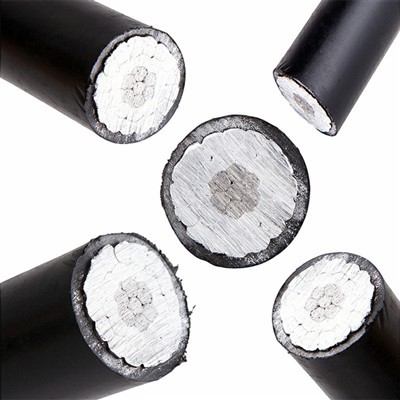
If you’re a project manager, utility planner, or engineer looking to build something that’s strong, reliable, and kind to the planet, I’d encourage you to reach out to discuss how our aluminum clad steel wire can fit your needs. We can share third-party sustainability audits, life cycle assessment reports, and tailored solutions for your specific project—no sales pitch, just honest data about what works and what doesn’t for both your goals and the planet.
Overhead Electrical Wire REFERENCES
- Electric Power Research Institute (EPRI). (2022). Life Cycle Assessment of Overhead Transmission Line Materials. EPRI Technical Report 3002001247.
- International Aluminum Institute (IAI). (2023). Aluminum Clad Steel Wire: Material Efficiency and Recycling Potential. IAI Publication Series on Composite Metal Products.
- U.S. Environmental Protection Agency (EPA). (2021). Steel Recycling and Circular Economy Metrics for Construction and Infrastructure Materials. EPA Sustainable Materials Management Report.
- World Steel Association. (2022). Energy Efficiency in Electric Arc Furnace Steel Production. World Steel Sustainability Report 2022.
- National Renewable Energy Laboratory (NREL). (2023). Material Demand for Renewable Energy Infrastructure: Transmission and Distribution Lines. NREL Research Report NREL/TP-6A20-84567.
Hebei Hualun Cable Co., Ltd.
As one of the leading aluminum clad steel wire manufacturers and suppliers in China, we offer a wide range of products with superior quality. We warmly welcome you to buy cheap aluminum clad steel wire for sale here from our factory. For price consultation, contact us.
Address: XINGBIEYING INDUSTRIAL ZONE, HEBEI PROVINCE CHINA
E-mail: steven@hualunchcable.com
WebSite: https://www.hualuncables.com/
