Hey, let’s cut to the chase—if you’ve ever wondered how that big charcoal machine you keep seeing in production yards actually turns random sticks, wood scraps, and even old tree trimmings into the charcoal you burn at barbecues or use for industrial heating, you’re in the right place. I’ve been supplying these machines for over 10 years, and honestly? Most folks I talk to have no clue it’s not just “burning wood in a box” — it’s way more precise (and way less smoky) than that. Let’s break it down, no jargon, just real talk from someone who’s been hands-on with these things my whole career. Charcoal Machine
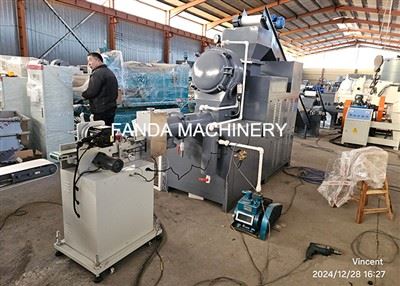
First, let’s start with the raw material, because that’s the secret sauce no one mentions. You can’t just throw wet, rotting wood in and get good charcoal. Most of our clients bring in what’s called “biomass waste” — think forest trimmings, sawdust from furniture factories, even old pallet wood (wait, not treated pallets, obviously — we make that clear early on). The first step is prepping that stuff, right? We tell every new buyer: garbage in, garbage out. If your wood has 30% moisture or more, the machine will struggle. So first, it goes through a chipper or a shredder. If you have big logs, the chipper cuts them into 1-2 inch chunks. Sawdust gets mixed with any larger chunks so the feed is consistent — like pouring cereal into a bowl, no clumps that jam the line. Some clients even add a small drying unit, super cheap to run, that brings moisture down to 10-15% — perfect for the next part. That’s the pre-processing stage, takes an hour or two max for a full batch.
Now the main event: the carbonization chamber. That’s where the magic happens, and this is what people get wrong all the time. They think it’s burning wood to make charcoal, but no — it’s heating the wood without oxygen. If there’s oxygen, you’d just get regular ash, not charcoal. The charcoal machine’s main unit is a sealed, rotating kiln (we call ’em retorts, but I’ll just say kiln to keep it simple). Here’s how it works: you load the prepped biomass into the kiln, seal it tight so no extra air can get in, then heat it up slowly. First, as the temperature climbs past 200°C (that’s like 390°F for us Americans, fyi), all the moisture left in the wood turns to steam and pours out of the vent pipe at the top. That’s the first gas you see — totally harmless water vapor. Next, around 250°C, the wood starts to “break down” — scientists call it pyrolysis, but again, just pyrolysis for short. This is where all the good stuff comes out: volatile gases, right? Things like methane, hydrogen, and little bits of tar. Instead of letting those gases escape and pollute the air (or waste fuel, which costs you money), our machines have a gas recycling system. That’s a game-changer. Most cheap, no-name machines out there just vent those gases into the air, so you’re wasting energy and breathing in fumes. Ours pull those gases back into the heating system, so we burn them to keep the kiln hot — that means you don’t need extra propane or coal to run the machine after the initial startup. Pretty smart, right?
Now, how long does this take? A typical batch is 8 to 12 hours, depending on how much charcoal you’re making. We tell clients not to rush it — if you crank the temperature too fast, the charcoal will be brittle, break easily, and burn unevenly. We’ve seen that happen a lot: some guy buys a cheap machine, cranks the heat to save time, ends up with crumbly charcoal no one will buy. Slow and steady wins here. Once the batch hits around 500°C, all the volatile gases are gone, and what’s left is pure carbon — that’s your charcoal. Wait, but it’s red hot right now, right? You can’t just open the kiln and take it out — it’ll catch fire immediately from the oxygen in the air. So the next step is cooling. We have two types of cooling: natural cooling, where you seal the kiln and let it sit for 4-5 hours, or forced cooling, which uses a small water or air system to speed it up for people who need to turn batches faster. No matter which you use, you have to keep the kiln sealed until the charcoal is below 50°C, almost room temperature. That way, no oxidation, no wasted charcoal.
Wait, but hold on — is that all? No, actually, most charcoal machines (especially the ones for BBQ charcoal) have an extra step after carbonization: refining and shaping? Wait no, wait — if you’re making block charcoal or briquettes, yeah, but if you’re making lump charcoal, you just take the cooled charcoal out, break it into the right size, and sift it to remove any dust. But a lot of our clients make briquettes too, which is another part of the process. Let me explain that, because I get asked about it all the time. Lump charcoal is just the chunks you get straight from the kiln, but briquettes are uniform, easier to light, and burn longer. For that, you take the charcoal dust and small chunks from sifting, grind them into a fine powder, mix in a little binder (usually starch or wood glue, totally non-toxic), and then press them into shapes with a briquette machine. Then you dry those briquettes for a few hours, and boom — they’re ready for sale. That’s why some people call these machines “biomass to briquette lines,” because they handle both raw charcoal and finished briquettes.
I should also mention the parts that keep this whole thing running, because that’s where our machines stand out from the rest. The retort (kiln) is made of heavy-duty steel, not thin metal that rusts after a year. We coat it with a high-temperature paint that can handle 600°C without chipping, so it lasts 10+ years, not 2. The gas recycling system is closed-loop, so we don’t pollute — a big deal in countries with strict emissions rules, and also it saves you money on fuel. The feed conveyor is adjustable, so you can control how much biomass goes into the kiln, which keeps the temperature steady. Most cheap machines have a fixed feed, so if you put too much in, the temperature drops and you get bad charcoal. We’ve had clients tell us their old machines would make 20% waste, but with ours, that’s down to less than 5%. That’s the difference between a good machine and a dud.
Let me add a real example to make this concrete. Last year, we worked with a guy in Oregon who owned a sawmill. He was throwing away 5 tons of sawdust every week, paying $200 a ton to dump it. He bought a medium-sized charcoal machine from us, turned that sawdust into 2 tons of charcoal a week, sold it for $800 a ton, and now he’s making more profit from his waste than he was making from selling lumber. He told us it paid for itself in 6 months. That’s not a scam, that’s real business. I hear that story all the time — people turning their waste into a profit center, and these machines are the reason.
Wait, but let’s get to the questions I get all the time from people who are thinking about buying one. Is it complicated to run? No, really. Our machines come with a 30-minute training session, either in person or over a video call, and we have 24/7 support if you run into issues. You don’t need a team of engineers — one guy can run a machine that makes a ton of charcoal a day. Is it safe? As long as you follow the steps — don’t open the kiln while it’s hot, seal it properly — it’s way safer than burning wood in an open pit. The only fumes you get are the water vapor we talked about, and if you have the gas recycling working, there’s almost no exhaust. We’ve had zero major safety issues in 10 years, because we build safety features into every machine: pressure valves that release if the kiln builds too much pressure, temperature sensors that shut off the heat if it gets too high, lockable doors so no one can open them while the kiln is running.
Another common myth: charcoal machines only work for big factories. No, we have small, compact machines that are perfect for small businesses, even startup guys who don’t have a lot of space. The smallest one can make 100 kg of charcoal a day, which is enough to sell to local BBQ restaurants or hardware stores. We’ve had college students use them for side hustles, too — that’s cool to see.
Wait, let’s circle back to the science for a second, just to make sure I didn’t get anything wrong. Pyrolysis, right — when you heat biomass in an oxygen-free environment, you break down the cellulose, hemicellulose, and lignin in the wood into carbon and volatile compounds. The gas recycling is called “energy self-sufficiency” because those volatile gases are the fuel for the kiln. That’s not some made-up thing — it’s the same process that has been used to make charcoal for hundreds of years, just with modern tech to make it efficient and non-polluting. Old-school charcoal pits were just big holes in the ground where you burned wood covered with dirt to keep oxygen out, but they wasted 90% of the wood and polluted like crazy. Our machines are just the upgraded, industrial, eco-friendly version of that. Makes sense, right?
Now, if you’re reading this, you’re probably either someone who’s curious about how these machines work, or someone who’s looking to buy one and turn their waste into profit. Either way, here’s the thing: not all charcoal machines are the same. A lot of sellers online will show you a cheap, flimsy machine, tell you it works, but you’ll end up with a pile of garbage and no support. We don’t do that. We’ve been testing and refining our machines for a decade, we stand behind every one we sell, and we help you set it up, train your team, and make sure you’re making high-quality charcoal every time.
If you’re ready to talk numbers, see a demo video, or ask any questions about which size machine fits your needs — whether you’re small, medium, or large — reach out to us. We don’t do pushy sales stuff, we just tell you the truth: if you have biomass waste, a charcoal machine will pay for itself. Period. No hidden fees, no fine print.

At the end of the day, these machines are pretty straightforward when you break it down. Prep the wood, heat it without oxygen, recycle the gas to keep it hot, cool it slow, and you get charcoal. The difference between a good machine and a bad one is in the details: the quality of the kiln, the gas system, the safety features, and the support after the sale. That’s what we focus on, every single day.
Pellet Line Accessory Equipment Reference:
- Biomass Pyrolysis: Principles and Practice, R.W. Bakker, Elsevier, 2018.
- Industrial Charcoal Production: Environmental and Economic Considerations, UN Industrial Development Organization, 2020.
- Small-Scale Pyrolysis Technologies for Biochar and Charcoal Production, International Energy Agency, 2021.
Zhengzhou Fanda Machinery Co., Ltd.
Zhengzhou Fanda Machinery Co., Ltd. is one of the most professional charcoal machine manufacturers and suppliers in China. Feel free to buy cheap charcoal machine for sale from our factory and check the price with us.
Address: Zhisi Road, Zhongyuan District, Zhengzhou, Henan, China.
E-mail: vincenthan@fandamachinery.com
WebSite: https://www.fandapelletmill.com/
