If you’ve been scrolling through decking options lately, you’ve probably seen bamboo come up more and more—and for good reason. It’s durable, eco-friendly, and way lower maintenance than wood (we’re looking at you, constant staining and sealing on traditional decking). But let’s cut to the chase: the first question almost everyone asks us when they reach out to Decking Bamboo is, “What’s the actual cost to install bamboo decking?” It’s not just a number, either—there are so many variables that make it go up or down, and as a supplier who’s worked with homeowners, contractors, and even small businesses for years, I’m here to break it all down, no fluff, no hidden stuff. Decking Bamboo
First off, let’s get one thing straight: the “cost” doesn’t stop at just the bamboo boards. You’ve got materials, labor, prep work, and even little add-ons that add up. I’ll walk through each part so you can get a clear picture, whether you’re a weekend warrior thinking of DIY-ing the whole thing, or a contractor looking to quote a job for a client.
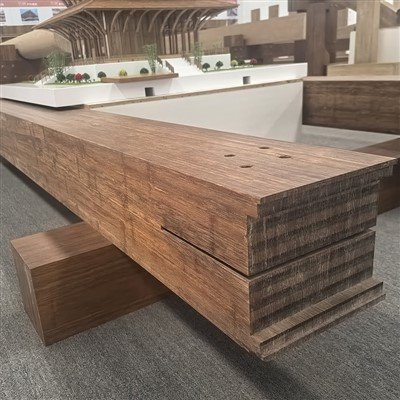
Let’s start with the material itself. That’s the biggest line item for most people, right? But bamboo decking isn’t a one-price-fits-all product. At Decking Bamboo, we carry two main types: solid bamboo and engineered bamboo. Solid is the stuff that’s made from whole bamboo stalks cut into boards, kind of like hardwood. It’s super strong—great for high-traffic areas, pools, or places where people are walking on it nonstop. Solid bamboo usually runs between $5 and $8 per square foot, depending on the finish. We’ve got natural (light tan, looks similar to cedar) and carbonized (darker, more like a warm walnut tone) options, and the carbonized ones are usually a bit pricier because they go through an extra heating process to boost durability and color consistency.
Then there’s engineered bamboo. This is made by shredding bamboo fibers, mixing them with a non-toxic resin, and pressing them into boards. It’s actually more stable than solid bamboo in extreme weather—no warping, no shrinking when it’s hot or cold. For people who live in places with big temperature swings or high humidity, engineered is the way to go. Our engineered bamboo decking is between $7 and $12 per square foot. Why the bigger range? It’s in the features: some boards have built-in slip resistance (huge for families with kids or anyone around pools), some are hidden-fastener compatible, and a few even come with a 25-year fade and stain warranty. That extra cost is worth it if you don’t want to touch your deck for decades.
Wait, but you can’t just buy the boards—you need the supporting materials too. Things like joists, screws, edge trim, maybe flashing if your deck is attached to the house. For a 10×10 deck (that’s 100 square feet, a common small backyard size), those extras usually add up to around $150 to $300. Don’t skip on the right screws, by the way—regular wood screws will rust over time, and that leaves ugly stains on your bamboo. We sell stainless steel deck screws specifically for bamboo, and they’re worth the few extra bucks to keep your deck looking clean.
Now the part that throws a lot of people off: labor. Unless you’re a pro with a nail gun and a level, you’re probably going to hire a contractor. Labor costs for decking vary a ton depending on where you live, how accessible your backyard is, and how complicated the deck design is. In most of the U.S., deck installers charge between $15 and $25 per square foot for labor. So for that same 100-square-foot deck, labor would be $1,500 to $2,500. But if your deck is on a slope, or you have to remove an old wooden deck first, that adds more time and cost. Demolition and disposal of old decking alone can run $300 to $800, depending on the size and how much debris you have.
Here’s where a lot of people think they can save cash: DIY-ing. I get it, not everyone wants to pay for labor. If you’re handy, a 100-square-foot bamboo deck is totally doable. You’ll still need to factor in your time, tools (if you don’t have a saw, level, nail gun, etc., that’s another $200 to $500 in rental or purchase costs), and any mistakes. Bamboo isn’t hard to work with, but cutting it wrong can ruin boards, so it’s worth practicing on a scrap or two first. If you go the DIY route, total cost for that 100-square-foot deck would be around $700 to $1,500, depending on which bamboo you pick. That’s a big difference from hiring a pro, but only if you’ve got the time and skill to do it right.
Wait, are there any hidden costs people don’t think about? Oh yeah. Things like permits. Most cities require a building permit for any deck over a certain height (usually 30 inches off the ground). Permit fees are usually $100 to $500, depending on your location and deck size. Then there’s maintenance. Bamboo decking is way lower maintenance than wood, but it’s not zero maintenance. If you get solid bamboo, you’ll want to seal it once a year for the first few years to keep it protected from moisture. Sealant for bamboo is about $30 to $50 a gallon, and you’ll need a couple gallons for a 100-square-foot deck. Engineered bamboo might only need a light cleaning once a year with a mild soap, so that’s a big long-term savings.
Let me put this all together for a common example: a 10×10 deck. If you go mid-range engineered bamboo, hire a local contractor, no old deck to remove, basic design: materials (boards + extras) are around $900, labor is $2,000, permit is $200. Total cost: around $3,100. If you do DIY the same deck, materials are $900, tools rental is $300, so total is around $1,200. That’s a huge gap, but again, only if you’re comfortable doing the work.
Now, I know some of you are thinking, “Why bamboo instead of composite or cedar?” Let’s be real, composite can be similar in price, but a lot of composites have plastic in them that can get super hot in the sun, and they’re not as eco-friendly as bamboo. Cedar is cheaper upfront, but it will rot, warp, and need staining every 1-2 years, so over 20 years, that’s way more money. Bamboo’s strength-to-weight ratio is actually higher than oak, so it’s just as durable as hardwood, but it grows way faster—bamboo is a renewable resource, so it’s way better for the planet, too. At Decking Bamboo, we source our bamboo from certified farms that replant every stalk they harvest, so you don’t have to feel guilty about your deck.
But let’s talk about how to keep the cost down if you’re on a budget. First, go with engineered bamboo instead of solid—it’s usually cheaper and lower maintenance, so you save money long-term. Second, keep the design simple. Curved decks or multi-level decks add a lot of time and cost, so a basic rectangular shape is way cheaper. Third, buy in bulk. If you’re doing a big deck, we offer discounts on orders over 500 square feet, so that can knock 10-15% off your material cost. And if you have any scrap left over, we actually take back unused bamboo boards to repurpose, so you don’t waste money on extra materials you don’t need.
I also want to be honest about what affects the cost beyond the numbers. If you live in a coastal area, you’ll want to go with a higher-grade bamboo that’s resistant to salt air—those boards are a bit pricier, but they won’t corrode or fade as fast. For small spaces, like a balcony deck, we have thinner, lighter bamboo boards that are cheaper than standard decking, and they work perfect for apartments or small patios. We’ve even done a lot of work for Airbnb hosts, who love bamboo because it looks nice for photos, holds up to lots of use, and doesn’t require constant upkeep.
Wait, have you thought about warranties? A lot of big box stores offer decking with 10-year warranties, but at Decking Bamboo, we offer 25-year warranties on our engineered bamboo. That might make the initial cost a bit higher, but think of it this way: if you don’t have to repair or replace your deck for 25 years, that’s way more money in your pocket than a cheaper deck that needs work every few years. We also have a team of installers we work with across the country, so if you’re not sure who to hire, we can connect you with pros who know our products, so you don’t have to worry about mistakes.
Let me wrap this up so it’s clear. The total cost to install bamboo decking can range from around $10 per square foot (DIY, basic solid bamboo) up to $30 per square foot (high-end engineered, pro install, complicated design). The biggest factors are the type of bamboo you pick, whether you hire a pro, your location, and any extra work like removing an old deck or getting permits. It’s not the cheapest deck material out there, but it’s one of the best long-term investments—less maintenance, eco-friendly, and way more durable than wood.

If you’re still trying to figure out what works for your space, don’t overcomplicate it. We’ve helped hundreds of people get quotes, pick the right bamboo, and find installers that fit their budget. No pushy sales stuff, just straight answers about what each option costs and what works best for your backyard, patio, or whatever space you’re building. Just reach out to us to chat through your project, tell us the size of the deck you’re thinking of, and we’ll break down the exact cost for you—no hidden fees, no weird fine print.
Decking Bamboo References:
- American Forest & Paper Association. (2022). Renewable Building Materials: Bamboo as a Sustainable Alternative.
- National Association of Home Builders. (2023). Decking Cost vs. Value Report.
- International Code Council. (2022). Residential Deck Permitting Requirements.
- Bamboo Industry Association of North America. (2021). Bamboo Decking Durability and Maintenance Guide.
Fujian Jingmingsheng Forestry Technology Co., Ltd.
As one of the most professional decking bamboo manufacturers and suppliers in China, we offer a wide range of products with superior quality. With abundant experience, we warmly welcome you to wholesale bulk decking bamboo in stock here from our factory. Customized orders are welcome.
Address: No.1, Daban, Fuzhuang, Xiyang Town, Yongan City, Sanming City, Fujian Province
E-mail: 17759790120@163.com
WebSite: https://www.jingangzhu.com/
