If you’ve ever been in the market for a lowbed semi trailer, you know it’s not like grabbing a new pair of boots or a coffee mug at the store. This is a big investment—like, six-figure big—and get it wrong, and you’re stuck with a trailer that can’t haul what you need, breaks down halfway to a job, or costs you way more in repairs than it’s worth. As a lowbed semi trailer supplier who’s been in this game for over a decade, I’ve seen it all: contractors grabbing the first trailer they see and winding up with one too short for their excavator, equipment haulers underbuying and getting stuck with a load that’s too tall to clear a overpass, even small business owners wasting money on features they’ll never use. Today, I’m breaking down exactly how to pick the right lowbed semi trailer for your needs—no jargon, no hidden fine print, just real talk from someone who’s sat across the table from hundreds of folks trying to make this call. Lowbed Semi Trailer
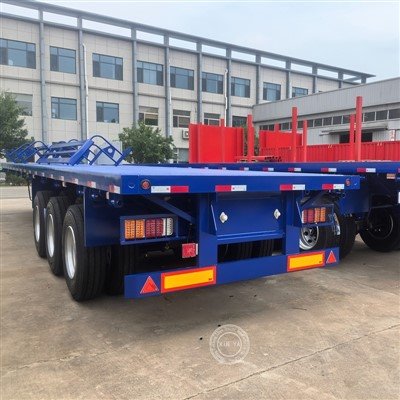
First off, let’s get clear: lowbed semi trailers aren’t a one-size-fits-all. They’re built for hauling heavy, oversized stuff—think excavators, bulldozers, construction materials, farm equipment, even prefab buildings. Regular flatbeds can’t handle the weight or height of most of these, and step-decks have higher ground clearance that limits how low you can drop the load. That’s where lowbeds shine, but even within lowbeds, there are so many variations. The very first question you need to answer before you even look at a spec sheet is: what exactly are you hauling, and how often? This is non-negotiable, because every other decision ties back to your load.
Let’s say you’re a general contractor who’s moving a 20-ton excavator three times a month around your state. That’s way different from a farm owner hauling a 40-ton combine 500 miles to harvest season, or a disaster response team needing to haul a bulldozer across the country in a week. I had a customer last year—small outfit, does residential construction—come to me saying he needed a lowbed. He showed up with a photo of his 18-ton skid-steer, and was dead set on a 50-ton heavy-duty lowbed. I asked him how many skid-steers he moves at once, and he said “usually one.” Turns out, he was about to drop $30k on a trailer that could haul three full-size excavators, and would be underutilized 90% of the time. We ended up getting him a 35-ton single-drop lowbed with a foldable ramp, which was half the price, lighter (so better fuel mileage), and perfect for his skid-steer. That’s the kind of math that matters here.
Next up: weight capacity. Don’t guess this—do the math. A lot of people only think about their load’s weight, but you have to account for the trailer’s own weight too, plus any accessories you’re adding, plus fuel, tools, even a spare tire. If your truck has a gross combination weight rating (GCWR) of 80,000 pounds, you can’t have a trailer that weighs 25,000 pounds and a load that’s 60,000 pounds—that’ll blow right past the legal limit, and get you a huge fine, or worse, damage your truck’s engine or axles. I always tell customers: take your heaviest load, add 10% for safety, then add the trailer’s empty weight, and make sure that number is under your GCWR and your state’s legal weight limits. Some states have strict rules for oversize loads, too, so check that before you commit—you don’t want a trailer that’s legal in Texas but needs special permits in California.
Then there’s the drop height, which is the whole reason you’re buying a lowbed. The deck height of a lowbed is way lower than a flatbed—usually between 18 and 24 inches, depending on the type. That lower deck lets you haul taller loads without hitting overpasses, bridges, or power lines. But here’s the catch: if you need to haul super tall stuff, you might need a removable gooseneck (RGN) lowbed. RGNs let you take the front part (the gooseneck) off, so you can drive your equipment right onto the deck without ramps, and lower the deck even more. For example, if you’re hauling a 12-foot tall combine, a standard lowbed might leave just 6 inches of clearance under the load, which is risky on a windy day or over a small hill. An RGN can drop the deck height down to 12 inches, giving you way more room. But if you’re only hauling small skid-steers or mini excavators, a fixed-gooseneck lowbed is fine—and cheaper, and easier to maintain.
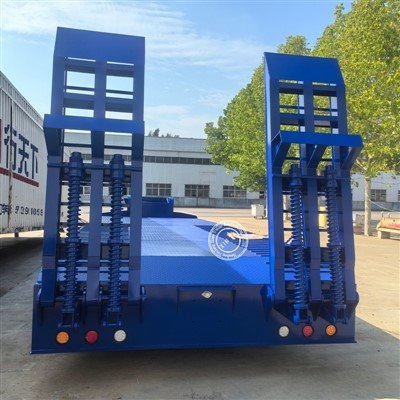
Ramps are another big one, and people sleep on this. Ramps are how you get your equipment onto the trailer, and if they’re not right, you’re either spending extra on a forklift to load, or risking damaging your machine (or the trailer) when you back up. There are a few types: foldable ramops, a-frame ramps, hydraulic ramps, even roller ramps. Foldable ones are great if you’re hauling small, light equipment—they’re cheap and easy to store. Hydraulic ramps are a game-changer for heavy stuff, like 50-ton excavators. You don’t have to crank them by hand, which saves time and lessens the risk of injury, and they adjust easier for different load heights. I always warn people against cheap aluminum ramps if you’re hauling heavy stuff—they bend, crack, and need replacing every year. Steel ramps are heavier, but way more durable, and worth the extra cost.
Now, axles. Lowbed trailers have anywhere from two to five axles, and each axle has a weight rating. The number of axles affects your total weight capacity, but also how the trailer handles. More axles mean you can carry more weight without blowing legal limits, but they also add to the trailer’s length and weight, which makes it harder to maneuver in tight spaces (like a construction site’s small access road). A 3-axle lowbed is perfect for most small to mid-sized jobs, but if you’re hauling 70-ton loads, you’ll need 5 axles. Also, think about axle configuration: some are fixed, some are sliding. Sliding axles let you adjust the trailer’s weight distribution, which helps stay within legal limits when you’re moving loads that are longer than the trailer itself. I had a customer who hauled prefab walls—his load was 60 feet long, and fixed axles left him overweight on the rear axle. Switching to a sliding axle fixed that, no extra permits needed. Don’t forget to check the axle’s material too—chromoly steel axles are stronger than regular steel, but more expensive, which matters if you’re hauling really heavy stuff regularly.
Accessories might seem like small stuff, but they add up, and they’re worth paying for if you’ll use them. Let’s be real: most people don’t need a built-in winch, but if you’re hauling equipment that’s a pain to hook onto, a 20,000-pound winch will save you hours. Toolboxes, tire racks, LED lights for hauling at night, even storage for chains and binders—these might not seem like they’re part of the trailer itself, but they make your job way easier. Just don’t go overboard. A customer of mine once bought a lowbed with a built-in air compressor, satellite TV, and a mini fridge “just in case,” and never used any of it. He could’ve saved $5k by skipping those add-ons, and put that money toward regular maintenance, which is way more important.
Speaking of maintenance—this is something most people overlook when buying a trailer, but it’ll save you a ton of money in the long run. How easy is the trailer to fix? Do parts for it cost a lot, or can you get them at any truck stop? A lot of cheap imported trailers have hard-to-find parts that cost twice as much as domestic ones, and you might be stuck waiting weeks for a replacement axle if something breaks. As a supplier, I only work with brands that have service centers within a day’s drive of most places in the US, and parts that are interchangeable with standard truck parts. That way, if you blow a tire on the road, you can pull into any truck stop and get a new one, not wait for a custom part to ship from overseas. Also, check the frame material. A steel frame is stronger than aluminum, but heavier. Aluminum is lighter, better for fuel mileage, but more prone to dents if you’re hauling rough loads. Pick what fits your use case—if you’re working on rough construction sites all the time, steel is better. If you’re doing long hauls on highways, aluminum will save you gas money over time.
Wait, let’s talk about size too—length and width. How long does your trailer need to be? If your excavator is 30 feet long, you need a trailer that’s at least 35 feet long, so you have space at both ends. If you’re hauling wide load, like a bulldozer that’s 10 feet wide, you need a trailer that’s at least 8 feet 6 inches wide (the legal limit for non-overwide loads in most states) to avoid needing special permits. I had a customer haul a 12-foot wide combine a while back, and he got stuck with a $1,500 fine because he bought a 8-foot wide trailer and didn’t realize he needed an oversize permit. Permits are a huge pain, so factor that in too—if you’re regularly hauling overwide or overlength loads, you might need a trailer that’s set up for that, or you’ll be paying for permits every time, which adds up fast.
Oh, and one last thing: future needs. A lot of people buy a trailer for their current job, then outgrow it a year later. I see this all the time—small construction companies that start with a 35-ton lowbed, then get a bigger project that needs a 50-ton trailer, and have to sell their old one at a loss. If you can swing it, think about what you might be hauling in the next 2-3 years. If you’re planning on expanding your equipment fleet to include larger machines, go for a slightly higher capacity trailer than you need right now. It’s better to spend an extra $2k upfront than $15k selling your old trailer and buying a new one in a year. The flip side is: don’t overbuy if you’re just starting out. I’ve worked with new contractors who thought they needed a 70-ton trailer for their first job, and they were barely using it by month 6.
At the end of the day, the best lowbed semi trailer for you isn’t the biggest, or the cheapest, or the one with the most fancy features. It’s the one that matches exactly what you haul, how often you haul it, where you’re hauling it, and your budget. Don’t let salespeople pressure you into buying something you don’t need—ask them to walk you through how the trailer works for your specific load. If a supplier isn’t willing to do that, that’s a red flag.
If you’re still not sure, the best move is to reach out. We’ve helped hundreds of folks narrow down their options, walk through load calculations, and figure out exactly what fits their needs—no pressure, no upselling. Just real advice from someone who’s been doing this for years, and knows how frustrating it is to get a trailer that doesn’t work for you.
Lowbed Trailer References:
- American Trucking Associations. (2022). Overweight and Oversize Load Regulations by State.
- Trailer Builders & Repairers Association. (2023). Lowbed Semi Trailer Specification Guide.
- U.S. Department of Transportation. (2021). Commercial Vehicle Weight and Dimension Limits.
- Heavy Equipment Transport Association. (2022). Best Practices for Lowbed Trailer Selection and Use.
- National Association of Trailer Manufacturers. (2023). Lowbed Trailer Maintenance and Safety Standards.
Shandong Yuncheng Xinya Trailer Manufacturing Co., Ltd.
Shandong Yuncheng Xinya Trailer Manufacturing Co., Ltd. is one of the most experienced lowbed semi trailer manufacturers and suppliers in China, featured by quality products and good service. Please rest assured to buy CE approved lowbed semi trailer from our factory. Contact us for customized service and OEM service.
Address: No. 008, Hexie Road, Yangzhuangji Town, Yuncheng County, Heze City, Shandong Province
E-mail: fiona@xinyatrailer.com
WebSite: https://www.china-truckfactory.com/
