Let’s start by busting a common myth I hear from folks new to utility infrastructure: “Utility companies just use big machines to dig, so why would they need tiny marker stakes?” Marker Stakes
As a marker stakes supplier with 12 years in the game, I can tell you first-hand that question comes up all the time. Last quarter alone, I sat down with three municipal utility directors and six line crews foremen who had no idea how central our stakes are to their daily work. That’s why I want to pull back the curtain on exactly how utilities use marker stakes—no fluff, just the on-the-ground truth I’ve seen, and why we’re not just selling a product, we’re keeping workers safe and projects on schedule.
First, let’s ground this in what utility companies actually do every day. Whether they’re running a fiber optic line to a new neighborhood, replacing a water main in an old suburb, or marking gas pipelines before a dig, they operate in a 3D web of underground assets. Before any excavation starts, every utility in North America is required to follow 811 law—you know, that “Call Before You Dig” number you dial when you’re planting a tree or building a deck. When someone calls 811, they dispatch locators who go out to the site and mark existing underground lines. Those markers aren’t just paint or flags; marker stakes are the backbone of that locator process, and they’re non-negotiable.
I remember a story from a crew in suburban Ohio last year. They were digging a trench for a new natural gas line, and because they used our high-visibility yellow marker stakes (the ones with reflective strips for low light), they caught a 2-inch water main that the 811 locator had missed with paint. The crew was just 10 feet away from hitting it, which would have shut down water for 2,000 homes. That’s the real value marker stakes bring—they turn temporary locator marks into something physical, visible, and hard to miss, even when trees or grass are tall, or the sun is low.
Let’s break down the specific use cases for different utility types, because not all stakes are created equal. Electrical utilities, for example, use our orange fluorescent marker stakes specifically for power lines and electrical conduits. Electrical crews work around high voltage, so accuracy here isn’t just about on-schedule projects—it’s about preventing fatalities. OSHA data from 2022 says that 12% of construction fatalities related to utility strikes are from electrical lines, and 811 locators use our orange stakes to demarcate those lines clearly for line crews. They also use our extra-tall (48-inch) stakes for areas where snow accumulates, like in Minnesota or Montana, so the marks don’t get buried under feet of winter snow.
Water and wastewater utilities, on the other hand, prefer our blue stakes. Water lines are often located deeper underground, so crews need stakes that are durable enough to stay in place during backfilling—even when a dump truck drives over them. I’ve seen cheap, flimsy stakes from big-box stores break on impact, leading crews to re-locate lines mid-project, which can add thousands of dollars in costs and delay a project by days. Our stakes are made from heavy-duty UV-stabilized plastic, so they don’t crack in extreme heat or cold, and they have a sharp steel tip that goes through grass and soft soil easily. Last year, a water utility in Texas told us that switching to our stakes cut their re-location time by 18% because they didn’t have to re-mark lines that had blown over or broken.
Gas utilities? They rely on our yellow stakes, often with permanent ink that’s resistant to gasoline and oil. Gas pipelines are pressurized, so a strike can cause an explosion or a release that’s dangerous for miles around. The Pipeline and Hazardous Materials Safety Administration (PHMSA) actually has guidelines that require utilities to use “physical markers” for high-pressure gas lines, and our stakes meet that requirement. I worked with a gas company in Pennsylvania last winter; they were replacing a section of pipeline in a wooded area with lots of leaf litter, and our reflective yellow stakes stood out even after a light snowfall, so their dig crew didn’t miss a turn that would have cut through a 12-inch high-pressure line. The foreman told me it would have cost over $100,000 in cleanup, fines, and repairs if they’d missed that mark.
Now, you might be wondering: why not just use paint or flags? That’s a question I get all the time. Paint washes off in rain, flags blow away in wind, and they’re easy to hide under tall grass or construction debris. Marker stakes are permanent for the duration of a project, and they create a clear visual reference that’s consistent across an entire site. For large-scale projects, like a new highway with multiple utility lines, our stakes also help project managers track where each utility is located without having to rely on GPS alone. I supply stakes for a highway project in Georgia that’s 12 miles long, and the foreman there told me that without our markers, his crew would have had to re-locate lines three times a week, instead of once, which would have pushed the project past its deadline.
Another big use case: maintenance and repairs. Utility companies don’t just build new lines—they maintain existing ones, and when a line breaks, they need to find it fast. Marker stakes that were placed during the initial construction make it easy to locate the line quickly, without having to dig test holes all over the site. A wastewater utility in Illinois told me that our stakes helped them fix a main break in a downtown area in half the usual time, because they didn’t have to close down a whole block while they searched for the line. That’s a huge win for customers, who don’t want to go without sewer service, and for the utility, which avoids fines for extended outages.
Now, I want to be clear: utility companies don’t just buy any marker stakes. They have specific requirements, and that’s where our experience comes in. We work with utilities to customize stakes to their exact needs—different colors for different assets, different heights for different landscapes, different materials for harsh conditions. We also provide bulk pricing and fast delivery, because utility projects often have tight timelines. Last year, during a construction boom in Arizona, we had a utility company order 100,000 stakes in 48 hours because their original supplier was late. That’s the kind of reliability that utility companies need.
But let’s talk about the bigger picture here. Marker stakes are a small part of utility infrastructure, but they’re a critical safety tool. Every year, there are over 50,000 utility strikes in the U.S., according to the Common Ground Alliance, and a lot of those strikes could be prevented with better, more visible markers. I’m not just selling a product— I’m helping utilities keep their workers safe, avoid costly delays, and serve their communities better. That’s why I’ve been in this business for 12 years, and that’s why our customers keep coming back.
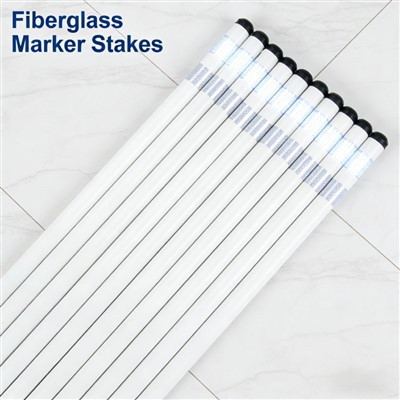
If you’re a utility company, a construction contractor, or someone who works in infrastructure, and you’re looking for a reliable marker stakes supplier, let’s talk. I can help you find the right stakes for your projects, whether you need a small order for a residential line or a large bulk order for a highway project.
Nursery Plant Supports References
Common Ground Alliance. (2023). Annual Utility Strike Report.
Occupational Safety and Health Administration (OSHA). (2022). Construction Safety: Utility Hazard Guidelines.
Pipeline and Hazardous Materials Safety Administration (PHMSA). (2021). Pipeline Marker Requirements.
Yizheng Wanteng Composites Co., Ltd.
As one of the most professional marker stakes manufacturers and suppliers in China, we’re featured by quality products and good service. Please rest assured to wholesale bulk slip-resistant marker stakes for sale here from our factory. Contact us for pricelist.
Address: No.20 Longyi Road, Qingshan Town Industrial Park, Yizheng City, Jiangsu Province, China
E-mail: mark@wantfrp.com
WebSite: https://www.wantfrp.com/
