Hey everyone, it’s Sam from [your C&I energy storage company] here. If you’re a commercial property owner or facilities manager, odds are you’ve already dipped your toes into solar—like, I bet you’ve got panels on your warehouse rooftop or the parking lot canopy at your office, right? But here’s the thing I hear all the time: “The solar works great during the day, but once the sun goes down, I’m back to paying peak grid rates. And when it’s cloudy, I barely get enough to cover my operations.” That’s where the question I get asked nonstop comes in: Can C&I energy storage actually pair with commercial solar to fix these headaches? Short answer? Heck yeah. And I’ve seen it work firsthand with dozens of clients, so let’s break this down like we’re chatting over coffee—not some stuffy industry webinar. C&I Energy Storage
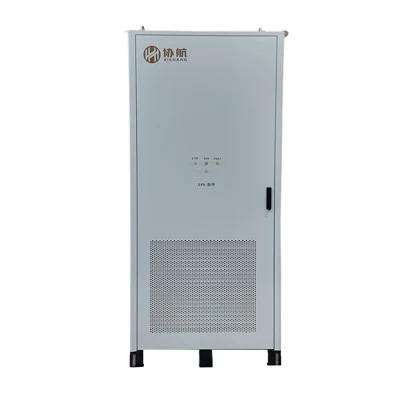
First, let’s make sure we’re on the same page with what we’re talking about, no jargon. C&I energy storage is just big, robust battery systems built specifically for commercial and industrial spaces—not the tiny powerwalls you stick in your garage. We’re talking lithium-ion units (the same tech that powers your phone, but scaled way up) that can store extra electricity. Commercial solar is those big arrays on your business’s property. Pairing them means “solar + storage” in one setup, not just solar alone.
Let’s start with the biggest pain point almost every C&I solar client has: grid demand charges. If you don’t know what those are, count yourself lucky, but if you do, you’re probably grumbling right now. Demand charges are fees utilities slap on you for your highest 15-minute electricity usage window each month—super common for businesses like manufacturing plants, grocery stores with freezers, or office buildings that run all day. For most of these places, those demand charges make up 30-50% of their total electric bill. That’s insane. When you pair solar with C&I storage, here’s how it works: your solar panels crank out extra power at noon, when your business might not be using all of it. Instead of sending that power back to the grid for a tiny credit (we’ve all seen that “net metering check” that’s basically pocket change), you store it in your batteries. Then, when that peak demand window hits—say, 5 PM, when everyone’s packing up but your warehouse is still running forklifts, or your office is cranking AC to beat the evening heat—you pull that stored battery power first, instead of drawing from the grid at peak rates.
I’ll give you a real example from a client we worked with last year: a 120,000 sq ft food manufacturing plant in Ohio. They had a 500 kW solar array, but their demand charges were sitting at $18,000 a month—no joke. We added a 1 MWh C&I storage system to their setup. The first month after installation, their demand charges dropped by $10,500. That’s nearly a 60% cut, just from shifting stored solar power to peak times. Their total electric bill went down by over 35% that month. Crazy, right? And this isn’t some gimmick—this is how all the big-box stores do it, they just don’t talk about it as much because they don’t want everyone copying their trick.
Next up: cloudy days and grid backups. Let’s be real—solar doesn’t work when it’s pouring rain, or when the sun’s hiding behind clouds for three straight days. Before storage, those days mean you’re back to relying solely on the grid, which can be brutal. With C&I storage paired with solar, you can bank enough power on sunny days to cover those cloudy stretches for a few days, depending on your setup. We’ve had a retail client in Michigan that uses their solar + storage system to get them through the occasional overcast week in winter. They don’t have to dip into the grid nearly as much, which saves them thousands during the cold months when heating loads are high.
And then there’s the backup power piece. A lot of C&I businesses can’t afford to lose power—manufacturers, hospitals, data centers, even grocery stores with perishable inventory. Last year, a storm knocked out power for two days in Texas. A client of ours that paired solar and storage didn’t miss a single shift, didn’t lose any inventory, and their production kept running like nothing happened. If they’d had solar alone? Once the sun went down, they would have been dark by 7 PM. Storage changes that. It’s not just for saving money—it’s for keeping your business from closing up shop when the grid fails.
Wait, but I know what you’re thinking: “Is this actually worth the cost? I heard batteries are expensive.” Yeah, they were—five years ago. But tech has come a long way, and prices have dropped by like 80% since 2018. We’ve crunched numbers for our clients, and most C&I solar + storage setups pay for themselves in 3-5 years, sometimes even less. Let’s go back to that Ohio food plant: their upfront cost was around $120,000, but their monthly savings were $10k+, so they paid themselves off in 11 months. That’s not a bad return. And there are also tax incentives—like the US ITC (Inflation Reduction Act) that gives 30% tax credit for solar and storage systems, plus some state-level rebates too. That cuts your upfront cost even more.
But hold on, it’s not just slapping a battery next to your solar panels and calling it a day. There are right ways to do this, and wrong ways. First, you’ve got to size the battery correctly. If you get a battery that’s too small, you won’t cover your peak demand or cloudy days. Too big, and you’re wasting money on capacity you’ll never use. That’s why we always do a full audit of your business’s energy usage—look at how much power you use at different times of day, peak demand windows, seasonal changes, even how much sunlight your property gets. One size doesn’t fit all. A small café has way different needs than a 24/7 manufacturing plant.
Then there’s the equipment side. Not all C&I batteries are built the same. We use lithium-iron-phosphate (LFP) batteries, by the way—they’re safer, last longer, and hold up better to being charged and discharged a lot, which is exactly what you’ll be doing with solar. Old lead-acid batteries are a no-go for this, they’re too heavy, don’t last, and aren’t made for commercial loads. We also pair the batteries with smart software that automatically manages everything: when to charge from solar, when to discharge to avoid demand charges, when to keep power in reserve for outages. You don’t have to do any of the work—the software does it all in real time, which is perfect for busy facilities managers who have 100 other things to worry about.
I also get the “what if I sell my excess power back to the grid” question. Look, net metering is great, but the credits almost always don’t match what you pay for grid power, especially during peak times. For example, if you generate power at noon and get a $0.05 per kWh credit, but you pay $0.25 per kWh for grid power at 5 PM, you’re losing $0.20 per kWh there. Storing that power lets you use it for yourself, which is way more valuable than sending it to the grid. The only time sending excess back makes sense is if you have way more solar than you could ever use, but even then, pairing with storage will give you better savings 9 times out of 10.
Another common misconception: “My roof can’t handle solar plus batteries.” Wait, the batteries don’t have to go on your roof. We can put them in a secured, fenced area on your property—like a corner of your parking lot, or an unused spot near your building—they don’t need any special roof support. For businesses with no roof space, we can even ground-mount the solar panels and put the batteries somewhere else on the site. That’s a non-issue for most of our clients.
Let’s talk about some real-world wins to back this up. We recently worked with a 10-screen movie theater in Arizona. They had a solar array to cut their electric bill, but on summer weekends, when they were open from noon to midnight, their peak demand was through the roof. Adding a 500 kWh storage system dropped their monthly demand charges by $4,200, so their total bill went down by 28% in the first quarter. They used to have to cut popcorn machine or projector power during busy times to avoid high fees—now they don’t have to do that, and they’re making more money too. That’s a win-win.
Or a manufacturing client in Pennsylvania that makes steel parts. They run 24/7, 365 days a year. Their solar array covered 40% of their daytime usage, but the rest came from the grid, especially at night. We added a 2 MWh storage system, and now they store all their daytime solar power and use it at night. Their total grid usage dropped by 60%, and they qualify for an extra grid incentive for reducing strain during peak hours. Their payback period is 3 years, which is way better than most investments they make.
So what’s the catch, if there is one? The only real thing to consider is that this setup is most effective for businesses that use a lot of power during the evening or at night. If you’re a small business that only runs 9-5 and doesn’t use much power after 6 PM, the savings might be smaller than for a 24/7 operation. But even then, you can still benefit from backup power if the grid goes out, plus you’ll still get the tax incentives and lower solar installation costs by pairing the two.
At the end of the day, C&I solar alone is great, but it’s leaving money on the table if you don’t pair it with storage. It turns your solar array from a “daytime only” power source into a whole-day, all-day solution that saves you thousands, protects your business from outages, and cuts your carbon footprint too. For businesses these days, cutting costs and being sustainable aren’t separate goals—they go hand in hand. This setup does both.
If you’re tired of overpaying for grid power, losing money during peak times, or worrying about power outages, we can help. We do free, no-obligation energy audits to size the right system for your business, no sales pitches, no pressure. Just real numbers for your specific space.
Reach out to us to start talking details and figure out how much you can save.
Home Battery Storage References:
- Energy Storage Association. (2023). Commercial and Industrial Energy Storage Market Report.
- U.S. Department of Energy. (2024). Inflation Reduction Act Tax Incentives for Solar and Storage Systems.
- National Renewable Energy Laboratory. (2022). Demand Charge Reduction Using Solar Plus Storage for Commercial Facilities.
- IHS Markit. (2023). Lithium-Ion Battery Price Trend Report for Stationary Storage Applications.
Zhejiang Xiehang New Energy Equipment Co., Ltd.
As one of the most professional c&i energy storage manufacturers and suppliers in China, our products have good reputation in the market. Please erst assured to wholesale custom made c&i energy storage from our factory. If you have any enquiry about cooperation, please feel free to email us.
Address: No.5 Hechen Road, Zhouwangmiao Town, Haining, Jiaxing City, Zhejiang Province, China
E-mail: dan.wu@xiehang.net
WebSite: https://www.shineonpower.com/
