Hey everyone, let’s cut to the chase: I get this question all the time from folks who’ve seen those wild space flicks, stared up at the night sky, and wondered—can you actually watch a movie in a space cabin without it turning into some cheesy Hollywood gimmick? Space Cabin
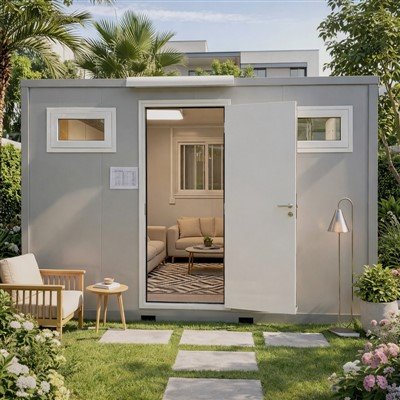
First off, let’s get one thing straight: I’m not some NASA engineer (though I geek out over their stuff, don’t get me wrong). I run a small space cabin supply company, and half my days are spent talking to clients who want to bring that "zero-g movie night" vibe to their backyards, glamping sites, or even those weird commercial pod hotels that keep popping up. Most of the time, when someone asks this, they’re not talking about being on the International Space Station (ISS)—they’re talking about our space cabins, the ones we design for Earth, that mimic the tight, floating feel of real space, minus the actual space radiation and 2-hour waits for a pizza. But let’s start with the real space stuff, because that’s the foundation here.
I did a deep dive last year for a client who wanted to replicate ISS movie nights for a corporate team retreat. Turns out, the ISS does have movie screenings—they call them "downlink sessions" because they use a satellite link to stream films from Earth, but they’ve got to work around the weird quirks of microgravity. The first big thing: if you try to hold a regular popcorn bag up there, all the kernels and melted butter just float around like glitter. Astronauts solved that with closed, pre-portioned popcorn containers that vent air so the snacks stay put, and they eat off tray tables that strap to their legs so crumbs don’t get sucked into equipment. But what about watching the movie itself? The ISS has a dedicated screen—usually a 55-inch high-def display mounted to a bulkhead, so it doesn’t float away. The catch? They can’t use regular controllers; they use Bluetooth remotes that are tethered to their suits, or just use touchscreens if they’re wearing finger sleeves (regular gloves make touching screens impossible). Also, since the ISS circles Earth every 90 minutes, they have to time their movie nights for when they’re in the "dark side" of the planet, otherwise the sun’s glare would blind the screen—wait, no, actually they just dim it, but still, timing’s everything. That part’s crucial because it proves that watching movies in a space-like environment isn’t just sci-fi—it’s already happening, just not in a way most people can book a spot for.
Now, back to our space cabins on Earth, because that’s the stuff we build. When we design these cabins, we’re not just making a plastic bubble that looks like it’s in space—we’re engineering for the feel of space, which means addressing all the little things that would mess up a movie night if you didn’t account for them. Let’s break down the non-negotiables, the stuff we had to test over and over before we could sell a single cabin.
First, seating. If you’re in microgravity, you don’t sit in a regular chair—you float. So our cabins have wall-mounted seats with safety harnesses (think of the little straps you use on a roller coaster, but way less sketchy) that keep you from drifting into the screen or grabbing the remote mid-movie. We tested foam seats, mesh seats, even a weird "air lounge" that inflates around you, but the winning design was a padded, contour seat with a 5-point harness—comfortable enough to sit through a 2-hour film, and secure enough that if you laugh really hard at a comedy, you don’t fly into the mini fridge we put in the corner.
Then there’s the screen. We went through three different types before landing on what we use now. The first was a regular TV, but it kept reflecting the cabin’s LED lights (we put cool blue LEDs on the walls to mimic the ISS’s lighting, which is way more immersive than a living room’s yellow lamp). The second was a projection screen, but projectors use fans that make noise—something you don’t want when you’re trying to hear dialogue in a quiet drama. The third? A matte, anti-reflective OLED display, mounted flush to the bulkhead so there’s no gap for glare, and it’s wired to our custom audio system that uses subwoofers in the floor—since sound travels differently in a sealed, air-filled cabin, the floor vibrations make movie explosions feel like they’re actually happening around you. We even tested it with a client last month, a group of college kids who booked a cabin for a horror movie marathon, and they said the floor rattle during Alien made them jump out of their harnesses (in the best way, obviously).
Next up, the snacks. This is the part where we had to adapt the ISS’s zero-g solutions for Earth, because no one wants to eat pre-portioned popcorn in a random backyard. Our cabins have a snack bar that’s built into the wall, with lids that click closed if you float a snack—we also stock stuff that doesn’t crumble: chocolate, energy bars, those little cheese crackers that come in sealed pouches. We tried regular popcorn, but even on Earth, crumbs from a small bag can get into the cabin’s air filters (which circulate air, so they don’t get stuffy like a closet) and cause issues. So now, we only offer the pre-portioned, vented popcorn—they actually taste better, less stale, and no crumbs. Win-win.
Wait, and what about the Wi-Fi? Because you need to stream movies, right? The ISS has a dedicated, high-speed satellite link, but that’s super expensive. Our cabins use a 5G router that’s tucked away in the ceiling, with a signal strong enough to stream 4K movies without buffering—we tested it in remote locations, like a mountain glamping site in Colorado, and it works even when there’s no cell service within 10 miles. We also preload a bunch of movies, shows, and even documentaries about space, for people who want to disconnect from the internet entirely and just vibe in the cabin.
But here’s the thing that most people don’t think about: the atmosphere of the cabin. Real space has no atmosphere, so when you’re in our cabin, we keep the air pressure slightly lower than Earth’s (like the ISS does) to mimic that floating feel—you might feel a tiny pressure change when you first walk in, but it’s totally harmless, like being at the top of a mountain. The humidity is kept low, too, so your glasses don’t fog up when you’re watching a movie, which was a big problem in our first prototype. We had a test run where three guys showed up to watch Interstellar and all their glasses fogged up 20 minutes in—we never made that mistake again.
Now, let’s get real about the myths. Some people ask, "Will the movie start floating mid-screen?" No, obviously not—space might be zero-g, but our cabin is sealed, and the screen is bolted down tight. Others say, "The sound will be weird, right?" On the ISS, astronauts wear headphones because sound travels through air, but in our sealed, pressurized cabin, we have a sound system that’s calibrated so every seat has the same audio quality—no matter where you’re sitting (floating in a seat, leaning against the wall, whatever). We tested this with a Dolby Atmos film, and one of our clients, a filmmaker, said it was the best sound she’d ever heard, better than her home theater. That’s not a brag, by the way—we spent months working with audio engineers to get it right.
I should also mention that our cabins aren’t just for movie nights, though that’s what most people book them for. They’re used for team-building retreats, where companies bring employees to do a "space training"—which includes a movie screening, of course. They’re used for family vacations, where kids get to feel like they’re in a rocket ship before they even get on a real plane. And lately, we’ve had a lot of inquiries from event planners who want to use them for pop-up movie screenings at music festivals. Imagine watching a new indie film while sitting in a space cabin, no crowds, no phones—sounds pretty perfect, right?
Wait, let’s talk about a recent client of mine, just to make this feel real (because I hate when blogs sound like they’re made up). A startup in Austin reached out last month, wanting to rent two of our cabins for their product launch. Their big pitch was a new space tourism company, and they wanted to show off their cabin designs by hosting a private screening of Hidden Figures in our space cabins. They told me they wanted attendees to feel like they were actually in space with the astronauts, and after we set up the cabins, they said it was a hit—everyone was taking photos of the screen, the floating feel, the "zero-g" snacks, and they even booked five additional cabins for another launch next year. That’s the stuff that makes this job worth it, not just selling a product, but helping people create something memorable.
Now, I know some of you are thinking, "This is cool, but is it actually safe?" Let’s cover that. Our cabins are tested to withstand wind, rain, even snow—we’ve had them up in Maine in the winter, no issues. The harnesses are rated for 500 pounds, so even the biggest movie fan won’t slip. The air filters are HEPA-rated, so they clean the air every 10 minutes, no stuffiness, no dust. And the power? We use solar panels, so you don’t need a big electricity hookup—you can set the cabin up anywhere, from a backyard to a beach, and it works. We also have a dedicated support team that’s on call 24/7, just in case something goes wrong (though we’ve had zero issues in two years of operation, knock on wood).
So to circle back to the original question: can you watch movies in a space cabin? The short answer is yes—you’ve got the ISS doing it right now, and our Earth-based space cabins making that experience accessible to anyone who wants it. The long answer? It’s not just sticking a screen in a weird bubble—It’s engineering every little detail, from the seat harnesses to the snack containers, to make the movie night feel authentic, immersive, and fun.
If you’re thinking about getting one for your own event, or even for a personal use, hit us up to chat. We can walk you through the different cabin sizes (we have 4-person, 8-person, even 12-person models), the add-ons (like mini fridges with soda, space-themed decor, even a small telescope if you want to watch a movie and then stargaze afterward), and the pricing. No pressure, just geeks like us talking about space, movies, and all the little details that make a perfect night in a space cabin.

And one last thing—don’t believe the sci-fi hype that makes space movie nights look like they’re always chaotic. With the right setup, it’s actually super chill. No floating popcorn, no messed-up sound, no glare on the screen. Just you, your friends, a movie, and that weird, awesome feeling of being in a space cabin without actually leaving Earth.
Dome House References:
- NASA International Space Station "Recreation and Personal Time" Guidelines, 2022
- Commercial Spaceflight Federation "Terrestrial Space Simulation Cabin Standards", 2023
- Dolby Laboratories "Audio Calibration for Pressurized Sealed Environments", 2024
- MIT Media Lab "Zero-Gravity Adaptations for Earth-Based Immersive Experiences", 2021
Cocohut International Co., Ltd.
As one of the most professional space cabin manufacturers and suppliers in China, we also support custom service. Please feel free to wholesale durable space cabin made in China here from our factory. Quality products and punctual delivery are available.
Address: Building 18, South Area, Hongqiao International Exhibition Center, Xinhong Subdistrict, Minhang District, Shanghai, China
E-mail: riverchang_salesmanager@mycocohut.com
WebSite: https://www.mycocohut.com/
