Hey there, if you’ve ever stood on an escalator and thought “how does this thing hold together without collapsing mid-rise?” — you’re not alone. Most people zone out on the handrail or count the steps, but the quiet workhorse keeping that whole system stable is the escalator truss support. As an escalator parts supplier, I field questions about trusses all the time, and honestly? Most folks don’t realize how critical those seemingly metal beams are. Let’s break this down like we chat with our customers—no jargon, just straight talk, and why truss supports matter way more than you might think. Escalator Parts
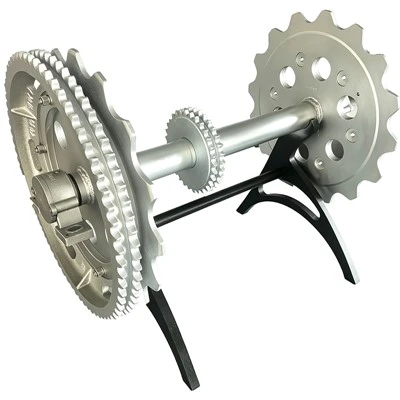
First, let’s get the basics right. An escalator isn’t just a bunch of steps rolling up and down. It’s a whole self-contained system that needs to span between two floors—think of a 10-foot gap between a mall’s ground level and its food court, for example. That span can’t just be empty space; the entire weight of the escalator (steps, motor, handrail, people standing on it) has to be supported by something. That “something” is the truss, and the truss supports are the brackets, plates, and anchors that hold that big metal frame firmly to the building structure.
Wait, hold on—let’s not mix up truss and truss support. The truss itself is the elongated, boxy metal frame that runs the full length of the escalator. It’s made of steel (sometimes aluminum for lighter commercial units) and has internal cross-braces to distribute weight evenly. The truss supports, on the other hand, are the hardware that attaches that truss to the building. So if the truss is the backbone of the escalator, the truss supports are the ligaments that connect that backbone to the building’s skeleton. That’s a simple way to put it, right?
Now, why do truss supports need to be specific? Escalators aren’t static. They’re constantly moving—10,000 steps a day in a busy Walmart, hundreds of people shifting weight back and forth, even small vibrations from foot traffic on adjacent floors. Those supports can’t just be random nails or brackets; they have to handle dynamic loads, not just static weight. That’s where our expertise as an escalator parts supplier comes in. We don’t just sell metal plates—we sell supports engineered to match the truss’s size, the building’s material (concrete? steel? wood? rare, but it happens), and the local building code requirements.
Let’s talk about the different types, because not all truss supports are created equal. The two main ones we work with are floor-mounted and wall-mounted supports. Floor-mounted is the most common for indoor escalators—you drill into the floor slab at the top and bottom landings, then bolt the truss’s end brackets down to those anchors. These have to be heavy-duty, usually made of hot-dip galvanized steel to resist rust from moisture (think a transit station, where spills happen). Wall-mounted is for when there’s no clear floor space at a landing, like in a narrow retail corridor. Here, the supports bolt into the building’s stud walls or concrete shear walls, and they have to distribute the escalator’s weight horizontally to the wall, which means we size them differently to avoid putting too much stress on the wall’s structure.
Then there are intermediate supports, too. For longer escalators—like ones that span 20+ feet between floors—you can’t just support the truss at the two ends. It sags, right? That’s called deflection, and too much deflection can mess up the step alignment and cause creaky, unsafe operation. So we supply intermediate supports that attach to the building’s structure midway along the truss, holding it up to cut deflection. Those are often adjustable, too—we like to include that feature because buildings settle over time, so being able to tweak the truss’s level without re-drilling is a total game-changer for installation teams.
Here’s a question we get a lot: “Why can’t I just use any heavy metal bracket?” Fair question, but let’s be real—escalator parts aren’t one-size-fits-all. Truss supports have to account for three big factors: load capacity, material compatibility, and installation access. Load capacity is non-negotiable. A typical commercial escalator can hold 5,000 pounds of distributed weight, but a 50-foot escalator in an airport might be double that. Undersized supports bend or break, which can lead to truss misalignment and costly downtime. We test all our supports to make sure they meet ASME A17.1 standards (that’s the US safety code for elevators and escalators) so our customers don’t have to worry about failing inspections.
Material compatibility is another big one. If a truss is made of carbon steel, a support made of stainless steel might work, but wait—corrosion from dissimilar metals can cause rust to spread faster. We make sure our supports are matched to the truss’s material and the building’s surface to prevent that. For example, in coastal areas with salt air, we use extra corrosion-resistant supports because salt eats through metal fast. We’ve seen too many maintenance calls where a customer used a random bracket from a hardware store and ended up with a rusted support that required half the escalator to be removed to fix. That’s a headache we help people avoid.
Installation access is the final piece. Some old buildings have tight landing spaces, so our truss supports come in pre-drilled holes and lightweight (but still strong) designs so installers can haul them up stairs without needing a crane. For new construction, we offer customizable supports that fit into the building’s structural plans before the truss even arrives on site—saves time on installation, which means the escalator is up and making money faster.
Now, let’s circle back to why this matters for you, whether you’re a building manager, an installer, or a facility owner. Truss supports aren’t something you check every week, but when they fail, it’s a big deal. A loose support can cause the truss to shift, which throws the steps out of sync, makes the handrail run too fast or slow, and even triggers the escalator’s emergency stop. In a high-traffic location like a mall or train station, that means lost revenue for the business and unhappy customers. As an escalator parts supplier, we’ve seen that first-hand—clients who tried to save a few bucks on cheap supports ended up paying for emergency repairs, missed inspections, and even temporary escalator removal.
We also offer replacement truss supports, because older escalators (especially ones from the 90s or early 2000s) have specific part sizes that aren’t available at regular hardware stores. A lot of building owners don’t realize that as an escalator ages, its truss supports can wear out from constant vibration, so proactive replacement is smarter than waiting for a failure. We keep a wide inventory of common sizes in stock, so we can ship parts same-day to get your project back on track.
Wait, let’s clear up another common misconception: truss supports aren’t just metal plates. They often include hardware like anchor bolts, washers, and locking nuts. Those small parts are easy to overlook, but we supply them as a complete kit because loose nuts or undersized anchors are one of the top causes of support issues. We even package our kits with installation guides, so even if you’re not a seasoned escalator installer, you have the info you need to make sure the supports are put in correctly.
If you’re working on a new escalator installation, or you’re upgrading an old one, here’s a tip: don’t leave truss support specs for last. When you’re planning the truss design, reach out to us early as your go-to escalator parts supplier. We can help you calculate exactly how much load each support needs to handle, what material works best for your location, and even adjust the design to fit your building’s layout. We’ve worked on projects from small retail stores to major international airports, so we know the ins and outs of different requirements.
Let’s get real for a second—no one gets excited about escalator parts. Truss supports are hidden, they’re not flashy, and they don’t make the steps move. But if they’re not done right, the whole escalator stops working. That’s why we take pride in making high-quality, code-compliant truss supports that keep escalators running smoothly, day in and day out. We don’t just sell parts—we’re the people who make sure your investment in an escalator lasts as long as it should, without unexpected headaches.

If you’re currently dealing with wobbly steps, a creaky escalator, or you’re planning a new installation and need truss support specs, don’t hesitate to reach out. We can walk you through the process, answer any questions you have, and get you the parts you need fast. No sales pitches, no confusing jargon—just honest help from people who know escalator parts inside and out.
Silk Machinery References
- ASME A17.1-2020, Safety Code for Elevators and Escalators
- National Elevator Industry, Inc. (NEII) Escalator Maintenance Guidelines
- Steel Construction Manual, American Institute of Steel Construction (AISC), 15th Edition
- International Building Code (IBC) 2021, Chapter 30: Elevators and Escalators
Haining Defuli Intelligent Equipment Co., Ltd.
As one of the most professional escalator parts manufacturers and suppliers in China, we’re featured by quality products and good service. Please rest assured to buy customized escalator parts made in China here from our factory. Welcome to contact us for pricelist.
Address: No.8-1, Anlan Road, Chang’an Town (Agricultural Development Zone), Haining City, Zhejiang Province, China
E-mail: Jiajie.jin@fukang-china.com
WebSite: https://www.cndefuli.com/
