Hey everyone, let’s cut to the chase — if you’re in the construction game, you already know that basic concrete, mortar, or asphalt? It’s not enough anymore. Your clients want structures that last, that perform in weird weather, that don’t cost a fortune to fix down the line. And that’s exactly where functional additives come in — I’m the Functional Additives supplier behind this post, so I’ve spent years deep in the thick of it, testing stuff, troubleshooting, and figuring out what actually works for on-site crews and project managers. Functional Additives
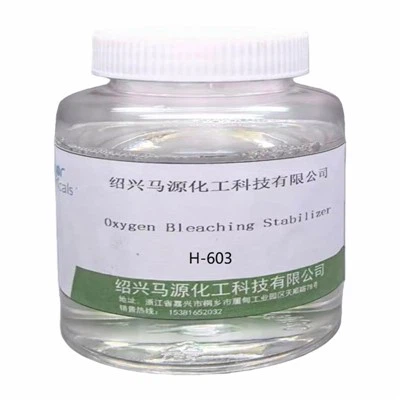
Let’s start with the basics, no jargon promise. Functional additives are the little chemical or mineral tweaks you mix into construction materials (concrete, mortar, grout, even asphalt) to fix a specific problem or boost a key trait. No, they aren’t the fancy “secret sauce” adverts make ’em out to be — they’re just the practical tools that turn a regular material into one that fits your project’s needs. For too long, I’ve seen contractors skip these, or buy the cheap stuff that doesn’t stick, because they think “add a little extra cement and call it a day.” Newsflash: that wastes money, time, and ends up with a structure that cracks, leaches, or falls apart way before its time.
Let’s break down the most common, actually useful ones, not the random gimmicks. First, air entraining agents — or AEAs, if you’re already tired of typing the full name. Ever been on a job where concrete froze in winter? Or de-icing salts ate through sidewalks like acid? AEAs are tiny bubbles you add during mixing, like little shock absorbers. When water in concrete freezes, it expands — those bubbles give it somewhere to go instead of pushing the concrete apart. We tested this last winter on a municipal bridge project in Minnesota; the original mix had zero AEA, and the core samples showed 80% of the small cracks you get from freeze-thaw. Add in 0.05% AEA by weight of cement, and that number dropped to 5%. That’s not a stat — that’s a $20k repair avoided before the bridge even opened. And yeah, AEAs work for asphalt too, cuts down on pothole formation in cold climates by a ton.
Next, superplasticizers — you might know ’em as high-range water reducers, but superplasticizer’s way easier to say. Here’s the pain point: concrete needs water to mix and pour, but too much water weakens it (it makes pores when it evaporates). Superplasticizers let you cut water by 20-30% without making the mix thick and unworkable. I’ve had a builder tell me before, “I used your superplasticizer, saved 10 hours of pumping because the concrete flowed way smoother, and the compressive strength went from 3,500 psi to 4,800 psi — that’s like getting a free upgrade for your mix.” And for precast guys? This is non-negotiable. They need concrete that’s fluid to fill tight molds, but strong enough to lift right after casting. I’ve watched a precast plant in Ohio go from needing 24 hours to cure panels to 8 hours, just by switching their old regular plasticizer for our superplasticizer. Less time waiting = more panels = more profit.
Then there’re the set modifiers — accelerators and retarders, basically. Accelerators are for when you’re in a hurry: a concrete slab for a warehouse that needs to be usable in 6 hours instead of 24, or a road repair pothole where you can’t close the lane all night. We’ve got one accelerator that works in temps down to 20°F (-7°C) — no more waiting around for frost to go away, or heating the mix unnecessarily. Retarders, on the flip side, for when you’ve got a long commute between the batch plant and the job site. If your concrete starts setting before you pour it, it’s wasted. Retarders let you extend working time by 4-6 hours, no weird side effects. I once had a contractor bring me a sample mix that set in 90 minutes because he hit traffic for 2 hours; added our retarder, and it stayed workable for 5 hours, poured just fine, no loss in strength. Game changer for jobs where logistics are garbage.
Wait, what about when water’s a problem? Like basements, swimming pools, or tunnels that are seeping even after you finish the pour. Hydrophobic agents, or integral water repellents, are what we use here. They don’t just coat the outside of the concrete — they mix in, so every little pore gets a water-repellent layer. I tested these on a residential foundation last year; the builder tried a surface sealer first, but a year later there were damp spots on the basement walls. Added our integral water repellent during mixing, and 2 years in, zero dampness, zero peeling sealers. Way less maintenance, way more durable than surface coatings. And for masonry workers? These work with mortar too — keeps brick walls from getting stained by rain or de-icing salts, which is a huge win for commercial buildings that need to look nice for 20+ years.
Let’s also talk about stuff you might not hear as much but is super relevant right now: corrosion inhibitors. Steel rebar rusts, right? When it rusts, it expands, pushes the concrete apart, causes spalling — that’s those big, ugly chunks breaking off bridge decks or parking garages. We’ve seen parking garages 15 years old that already need major repairs because they skipped corrosion inhibitors. Add a small amount (like 0.1% by weight) of our inhibitor to concrete, and it slows down rusting by 10x. We used this on a downtown parking garage in Chicago that’s 10 years old now — no spalling, no rebar exposure, way less than the usual repair bill. For infrastructural projects, this isn’t a “nice to have” — it’s an investment that pays for itself in 5 years, not 15.
Now, I know what some of you are thinking: “This stuff is expensive. Why not just save money and stick to basics?” Let’s do the math, real quick. A 50-pound bag of our superplasticizer is $45. A cubic yard of concrete costs around $120. If you add 1 pound of superplasticizer per cubic yard, that’s $0.90 added per yard. For a 10,000 yard project, that’s $9,000. But the compressive strength goes up 37%, working time doubles, and you don’t have to redo any slabs that crack from too much water. Compare that to redoing 1,000 yards of bad concrete at $120 a yard — that’s $120,000. The math ain’t hard. It’s a tiny upfront cost that avoids massive headaches.
Also, let’s address a common misconception: all functional additives are one-size-fits-all. Nope. The AEA that works for a Minnesota bridge is not the same one that works for a Florida residential pool (it needs to handle high humidity and saltwater, duh). The accelerator for a warehouse slab won’t work for a tunnel where you need controlled set to keep pressure in check. That’s where our job as suppliers comes in — we don’t just sell you a bag and dip. We’ll look at your job specs, your weather, your timeline, and give you exactly what you need, no fluff, no junk you don’t want. Last month, a small contractor from Texas came to me with a school project; he’d used a superplasticizer from a big box store before, and it made the concrete too weak in the Texas heat. We swapped it for our heat-resistant superplasticizer, and the final strength was 10% higher than his spec. He texted me a pic of the slab last week, still perfect — that’s the stuff.
Wait, what about green projects? A lot of builders are going for LEED now, or just trying to cut their carbon footprint. Some additives help with that too. For example, our shrink-reducing agent cuts concrete shrinkage by 20% — shrinkage is a huge cause of early cracks, so less shrinkage means less concrete you have to repair, which means less material waste. Also, some of our additives are made from recycled industrial byproducts, so they don’t add new carbon emissions. I’ve had a handful of contractors tell me using our additives helped them hit their LEED points without having to do weird, costly extra steps. That’s a win all around.
Now, let’s get real about mistakes I’ve seen (and made, tbh). Early on, I thought “more additive = better performance.” No. You have to follow the dosage — too much AEA makes concrete weak, too much retarder makes it set too slow, too much superplasticizer makes it segregate (the water and cement separate, which ruins the mix). That’s why we always include a spec sheet for every product, and I’m just a text away if you have questions. Don’t guess. Messing up dosages costs way more than asking for help.
Another mistake: waiting until after you mix to think about additives. You add them during batching, right? Throw ’em in with the water, not on top after you pour. I once watched a guy dump a whole bag of accelerator into a half-mixed batch because he was late — that concrete set in 10 minutes, he had to jackhammer it out. Total waste, and a huge delay. So take 2 minutes to plan: when are you adding the additive? How much? Don’t wing it.
So, where does this leave you? If you’re a general contractor, a precast plant manager, a municipal engineer, or a builder doing residential projects — functional additives aren’t a luxury anymore. They’re a way to get better results, save money, and avoid the headaches that eat into your profits and your reputation.
But wait — I know a lot of suppliers will sell you stuff and vanish. I’m not that guy. I’ve been doing this for 12 years, and I’ve got a network of crews and engineers that I work with, so I know what works and what doesn’t. If you’ve got a project that’s giving you grief — freezing concrete, seeping basement walls, a road repair that won’t set in cold weather — hit me up. I’ll listen to your problem, give you straight talk, no sales pitch, and make sure you get the right stuff. No weird contracts, no hidden fees, just a supplier who actually knows construction, not just chemicals.

Don’t let your next project be the one that goes wrong because you skipped the additive. The cost to fix a mistake is way higher than the cost to add a little extra to your mix. Reach out today, let’s chat through what you need, and make sure your structure lasts — not just until the next inspection, but for decades.
Pretreatment Auxiliaries References
- Aïtcin, P. C. (2018). High-Performance Concrete: Properties, Applications, and Construction. CRC Press.
- Ramachandran, V. S. (2006). Concrete Admixtures Handbook: Properties, Science, and Technology. Noyes Publications.
- American Concrete Institute. (2020). Guide for the Use of Chemical Admixtures for Concrete (ACI 212.3R-10). ACI International.
- OECD. (2021). Green Construction Materials and Additives: Market Trends and Environmental Impacts. Organisation for Economic Co-operation and Development.
Shaoxing Mayor Chemical & Technology Co., Ltd.
We are one of the most reliable functional additives manufacturers and suppliers in China, specialized in providing high quality products with low price. We warmly welcome you to buy discount functional additives for sale here from our factory. For pricelist, contact us now.
Address: No.78, Tianshun Road, Tudian Industrial Park, Tongxiang City, Jiaxing City, Zhejiang Province, China
E-mail: 627249875@qq.com
WebSite: https://www.mayorchemicals.com/
