If you’ve ever stood at a jewelry designer’s bench, watching a craftsman carve tiny, intricate details—like the delicate filigree on a vintage engagement ring setting or the personalized engraving of a family name on a pendant—you know that custom jewelry is equal parts art and precision. For decades, that process relied on hand-carved wax prototypes: a meticulous, labor-intensive step that meant custom pieces often came with long wait times and steep price tags. Now, as a 3D printing wax material supplier, I hear the same question from jewelers, designers, and even small-batch retail owners all the time: Is wax 3D printing actually suitable for custom jewelry? 3D Printing Wax Material
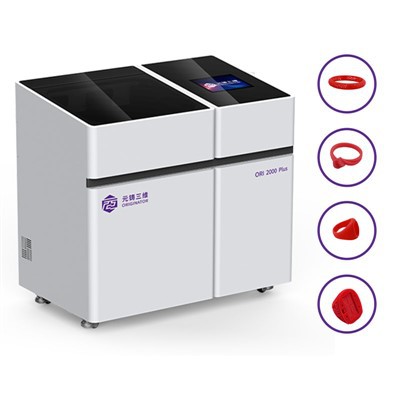
I don’t answer this with a sales pitch right away. I answer it with the stories of the customers who’ve made the switch. Last year, I worked with a small jewelry studio in Portland that specialized in heirloom pieces. They’d spent 12+ hours hand-carving each wax mold for their wedding band collections, often scrapping a piece entirely if they messed up a tiny notch in the band or a curve in a pearl setting. Within six months of switching to our high-precision wax 3D printing materials, they cut their prototyping time by 70% and reduced scrap rates from 22% to less than 3%. That’s not a fluke—it’s the real impact wax 3D printing has had on the jewelry industry, but it’s not a one-size-fits-all solution. Let’s break down what makes it work for custom jewelry, where it falls short, and how to tell if it’s the right fit for your workshop.
First, let’s get one thing straight: when we talk about wax 3D printing for jewelry, we’re not talking about the cheap desktop printers you might use for school projects. Those use PLA or ABS, which are brittle, leave residue when melted, and aren’t engineered for the high standards of lost-wax casting—the process almost all jewelry makers use to turn a wax mold into metal (gold, silver, platinum, etc.). The wax materials I supply are formulated specifically for precision 3D printing: they have controlled melting points, minimal ash content when burned out, and enough structural integrity to hold tiny details. That’s non-negotiable for jewelry, where a 0.5mm intricate design needs to survive not just the 3D printing process, but also the casting step.
For custom jewelry, the biggest win is detail accuracy. Hand-carving a wax mold is limited by how steady a person’s hand is, and even the most skilled craftspeople can’t replicate tiny, repeated details across multiple pieces with perfect consistency. Let’s take a custom engagement ring with a micro-pavé setting: that’s 10+ tiny prongs holding 1mm diamonds, each spaced exactly 0.3mm apart. Hand-carving each prong would take hours, and the spacing would vary slightly from one ring to the next. With wax 3D printing, those prongs can be printed as a single piece of wax, with spacing accurate to ±0.05mm. That consistency isn’t just about looks—it’s about quality. A customer who orders two matching anniversary bands wants them to look identical; a jeweler who uses consistent molds doesn’t have to adjust their casting process for every custom piece.
Another game-changer for custom work is design flexibility. Custom jewelry is all about personalization: a customer might want to combine their grandparent’s birthstone with a modern twisted band, or add a hidden engraving on the inside of a pendant that only they know about. Hand-carving a custom design from scratch can take days, and if the customer asks for a last-minute tweak—like moving the center stone 2mm to the left—you’re back to square one. Wax 3D printing lets you iterate quickly. You can print a draft mold in hours, show it to the customer for approval, adjust the digital design in your CAD software, and reprint it without throwing away hours of hand-carving work. A client in Chicago who designs custom memorial jewelry works with terminal patients to create pieces that include a tiny amount of cremated ash embedded in the metal. Each piece is one-of-a-kind, and being able to adjust the size and shape of the ash compartment digitally and print a new wax mold in a day cut their order turnaround time from 4 weeks to 7 days. That’s the kind of speed that makes custom jewelry accessible to more people, not just those who can afford to wait months for a piece.
But here’s the part no one talks about enough: wax 3D printing isn’t for every custom jewelry project. Let’s get real about the limitations, because honest advice is the kind that builds long-term partnerships, not one-off sales. First, there’s the learning curve. If you’ve been hand-carving wax for 20 years, switching to CAD and 3D printing means unlearning some habits and learning new ones. I’ve had jeweler clients come to me frustrated after their first few prints, because they didn’t account for wax shrinkage during printing or casting. Jewelry wax shrinks about 1-2% when it cools after printing, and another small percentage when it’s burned out of the mold before casting. That means you have to adjust your digital design to compensate for shrinkage—a step that takes time to master. It’s not rocket science, but it’s not something you pick up in an hour-long YouTube video.
Then there’s the cost factor for very small custom runs. If you’re making a one-of-a-kind piece for a high-end client who’s willing to pay $5,000 for a hand-carved ring, wax 3D printing might save you time, but it might not be drastically cheaper. The real savings come when you’re making 5 or more custom pieces of the same design, like a set of bridesmaid rings. For single, ultra-complex pieces—like a tiny, 10mm wide locket with 20 separate engravings on the inside and outside—hand-carving might still give a more organic feel that some clients prefer. I always tell clients: if your custom work is focused on ultra-unique, handcrafted pieces for a luxury market and price point, wax 3D printing is a tool, not a replacement for your carving skills. But if you’re making 10+ of the same custom design, or need consistent details across multiple pieces, it’s a game-changer.
Another point that often comes up is casting quality. The wax material you use is everything here. I’ve had clients come to me with stories of failed casts using wax from a cheap supply store: ash residue left from burning out the wax, which causes bubbles in the metal; or wax that melts unevenly, leading to distorted mold shapes during casting. The wax materials I supply are formulated to burn out completely at low temperatures—around 1600°F—leaving less than 0.1% ash. That means no bubbles, no distorted molds, and a smooth, high-quality cast metal piece. For custom jewelry, where every flaw is noticeable, that consistency in casting is non-negotiable. I remember a client who switched to our wax after a string of failed casts with another brand; his scrap rate dropped from 15% to less than 2%, and his monthly metal waste cost went down by over $1,200. That’s money he can pass on to his customers or invest in growing his business.
Now, let’s talk about the environmental side, which is a big deal for many modern jewelry buyers. The traditional lost-wax carving process produces a lot of wax scraps—small leftover pieces from carving, unused wax blocks, damaged molds. Wax 3D printing only uses the exact amount of wax needed for the mold, so there’s very little waste. For small workshops that care about their carbon footprint and their waste costs, that’s a huge plus. I recently worked with a brand that sells eco-friendly custom jewelry; they advertised that all their molds are 3D printed with minimal wax waste, and that became a selling point for their customers, who were willing to pay 10% more for pieces that aligned with their sustainability values.
So, is wax 3D printing suitable for custom jewelry? The short answer is: yes, for most custom jewelry projects, especially when you use the right wax materials and understand the process. But it’s not a replacement for craftsmanship—it’s a tool that lets jewelers do what they do best: create beautiful, personalized pieces, while cutting down on time, waste, and costs.
If you’re a jeweler or designer who’s been thinking about making the switch but aren’t sure where to start, my advice is to test it with a small project. Print a few wax molds for simple designs, compare them to hand-carved ones, and see how they work with your casting process. The right wax supplier will help you every step of the way—from adjusting your digital designs for shrinkage, to troubleshooting casting issues, to making sure you have the right material for your specific printer and needs.
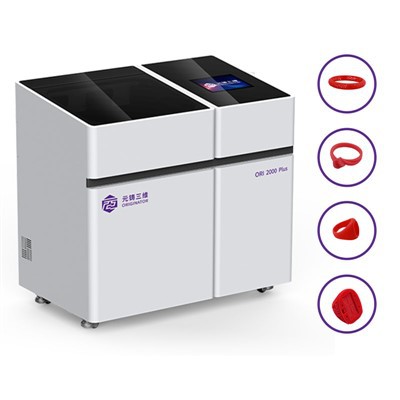
At the end of the day, custom jewelry is about personal connection: a ring that marks an engagement, a pendant that honors a loved one, a bracelet that matches a memory. Wax 3D printing doesn’t take that away—it makes it easier to turn those ideas into tangible pieces, faster, more consistently, and for more people. If you’re ready to explore how our wax 3D printing materials can work for your custom jewelry business, reach out to our team to discuss your specific needs, test samples, or learn more about how we can help you streamline your process.
Jewelry 3D Printer References
- Jewelry Manufacturing and the Impact of 3D Printing: A Market Analysis, 2022, International Jewelry Industry Association
- Lost-Wax Casting Material Properties for Precision Applications, Journal of Manufacturing Processes, Vol. 78, 2022
- Sustainability in Custom Jewelry Production: A Case Study of 3D Printed Wax Molds, Journal of Sustainable Materials and Technologies, Vol. 32, 2022
- Precision Tolerances in Wax 3D Printing for Jewelry, Additive Manufacturing, Vol. 49, 2022
Hangzhou Originator 3D Technology Co., Ltd.
Hangzhou Originator 3D Technology Co., Ltd. is one of the most experienced 3d printing wax material manufacturers and suppliers in China. With abundant experience, we warmly welcome you to wholesale high quality 3d printing wax material made in China here from our factory. Contact us for more details.
Address: Room 403, Building 2, Block B, Heda Incubation Park, No.452, 6th Avenue, Xiasha, Qiantang District, Hangzhou, Zhejiang, China
E-mail: Sales@originator3d.com
WebSite: https://www.originator3d.com/
