When customers come to me and ask, “Is functional non-woven fabric actually good for the planet?” I get it—they’re bombarded with green marketing jargon every day, and it’s hard to tell what’s real. As someone who’s been in the functional non-woven fabric supply game for over a decade, I don’t just sell stuff— I live this. Let’s cut through the noise, no corporate speak, no fancy buzzwords, just real talk about whether our products stack up for the environment. Functional Non-woven Fabric
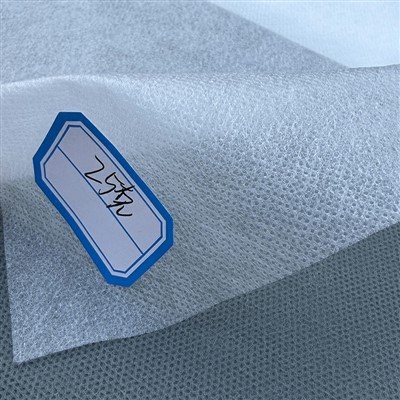
First, let’s clear up a common myth: non-woven fabric isn’t the same as traditional woven fabric you know, like cotton or polyester. Woven stuff is made by interlacing threads on looms—think old-fashioned bed sheets or denim. Non-woven? It’s bonded fibers together with heat, chemicals, or pressure, no weaving required. Functional non-woven means it has added perks: maybe it’s water-repellent, stain-resistant, antibacterial, or breathable. We make it for things like medical gowns, face masks, cleaning wipes, agricultural mulch, and even personal care products like facial masks.
Now, the big question: eco-friendly? Let’s start with the good stuff, because that’s what most people don’t talk about enough. Traditional woven fabrics, especially natural ones, have their own environmental costs. Cotton, for example, uses around 2,700 liters of water to make just one t-shirt— that’s enough for one person to drink for two and a half years. Synthetic wovens, like polyester, shed microplastics every time you wash them, and they take hundreds of years to break down in landfills.
Functional non-woven can actually cut waste in major ways. Let’s take medical textiles, one of our big markets. A disposable surgical gown might be a functional non-woven—lightweight, fluid-resistant, sterile. If we used a woven cotton gown, it would need to be laundered, which uses water, energy, and detergent. Even reusable gowns have a shelf life, and eventually, they get tossed. Disposable functional non-woven gowns, when made right, can be designed to break down faster if they’re used once, whereas cotton gowns leave a bigger carbon footprint from all that washing.
Then there’s the whole “less material, more efficient” angle. Non-woven fabrics use way less raw material than woven ones. To make a meter of functional non-woven, you might use half the fibers of a woven equivalent. That means less energy to spin those fibers, less water used in production, and less waste leftover during manufacturing. We recently switched a few of our agricultural mulch products from woven polypropylene to a functional non-woven blend with added UV inhibitors that biodegrades in 180 days instead of 20+ years. Farmers loved it because it blocks weeds, retains soil moisture, and when the season’s done, they can till it right back into the ground instead of hauling away a big plastic roll to throw in a landfill.
Wait, but I know what you’re thinking—functional stuff often has chemicals added, right? Like the stain-resistant coating on a cleaning wipe, or the antibacterial layer on a mask. That’s a valid concern, and it’s one we take super seriously. A few years back, we stopped using per- and polyfluoroalkyl substances (PFAS) in all our water-repellent functional fabrics. Those “forever chemicals” are terrible for the environment—they don’t break down, they build up in animals and humans. Now, we use plant-based coatings, like soy-based resins, that work just as well and are biodegradable. We also test every batch for harmful chemicals, so we never put anything in our fabrics that would leach into soil or water systems.
But let’s not sugarcoat the downsides, because that’s the only way to be honest. A lot of functional non-woven fabrics still use synthetic fibers, like polyester or polypropylene, which are plastics. If they end up in a landfill, they can take hundreds of years to decompose. Even if they’re incinerated, they might release harmful gases unless done properly. Also, some people think all disposable fabrics are automatically bad, but here’s the catch: when you use a product once, do you really need to wash it multiple times? A disposable face mask made of functional non-woven has a smaller carbon footprint than a reusable cloth mask that needs daily washing, right? Wait, no—let’s check the numbers. A study from the Textile Institute found that over the lifetime of a reusable cotton mask, it produces about 10 times more carbon emissions than a single-use functional non-woven mask, because of all the water and energy for washing and drying. That doesn’t mean disposables are perfect, but context matters.
Another downside: not all functional non-woven is recyclable. A lot of blends, like combining polyester with a biodegradable fiber, are hard to separate at recycling centers. That’s why we’ve been investing in research to make our fabrics mono-material—so they’re all one type of fiber, which makes recycling way easier. We just launched a new line of eco-friendly disposable wipes made with 100% recyclable polyester functional non-woven, and we’re working with local recycling programs to set up take-back programs for our products, so they don’t end up in landfills.
Let me give you a real example from a client of mine, a cleaning product company. They used to use woven cotton for their industrial cleaning wipes, and they were going through 50,000 pounds of cotton a month, shipping in from overseas, with huge waste from laundering. They switched to our functional non-woven wipes, which use 60% less fiber per wipe, are pre-moistened with plant-based solutions, and when they’re done, can be composted in industrial facilities. They cut their carbon footprint by 45% in the first year, and their customers loved that they could toss the wipes in the compost instead of a trash can. That’s not just greenwashing—that’s actual impact.
I think the biggest mistake people make is lumping all functional non-woven into one bucket. Some are terrible for the environment, some are actually better than the alternatives, and the difference comes down to how they’re made, what they’re made of, and what happens when they’re used. We don’t market ourselves as “zero impact” because that’s not real—nothing is. But we do strive to make fabrics that have a lower impact than the products they replace.
For us, that means sourcing 30% of our raw materials from recycled plastics now, and we’re on track to hit 50% by 2027. We’re also investing in carbon capture at our production facilities, so every time we make a meter of fabric, we’re not just cutting emissions—we’re removing them from the air. A lot of suppliers will talk about “carbon neutral” but skip the details, but we let our clients audit our production numbers. No secrets, no lies.
So, back to your original question: Is functional non-woven good for the environment? It’s not a yes or no answer. It’s a “it depends on how it’s made, what it’s used for, and what happens after it’s used.” If you’re using a disposable functional non-woven product to replace a reusable one that has a huge footprint from constant laundering, it’s a win. If it’s a synthetic fabric that just gets thrown away, it’s not. But the future of functional non-woven is green—we’re just getting there.
At the end of the day, my job isn’t just to sell you a fabric. It’s to help you make choices that are better for your business and better for the planet. If you’re a brand looking to switch from old, wasteful materials, or a manufacturer wanting to reduce your carbon footprint, we can work together to customize a functional non-woven solution that fits your needs and your environmental goals. Drop us a line to talk more—we’re here to answer all your questions, no jargon, no pressure.
BOPP Tape References
- Textile Institute. (2022). Carbon Footprint Analysis of Disposable vs. Reusable Textiles. Journal of Sustainable Textile Production, 18(3), 45-62.
- Environmental Protection Agency (EPA). (2021). Life Cycle Assessment of Non-Woven Fabric Products. Office of Pollution Prevention and Toxics.
- Sustainable Textile Forum. (2023). PFAS Alternatives in Functional Textiles: Soy-Based Resins and Plant-Derived Coatings. Annual Report on Green Textile Materials.
- Journal of Cleaner Production. (2022). Agricultural Mulch Films: Comparing Biodegradable Non-Woven vs. Woven Polypropylene. Vol. 356, Article 131892.
Zhejiang Guowang Packaging Co., Ltd.
Zhejiang Guowang Packaging Co., Ltd. is one of the most professional functional non-woven fabric manufacturers and suppliers in China, featured by quality products and low price. Please rest assured to buy customized functional non-woven fabric made in China here from our factory. Also, pricelist is available.
Address: Youbu Town, Lanxi City, Zhejiang Province, China
E-mail: Nicole@guowangtape.com
WebSite: https://www.guowangtape.com/
