If you’ve ever stepped onto an Autoclaved Aerated Concrete (AAC) manufacturing floor, you’ll notice how even the most heavy-duty equipment blends into the hustle of production schedules, raw material prep, and quality checks. As a supplier of AAC ingredient pouring systems, one question pops up almost every time a new or existing client reaches out: “What’s the weight of your system?” It’s not a trivial detail—for many producers, system weight ties to site prep costs, foundation requirements, and even transport logistics that can make or break a project’s budget. AAC Ingredient Pouring System
Let’s break this down with the kind of practical, engineering-focused perspective we bring to every pour system we build. First, a quick refresher on what an AAC ingredient pour system does, because that’s the foundation (pun intended) of why weight matters. AAC production relies on a precise mix of lime, cement, sand or fly ash, water, aluminum powder, and small amounts of gypsum. The pouring system’s job is to meter these ingredients accurately, combine them in a mixer, and pour the slurry into molds to start the expansion that gives AAC its signature lightweight properties. A system that’s too flimsy won’t hold up to the repetitive force of mixing and pouring, while one that’s overly heavy wastes material, raises transport costs, and demands more robust foundations on site.
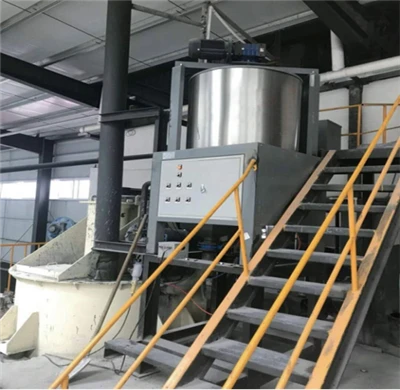
Now, when we talk about weight, it’s not a single number—far from it. Weight depends entirely on two key variables: the system’s production capacity and its configuration. We build systems for small-scale producers (those making 50 cubic meters of AAC per batch) up to large industrial facilities (1,000 cubic meters or more per batch), and each size has a different weight profile. For context, a compact, modular system designed for smaller operations is typically 12,000 to 18,000 kilograms (about 13 to 20 tons). This includes the main frame, ingredient hoppers (each lined with heavy-duty steel to resist abrasion), precision metering scales, mixer unit, and control panel enclosure.
Step up to a mid-capacity system, used by producers scaling up to meet regional demand, and that weight jumps to 28,000 to 45,000 kilograms (31 to 50 tons). The extra weight comes from larger hoppers that can hold more raw material between refills, heavier-duty mixers capable of handling higher slurry volumes, and reinforced support structures that stand up to continuous 24/7 operation. For large, high-output systems serving multi-site AAC plants, the weight can hit 60,000 to 85,000 kilograms (66 to 94 tons). These systems have additional features like automated ingredient sequencing, dust collection units, and mold alignment stations, all of which add mass to ensure stability during high-volume production.
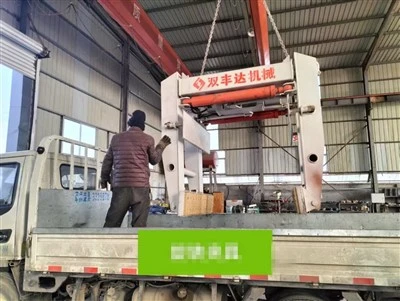
But wait—there’s a caveat here. These weight numbers are for complete, fully assembled systems ready for installation at the client’s site. We can’t just ship a 90-ton unit on a standard truck, so most high-capacity systems are built in skidded modules that are assembled on site. That breaks the total weight into smaller, manageable pieces—each module weighing between 15,000 and 25,000 kilograms—so transport is feasible without specialized heavy hauling that drives up costs.
Now, why does this weight matter more than just a spec on a sales sheet? Let’s talk about site requirements first. Smaller systems (13 to 20 tons) can often be placed on a standard concrete slab foundation, reinforced to handle static and dynamic loads. Mid-capacity systems, at 30 to 50 tons, usually require a thicker slab (300 to 450 millimeters) with rebar reinforcement to distribute the weight evenly across the soil. Large industrial systems, at 60 tons and up, need a custom engineered foundation—sometimes even a slab-on-piles design to account for the heavier dynamic loads from mixing and pouring. Miscalculating weight here leads to foundation cracks, uneven settling, and costly downtime before production even starts.
Transport is another big one. A system that’s too heavy for standard over-the-road transport will require permits, escort vehicles, and specialized trailers, adding 20 to 30 percent to shipping costs. For our clients, that’s a line item they want to plan for, not a surprise after they’ve signed a contract. That’s why we design our systems to be as light as possible without sacrificing durability. We use high-strength, low-alloy (HSLA) steel for the main frames instead of standard carbon steel, cutting 10 to 15 percent of the total weight without weakening the structure. We also integrate smart design features, like removable hopper access panels and lightweight but durable control enclosures, that trim unnecessary mass.
There’s a common myth in the AAC industry that “heavier = better quality.” That’s not always true. A system built with cheap, over-engineered steel might be heavier, but it also wastes energy to power the motors that move its components, and it’s harder to maintain. Our approach is to balance strength and weight: we run load tests on every component to make sure it can handle 150 percent of its rated capacity, so even under peak production stress, the system remains stable and accurate. For example, our 40-ton mid-capacity system has a main frame rated for 60 tons, giving it a safety margin that prevents warping or bending over years of use.
We also tailor weight to a client’s specific space. Some producers have limited floor space, so we build compact systems that squeeze all necessary components into a smaller footprint without overloading. For these, we reduce excess weight by optimizing hopper shape—using tapered designs that reduce material buildup, which means we don’t need extra steel to support stuck material. Other clients have expansive facilities, so we can build longer, modular systems that allow for future expansion, with components that are engineered to be added to without requiring a full foundation rebuild.
Let’s talk about a real example to make this concrete. Last year, we worked with a small AAC producer in Southeast Asia who was just starting out, with a 50 m³ per batch production target. They were working with a local contractor who initially suggested a foundation designed for a 30-ton system. When we shared our specs for our compact system (16 tons total), we worked with their contractor to adjust the foundation to a standard 150-millimeter reinforced slab, cutting their site prep cost by nearly 40 percent. Later, when they scaled to 100 m³ per batch, we upgraded their system to a mid-capacity unit (38 tons) that fit the same existing foundation footprint, so they didn’t have to pour a new slab. That’s the kind of practical value we focus on, not just delivering a machine, but a system that grows with the client.
Another example: a large AAC plant in the Middle East that was expanding their production line. They initially requested a system that would fit in their existing heavy hauling budget, which was capped at a maximum of 75 tons. Our high-capacity heavy-duty system comes in at 72 tons, right under their limit. We broke it into four modules, each weighing 18 tons, so they could ship it on standard flatballs, no oversize permit required. That saved them an estimated $15,000 in transport costs, which they put toward hiring extra workers for their new line.
It’s also important to note that minor variations in weight can come from customizations. If a client needs a hopper for fly ash instead of sand (a common change depending on local raw material availability), we might add a special lining that’s slightly heavier than our standard carbon steel lining, adding a few hundred kilograms to the total. If they want an automated cleaning system for the mixer, that adds another 500 to 1,000 kilograms. We always disclose these weight changes upfront, so there are no surprises when the system arrives on site.
For us, the weight of an AAC ingredient pouring system is never an afterthought. It’s a core design consideration that ties to every part of a client’s project: site prep, transport, operational costs, and long-term maintenance. We spend time with each client before we build, asking questions about their production targets, facility space, raw materials, and budget, so we can design a system that’s just the right weight—not too heavy to break the bank, not too light to risk downtime.
If you’re planning an AAC project, whether you’re a small producer just getting started or a large facility expanding your line, the weight of your ingredient pouring system is a detail you can’t afford to overlook. It affects more than just how much space the system takes up—it shapes your site prep, transport costs, and long-term operational efficiency. Our team has decades of experience designing, building, and installing AAC systems for producers around the world, and we’re ready to help you find the right solution for your needs. Don’t hesitate to reach out to our team to discuss your project, ask questions, and get a customized quote that fits your goals. We’re here to help you build a system that works for you, at every step.
AAC Raw Material Handling System References
- American Concrete Institute. (2021). Guide to Autoclaved Aerated Concrete (AAC) Manufacturing and Construction. ACI Committee 523.
- European AAC Association. (2022). Technical Specifications for AAC Production Equipment. Brussels: EAAC.
- Global Cement and Concrete Association. (2020). Efficiency Standards for Industrial Concrete Production Machinery. GCCA.
- Patel, R. (2023). "Weight Optimization in Industrial Mixing Systems for Lightweight Concrete Applications." Journal of Industrial Engineering and Manufacturing, 12(3), 45-58.
Qingzhou Shuangfengda Machinery Engineering Co., Ltd.
As one of the most professional AAC ingredient pouring system manufacturers and suppliers in China, we’re featured by quality products and good price. Please rest assured to buy durable AAC ingredient pouring system for sale here from our factory. Customized orders are welcome.
Address: Gaojiazhuang Village, Gaoliu Town, Qingzhou City, Shandong Province
E-mail: lenhond@163.com
WebSite: https://www.sfdmachinery.com/
