If you’re in the beverage industry or just getting into packaging for bottled water, you’ve probably found yourself asking: “How much water can a filling machine actually crank out in an hour?” That’s a question I get multiple times a week from customers, potential clients, even friends who’ve dabbled in small-scale production. As someone who’s been selling water filling machines for over a decade, I can tell you the answer isn’t a one-size-fits-all number—but breaking it down makes it way easier to wrap your head around. Water Filling Machine
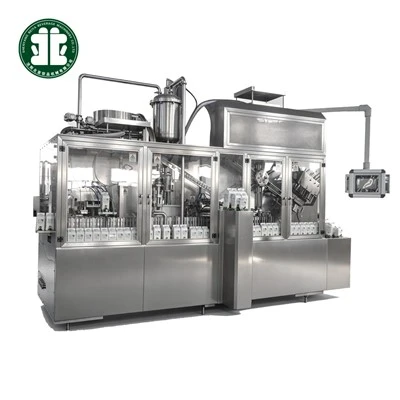
First, let’s start with the basics: what’s a “typical” machine, anyway? Not all water filling machines are the same, right? A small shop making 500ml bottles for local cafes is going to need something way different than a big brand shipping 20L jugs nationwide. I’ve seen machines that can barely handle 1,000 bottles an hour (that’s the super small, semi-automatic ones for startups) and others that push over 40,000 bottles in the same 60 minutes. That range is huge, so let’s break it down by machine type because that’s where most of the capacity confusion comes from.
Let’s start with semi-automatic machines. These are the ones we sell to folks who are just getting started—you don’t need a whole crew of engineers, just one or two people to load bottles, get the machine set, and unload filled ones. Semi-automatic water fillers usually top out between 1,000 and 6,000 bottles per hour (BPH) for standard 500ml or 1L bottles. Why the range here? It depends on how many filling stations the machine has. A basic semi-automatic might have 4 filling heads, so it can process a bottle every 10 seconds. Add a few more heads, and you’re knocking out a bottle every 2 or 3 seconds, pushing that number up. I remember a client last year who ran a small farm stand and bought a 3,000 BPH semi-automatic—perfect for their weekend crowds, no need to hire extra staff just for filling. It’s affordable, easy to use, and works great for low-volume, local stuff.
Next up: automatic inline filling machines. These are the workhorses for mid-sized operations—think a brand that’s distributing across a few states, not the whole country. Inline machines are fully automated, so you just feed bottles in, and they cap, label, and fill nonstop without a ton of manual work. Their capacity usually lands between 6,000 and 20,000 BPH. Again, it’s all about the number of filling heads and how fast the conveyor moves. I had a customer who had a small juice brand that added water to their line—they went from a 5,000 BPH semi to a 12,000 BPH inline, and that was just enough to keep up with orders from grocery stores in the region. The inline machine is worth the investment once you’re outgrowing the semi-automatic, no question.
Then there’s the big league: rotary water filling machines. These are the high-speed lines for major brands—Dasani, Aquafina, that kind of thing. Rotary machines spin bottles around a central turret, with multiple filling heads rotating with them, so they can crank out way more in less time. Most high-volume rotary fillers have a capacity of 20,000 to 40,000 BPH, and I’ve even seen custom ones that hit 50,000 BPH for large-scale operations. Now, full disclosure: these aren’t cheap, and they need a solid space to run—like a warehouse with the electrical and water hookup to handle that kind of speed. But if you’re shipping millions of bottles a month, that’s the only way to do it efficiently. Last year, we installed a rotary line for a regional brand that expanded into 10 states—they went from 15,000 BPH to 35,000, and they haven’t looked back.
Wait a second, though—capacity isn’t just about the machine itself. There are a bunch of other factors that can make that number go up or down, and I see customers overlook these all the time. Let’s talk about bottle size first. A 500ml bottle is way easier to fill fast than a 5L jug, right? Our 3,000 BPH machine is for standard 1L bottles—if you put a 2L bottle on it, that number drops to around 1,500 BPH because each bottle is bigger, so you can’t fit as many through the line. Same with small bottles: a 200ml mini water bottle might push that same 3,000 BPH machine to 4,000, just because it’s smaller, fits more on the conveyor.
Then there’s the type of water you’re filling. Wait, that sounds weird, but hear me out. If you’re still water, no carbonation, it flows super easily through the filling heads—so the machine can fill and seal faster. If it’s sparkling water, you have to be way more careful not to overfill and make the bubbles fizz out, so that slows things down a little. We usually tell customers to knock 5-10% off the BPH number if they’re doing sparkling or flavored water, just to account for that extra care.
Also, line downtime matters. No machine runs 100% of the time, right? If a bottle jams on the conveyor, or a filling head clogs, or you have to change between bottle sizes, that cuts into capacity. When we quote a machine to a customer, we don’t just give the maximum BPH—we talk about “actual operating capacity,” which is usually 80-90% of the peak. So that 12,000 BPH inline machine I mentioned earlier? It’s not spitting out 12,000 bottles every single hour, it’s more like 10,000 because of those little stops and starts. That’s a number you can actually rely on, not just a theoretical maximum that only works if everything goes perfect.
Another thing: if you’re doing jugs instead of single-serve bottles, that’s a whole different ballgame. The water filling machines for 5-gallon or 3-gallon jugs are way different than the ones for small plastic bottles. Their capacity is way lower—usually between 200 and 1,200 jugs per hour. A 5-gallon jug is huge, so even a fast machine can only handle a few hundred an hour. I had a client who owned a water delivery service, and they started with a 400 jug per hour semi-automatic machine, then upgraded to an 800 BPH automatic one when their delivery area doubled. That makes total sense—you don’t need a high-speed rotary line for big jugs, they’re too bulky.
Wait, let’s make this relatable. Let’s say you’re a startup with a $50k budget, looking to make 500ml bottled water for local farmers markets and small cafes. What machine makes sense for you? A semi-automatic in the 2,000-3,000 BPH range. That’s enough to make 12,000-18,000 bottles a day if you run 8 hours—way more than a small market would need on a Saturday, and just enough for weekdays too. If you’re a mid-sized brand doing 100,000 bottles a month, that’s about 12,500 a week, so an inline machine in the 8,000-12,000 BPH range would let you knock that out in 10 hours, no overtime needed. And if you’re a big brand doing 1 million bottles a month? You’ll want that rotary line cranking 25,000+ BPH, which would take you less than 40 hours a month to produce—way more efficient than a smaller machine.
I’ve seen so many people get stuck on the maximum BPH number, but that’s the wrong way to look at it. A 10,000 BPH machine is useless for a guy making 1,000 bottles a week—too expensive, too much space, too complicated. On the flip side, a 3,000 BPH semi is way too slow for a brand that needs 50,000 bottles a week. The key is matching the machine’s capacity to your actual production needs, not the biggest number you can find online.
Let me also clear up a common myth: more filling heads don’t always mean better capacity. If you have 10 filling heads but your conveyor is only moving slow enough to support 5, you’re wasting 5 heads and the extra money you spent on them. We always audit a customer’s space, their order volume, their bottle size, before we even suggest a machine—we don’t just push the highest BPH one because it sounds good. Last quarter, a customer came to us asking for a 15,000 BPH inline, but after talking, we realized they only needed 7,000 a week, so we pointed them to a 4,000 BPH semi-automatic that saved them $20k. They’ve been thrilled ever since.
Another thing to consider: future growth. If you’re just starting out but you think you’ll double your orders in a year, it might make sense to buy a machine with a little more capacity than you need right now, instead of upgrading in 12 months. That saves you the hassle of switching lines, retraining staff, and extra downtime. I had a customer a few years ago who started with a 2,500 BPH semi, then in 18 months, they hit a point where they had to upgrade—turns out, they could have bumped up to a 5,000 BPH inline for only $5k more than the semi they bought, so they could’ve skipped the first upgrade. That’s a mistake I see startups make all the time: buying too small, then having to replace a machine way sooner than they should.
Now, let’s talk about reliability, because that ties back to capacity. A machine that’s rated for 10,000 BPH but breaks down every other hour isn’t actually going to produce 10,000 bottles an hour. We build all our water filling machines with heavy-duty parts, easy-to-clean components (super important for food and beverage, no one wants dirty water), and simple controls so your staff doesn’t need a engineering degree to run it. We test every machine before it leaves our warehouse, so you know that BPH number we quote is the actual number you’ll get, not a pie-in-the-sky estimate.
At the end of the day, there’s no “one typical” capacity for a water filling machine—it all depends on what you’re making, how much you need, and how much space and budget you have. But the most important thing is to not just look at the BPH number. Ask yourself: how many bottles do I need to make in a day? Do I have space for a big line? Am I going to need to scale up soon? Those questions are way more important than just “what’s the fastest machine?”

If you’re in the market for a water filling machine and you’re still not sure what capacity makes sense for you, hit us up to chat. We don’t push the most expensive machine, we listen to your needs and find something that fits. No sales pitches, no confusing jargon, just straight talk about what’ll work for your operation.
Rice Packaging Machine References
- Food and Beverage Packaging Association. (2022). Industrial Bottling Equipment Capacity Guidelines.
- Machinery Lubrication Magazine. (2021). Factors Affecting Liquid Filling Machine Output.
- International Bottled Water Association. (2023. Water Packaging Equipment Performance Standards.
Shenyang Beiya Beverage Machinery Co., Ltd.
With abundant experience, we are one of the most professional water filling machine manufacturers and suppliers in China. If you’re going to buy customized water filling machine made in China, welcome to get quotation from our factory. For price consultation, contact us.
Address: No. 2-1, Tongling Street, Yuhong District, Shenyang City, Liaoning Province, China
E-mail: market@sybeiya.com
WebSite: https://www.chinafilling.com/
