Hey everyone, it’s Jake from the TV mounting brackets team here—today I want to talk about a question I get at least once a week from customers: “Do TV mounting brackets affect my TV’s warranty?” It’s such a common concern, and honestly, it’s one of those topics where there’s a lot of misinformation floating around online, from forum rants to random blog posts that twist warranty fine print to fit their own agenda. As someone who’s spent the last six years helping customers pick the right brackets, troubleshoot installations, and navigate warranty claims, I’m here to break this down plainly, no jargon, no hidden agendas. TV Mounting Brackets
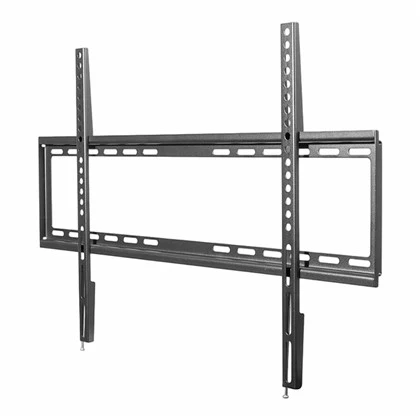
Let me start by getting one thing straight: the short answer is no—but only if you do it right. A lot of people hear horror stories where their TV manufacturer denied a claim because they used a third-party bracket, and they jump to the conclusion that all brackets will void your warranty. That’s not true. Most TV manufacturers don’t care if you use a bracket as long as it’s installed correctly, uses the right hardware, and meets the weight and size requirements for your TV. The problem comes when people cut corners—using a flimsy no-name bracket from a dollar store, skipping the proper mounting hardware, or drilling into drywall instead of studs when they should’ve used wall anchors rated for their TV’s weight. That’s when the TV could get damaged, and that’s when manufacturers will say “sorry, this is your fault, not ours.”
I’ve seen this play out firsthand, too. Last year, a customer came to me panicking because his 65-inch OLED TV had fallen off the wall a week after he mounted it. He’d used a cheap bracket he bought from a big-box store’s clearance section, and the bracket’s VESA holes didn’t line up right with his TV. When he reached out to the TV manufacturer for a warranty claim, they denied it because they said “third-party hardware caused damage.” He came to me, and we looked at the bracket—its load rating was listed as 50 pounds, but his TV alone was 58 pounds. That’s a mismatch, and that’s the mistake he made. If he’d used a bracket rated for at least twice his TV’s weight (which is what I always recommend), that would’ve never happened.
Now, let’s get into the nitty-gritty of why manufacturers have these rules in the first place. TV warranties are designed to cover defects in the TV itself—like a dead pixel, a faulty panel, or a malfunctioning power supply. They don’t cover damage that happens because of improper installation or hardware failure. So if your TV just stops working out of the box, that’s on the manufacturer. If your TV falls off the wall because you used a bracket that can’t support its weight, that’s on you. It’s not a voided warranty because of the bracket—it’s a voided warranty because of incorrect use of the bracket.
I’ve also had customers ask me, “What if I use a bracket from the manufacturer themselves?” Let’s be real—manufacturer-branded brackets are often marked up way higher than third-party options, and there’s nothing special about them that makes them safer or warranty-friendly. A reputable third-party bracket that meets VESA standards (that’s the Video Electronics Standards Association, the group that sets the guidelines for TV bracket sizes and mounting holes) is just as good, if not better, than a manufacturer’s overpriced bracket. VESA compliance is key here—all TVs come with a VESA pattern, which is the distance between the four mounting holes on the back. Any good bracket will list its VESA compatibility, so you just need to match that number to your TV. That’s non-negotiable. If your bracket doesn’t match your TV’s VESA pattern, don’t use it. Period.
Another common myth I hear: drilling into your wall will void your warranty. No, that’s not true either. Most TVs don’t come with any rule against mounting, as long as the installation is done correctly. Some manufacturers actually encourage wall mounting because it reduces the risk of the TV tipping over (especially important if you have kids or pets). The only time drilling would cause a problem is if you drill into a structural part of your home that causes damage, or if you drill into wires or pipes behind the wall, which would create a safety hazard. That’s not a warranty issue—that’s a home improvement mistake.
I want to share a recent example that shows how this works. A couple months ago, a customer came to me with a 75-inch Samsung QLED TV that he’d mounted using our heavy-duty full-motion bracket. A few months after installation, the TV developed a screen pixel issue, so he reached out to Samsung for a warranty claim. Samsung had no questions about the bracket, because we provide installation instructions that follow all VESA and TV manufacturer guidelines. The claim was approved in just three days, and the TV was repaired at no cost to him. That’s exactly how it’s supposed to work.
But let’s talk about the edge cases where a bracket might lead to a denied claim. Last quarter, we had a customer who used our basic fixed bracket for his 55-inch TV, but he mounted it on a plaster wall without using the proper wall anchors. Six months later, the bracket pulled out of the wall, and the TV cracked when it fell. The customer thought his warranty would cover it, but the manufacturer investigated and found that the wall anchors he used were not rated for his TV’s weight—he’d just used the drywall anchors that came in a random tool kit, which are only for small shelves, not TVs. In that case, the claim was denied, but it wasn’t because of the bracket—it was because he used the wrong hardware to install the bracket. That’s a crucial distinction. The bracket is only as good as the installation and the hardware you use with it.
So what’s the takeaway here? How do you make sure your bracket doesn’t impact your TV’s warranty? First, use a reputable bracket supplier—someone who stands behind their products, provides clear installation instructions, and gives you the load rating and VESA compatibility upfront. Avoid no-name brackets on Amazon or at gas stations—they’re usually made from thin metal, have low load ratings, and don’t meet VESA standards. Second, check your TV’s manual for its VESA pattern, weight, and any specific mounting recommendations. Don’t guess—write those numbers down, then pick a bracket that matches them. Third, follow the installation instructions exactly. If the manual says to use a stud, don’t mount it only to drywall. If it says to use specific wall anchors, don’t skip that step. And if you’re not comfortable drilling or mounting, hire a professional. It’s worth the $50 or $100 to avoid ruining a $1,000+ TV.
I also want to mention that most major TV manufacturers (Samsung, LG, Sony, TCL) all have public statements about this. If you go to their support pages, you’ll see that they only void warranties if the TV is damaged due to improper installation, not because a third-party bracket was used. I’ve looked up these statements dozens of times for customers, and it’s consistent across the board. The only time you’ll see a claim denied over a bracket is when there’s clear evidence that the bracket or installation caused the damage.
At our company, we guarantee all our brackets and we stand behind our customers. If you have any questions about which bracket is right for your TV, or if you need help with installation, our team is here to answer your calls or emails. We’ve built our business on being transparent and helpful, not on pushing cheap products that will cause problems later.
Instrument Panel Systems At the end of the day, TV mounting brackets don’t have to be a warranty risk. The key is to do your research, use quality products, and follow the rules. If you take the time to pick the right bracket and install it correctly, you’ll never have to worry about that bracket impacting your TV’s warranty. If you’re in the market for a new bracket and want to talk through which one fits your TV, feel free to reach out to our team for a consultation. We’re happy to help.
References
- Samsung Support. "Warranty Terms and Conditions for Televisions." Samsung Electronics America, 2024.
- LG Electronics. "TV Mounting Guidelines and Warranty Information." LG USA, 2024.
- Video Electronics Standards Association. "VESA Mounting Interface Standard (MIS) for Televisions." VESA, 2023.
- Consumer Reports. "How to Mount Your TV Without Voiding Your Warranty." Consumer Reports, 2024.
- Sony Electronics. "TV Warranty Coverage and Installation Best Practices." Sony Group Corporation, 2024.
Hebei Xiujie Auto Parts Co., Ltd.
As one of the most professional tv mounting brackets manufacturers and suppliers in China, we have world-leading production equipment and strong manufacturing capabilities. Please feel free to wholesale bulk customized tv mounting brackets from our factory. Contact us for quotation and free sample.
Address: Industrial New Area, Wen’an County, Langfang City, Hebei Province (State-run Xiaowu Farm)
E-mail: runtaoli87@gmail.com
WebSite: https://www.xiujie-cn.com/
