Hey everyone, if you’ve ever worked with piping systems, pressure vessels, or industrial machinery, you’ve probably dealt with stainless flanges—those unsung heroes that hold everything tight without rusting out on you. But let’s get real: when temperatures swing from freezing to scalding, do you ever stop to think about how those flanges move? That’s where the thermal expansion coefficient comes in, and as someone who’s been selling stainless flanges for the better part of a decade, I get way too many questions about this number. Let’s break it down like I would with a customer stopping by my shop, no jargon, no fluff. Stainless Flanges

First, let’s make sure we’re on the same page: thermal expansion coefficient (let’s just call it TEC from here on, everyone uses that abbreviation) is basically how much a material stretches or shrinks when its temperature changes. Think of a metal ruler: if you heat it up, it gets a tiny bit longer, right? The TEC tells us exactly how much longer, usually in units like millionths per degree Celsius (ppm/°C). For stainless flanges, this matters way more than it does for a random metal part because flanges connect two sections—if one side expands way more than the other, you’ll get leaks, warped bolts, or even a full system failure. That’s not the kind of thing anyone wants at 2 a.m. when a pipe breaks at a refinery.
Now, here’s the big secret most people don’t tell you: there’s no single TEC for “stainless steel.” Wait, hold on, I know—you thought stainless was stainless, so why the difference? Let’s talk grades, because that’s where it all splits. The most common stainless flanges we sell are 304 and 316, right? 304 is your workhorse, 316 is the acid-resistant one for food, pharma, or marine environments. What’s their TEC? Let’s get specific: around room temperature (like 20°C, 68°F), 304 stainless has a TEC of roughly 17.2 ppm/°C. 316 is a touch lower, around 16.0 ppm/°C. Why? Because of the extra molybdenum in 316—adding that element tweaks the crystal structure just enough to change how it expands. That’s the kind of detail I live for, because mixing up 304 and 316 flanges in a system where temps fluctuate a lot is a fast track to problems.
But wait, it doesn’t stop there. If you’re working with a different grade, like 410 stainless (martensitic, used for high-stress parts) or duplex stainless (2205, super strong for offshore stuff), their TECs are totally different. 410 is around 11.0 ppm/°C, duplex 2205 is about 14.5 ppm/°C. And here’s another thing people miss: TEC isn’t constant. It changes as temperature goes up. That 17.2 ppm/°C for 304? Crank the temp to 500°C (932°F), and it jumps to like 19.5 ppm/°C. Go down to -100°C (-148°F), and it drops to around 15 ppm/°C. That’s why I always ask customers what their operating temps are before they order—giving a generic number just doesn’t cut it for big jobs.
Now, why does this matter for flanges specifically? Let’s use a real example: say you have a 12-inch 304 stainless flange connecting two pipes in a system that goes from 20°C to 200°C. Let’s do the quick math: the total expansion would be TEC × length × temp change. So 17.2 ppm/°C × 12 inches × 180°C = around 0.037 inches. That’s less than a millimeter, right? But if you ignore that and use a carbon steel flange instead? Carbon steel has a TEC of about 12 ppm/°C. The mismatch would be almost 0.018 inches—enough to stretch bolts, cause a gap, and start a leak. I’ve seen this happen more times than I can count: a customer grabs a cheap carbon steel flange because it’s cheaper, doesn’t check TEC, and next thing you know, their plant is shut down for a day. Not worth the savings, trust me.
Another example: cryogenic systems, like in LNG plants, where temps are way below zero. 304 and 316 stainless are still good here, but their TEC drops, so shrinkage has to be accounted for. If a flange is mounted too tight at room temp, when it cools down, it’ll shrink and pull away from the gasket. We always recommend leaving a tiny bit of tolerance when installing for those jobs, which is a tip most other suppliers won’t bother to mention—they just sell the flanges and wash their hands of it. But I’m in this for the long term, so I’ll tell you what actually works.
Wait, let’s address a common myth I hear all the time: “Stainless steel doesn’t expand as much as other metals.” Nope, not true. Copper’s TEC is around 16.5 ppm/°C, so almost the same as 316. Aluminum is way higher, like 23 ppm/°C. Carbon steel is lower, like I said, around 12. That’s why matching TEC between flanges and pipe material is non-negotiable. If your pipe is carbon steel and your flange is 304 stainless, you’ve got a mismatch that’ll cause issues over time. I’ve had customers come back years later saying their leaks are because of that exact mistake—always fun to be the one to confirm they should’ve listened to me back then.
Now, how do we test this? At my shop, we don’t just go by textbook numbers. We use thermal dilatometers to measure TEC for every batch of flanges we send out. That’s the machine that heats a tiny sample of the flange material and tracks how much it grows. We keep a log of every grade, every heat batch, because sometimes even the same grade can have tiny differences depending on the mill it came from. For example, a 304 flange from a mill in Germany might have a TEC 0.5 ppm/°C different than one from a mill in China—small, but when you’re dealing with big flanges (like 24-inch ones for power plants), that adds up.
Let’s also talk about gasket material for a second, because TEC of the flange doesn’t exist in a vacuum. If your flange’s TEC is 17 ppm/°C and your gasket is, say, rubber, which has a way higher TEC, the gasket will expand way more than the flange, squeezing it too tight and causing it to fail. Or if you use a metal gasket, matching the TEC to the flange is way better. I always suggest gaskets that complement the stainless flange’s TEC for high-temperature applications—something I learned the hard way when we sold a batch of flanges with rubber gaskets for a 300°C system, and every single one leaked. Oops. Lesson learned.
So, when you’re shopping for stainless flanges, don’t just ask for “stainless steel” and the size. Ask: what grade do you need? What’s your operating temperature range? Are you connecting it to a pipe made of the same material? That’s how you make sure the TEC works for your system, not against it. I’ve had customers come to me thinking they just need the cheapest 304 flange, and after a chat, we realize they need 316 with a specific TEC profile for their marine application. That’s the service I try to provide—no upselling, just getting the right flange for the job.
Wait, let’s wrap this up. The thermal expansion coefficient of stainless flanges isn’t a one-size-fits-all number. It depends on the grade, temperature, and even the mill that made the material. For the most common grades (304, 316) at room temp, it’s around 16-17 ppm/°C, but that shifts as temps change. Matching TEC between components is key to avoiding leaks, warpage, and downtime. And don’t sleep on the small details—they’re the ones that trip you up.
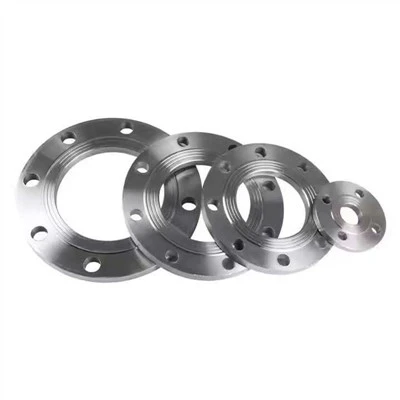
If you’re working on a project where TEC matters, or you’re not sure which stainless flange is right for you, hit me up. I’ve got over a decade of experience helping folks pick the right flanges, test TEC for custom jobs, and make sure their systems don’t fail when the heat turns up (or down). No pressure, just questions answered straight.
Flange References:
- ASME International. (2021). Material Properties for Stainless Steels in Pressure Equipment. ASME Boiler and Pressure Vessel Code.
- Shackelford, J. F. (2019). Introduction to Materials Science for Engineers. Pearson Education.
- Nickel Institute. (2022). Thermal Expansion of Stainless Steel Alloys. Technical Report.
- Moffat, W. G. (2018). Corrosion and Materials Selection in Industrial Piping Systems. NACE International.
- ASM International. (2020). Properties of Austenitic Stainless Steels: Thermal Expansion Data. ASM Handbook, Volume 2: Properties and Selection: Nonferrous Alloys and Special-Purpose Materials.
Liaocheng Shengkjia Machinery Accessories Co., Ltd.
As one of the most professional stainless flanges manufacturers and suppliers in China, we offer a wide range of products with superior quality. With abundant experience, we warmly welcome you to buy advanced stainless flanges at low price from our factory. For more cheap products, contact us now.
Address: No 8 Liaohe Road, Liaocheng City, Shandong Province, China
E-mail: Lcshshenghuaiwei@aliyun.com
WebSite: https://www.shengjia-steel.com/
