If you’ve ever worked with assembly equipment, you know it’s not just a hunk of metal that gets dragged out, plugged in, and set to run. Especially if you’re running a small to mid-sized manufacturing shop, or just switching out lines between product runs, the way you store that gear when it’s not in use can make or break how long it lasts, how well it performs when you fire it back up, and even how safe your team is. As someone who’s been an assembly equipment supplier for going on 12 years, I’ve seen so many folks skip the proper storage steps to save time or space, only to end up with a $10k robot that won’t calibrate after a month sitting in a corner, or a precision conveyor that’s bent out of shape. Let’s break down the real storage requirements—no stuffy industry jargon, just what actually works. Assembly Equipment
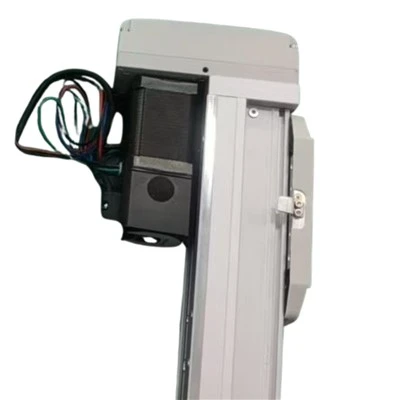
First up, let’s talk about the two big buckets of assembly equipment, because storage needs change wildly depending on what you’re dealing with. There’s the heavy, permanent stuff: big industrial robots, multi-head assembly lines, large press fit machines. These are usually bolted to your floor when they’re in use, so when they’re idle, they get moved to a storage spot. Then there’s the portable, shorter-cycle gear: handheld drivers, small pick-and-place units, modular jigs, test fixtures. Those might get tucked away between runs, sometimes for just a few days, sometimes for months. Most people mix up these two, so that’s where the first mistake happens.
Let’s start with the heavy permanent gear first, because that’s where I see the most costly mistakes. The number one non-negotiable here is a flat, level storage surface. If you take a 500kg industrial robot and set it on a concrete slab that’s settled just 15mm in one corner, the arm’s going to be out of calibration when you go to use it again. Calibration for those robots isn’t just adjusting a few dials—it’s hours of work, and if you mess it up, you’ll get misaligned parts, missed fasteners, and a lot of scrap. I had a customer last year who stored their 6-axis FANUC robot in a back corner of their warehouse that had a slight slope; when they moved it back, the repeatability was off by 0.8mm, which made their tiny electronic parts unfit. They spent $1,200 on calibration and $3,000 in scrap parts before they figured out the slope was the issue. So rule one for large assembly gear: check the level of your storage spot before you move it in. Use a laser level, not a basic carpenter’s level—you need precision here.
Next, climate control. A lot of manufacturing spaces forget this, but temperature and humidity do way more damage than people think. For metal parts, sudden temperature swings cause expansion and contraction. If you store a stainless steel conveyor in a spot that’s 32°F at night and 85°F during the day, every time it expands or contracts, tiny stress cracks can form in welds or brackets. For electronic components—like the servo motors on robots, or the circuit boards on small assembly tools—excess humidity causes condensation. Condensation seeps into those boards, corroding traces and killing motors. Last winter, a customer stored a batch of modular assembly jigs in an unheated warehouse; when spring came, they brought them in and powered them up, and 3 out of 8 had dead servo drives because of condensation buildup. For gear that’s idle for more than 2 weeks, aim for a consistent 60-70°F temperature and less than 50% humidity. Now, I’m not saying you need a whole climate-controlled warehouse for a single robot—even a portable dehumidifier in the storage corner can make a huge difference, especially in damp climates.
Then there’s protection from dust and debris. Assembly equipment, especially the precision stuff, has tiny moving parts, gears, sensors, and filters. Dust isn’t just annoying—it gets into gears, gums up servo motors, and clogs air filters, which makes the machine work harder when you turn it on, shortening its lifespan. For example, a pick-and-place machine that’s idle for a month in a dusty factory will have dust in the head mechanism, leading to missed picks, bent nozzles, and downtime. The fix here is simple: use custom fitted covers, not just a random tarp. Tarps get mildew if they touch metal for too long, and they can trap moisture. We make custom polyurethane covers for all the equipment we sell, and we always tell customers to cover every exposed part, not just the top. Even if you’re storing something for a week, a cover keeps dust out. For smaller parts like jigs and fixtures, store them in sealed plastic bins with desiccant packs—those little packets you get with electronics, they absorb moisture and stop dust too.
Now, for the portable, lighter assembly gear—this is the stuff that gets moved around a lot, from line to line, between shifts. A lot of people think “it’s small, just throw it on a shelf,” but that’s where you can scratch or damage expensive precision parts. First, weight capacity on shelves. I see this all the time: a customer puts a 20kg handheld electric torque driver on a light-duty metal shelf, and over time the shelf bends, so the driver falls off, cracking the casing or breaking the torque sensor. For portable assembly tools, use heavy-duty shelving rated for at least 30kg per shelf, and if you have multiple tools, line shelves with rubber matting to prevent scratches. The rubber is cheap, and it saves you from replacing a $500 driver because it got banged up.
Another thing for portable gear: organization. When you store a small assembly jig, it’s easy to mix it up with another jig from a different product line, right? So labeling is key, but not just a sticky note—use metal tags or engrave the part number and product it’s for. Also, store jigs in a way that they don’t stack on each other if they have precision surfaces. For example, a jig that holds a circuit board has a flat, machined surface that needs to stay straight. If you stack another jig on top of it, even a lightweight one, you can bend that surface, leading to fit issues when you use it. For that, use individual bins or hang them on wall-mounted hooks—hanging is even better, because it saves shelf space and keeps the jig off the ground, away from dust or spills.
Now, a big one that almost no one talks about: prepping the equipment before storage. You can’t just unplug a robot or a torque driver and stick it in a corner. Proper prep prevents so many issues. For any electrical assembly gear, you need to clean it first. Wipe down all surfaces with a mild, non-abrasive cleaner—no harsh chemicals that will strip paint or corrode metal. For tools with moving parts, like a screwdriver that has a gear system, lubricate them lightly with the manufacturer’s recommended lubricant before storage. I’ve seen customers use generic WD-40, which actually dries out over time and leaves a sticky residue, so you need to use the right stuff. Also, for any tool with batteries—portable drills, drivers, pick-and-place units that run on lithium-ion batteries—remove the batteries before storage. Lithium-ion batteries lose charge over time, and if they’re left in a tool fully charged, they can swell or even fail. Store them in a cool, dry place, and charge them to 50% of their capacity before putting them away— that’s the sweet spot for long-term battery life. If you’re storing a tool for more than 3 months, charge the batteries every month to keep them from dying completely.
Then there’s safety, which shouldn’t be overlooked, even for storage. Assembly equipment has sharp parts, high-torque components, and heavy parts that can fall. Never store heavy gear (anything over 50kg) on high shelves—use ground-level racks for large, heavy equipment, so if it falls, it won’t cause injury. Also, lock up any small, valuable precision parts—like nozzles for pick-and-place machines, or custom jig inserts— in a secure cabinet. Those parts get stolen all the time, especially from small manufacturing shops, and replacing them can cost as much as a new handheld driver. Another safety tip: if you’re storing equipment that’s powered, make sure all power cords are unplugged and secured so no one trips over them, especially if the storage area is in a high-traffic part of the warehouse.
Wait, I should also mention short-term vs long-term storage, because that changes a lot too. Short-term is anything less than a month—like storing gear between product runs. For short-term, you don’t need as much climate control, just a flat, covered spot. The prep is minimal: just clean off any debris, unplug, and cover. Long-term is more than 3 months, and that’s where all the rules go into effect: climate control, full cleaning, battery removal, custom covers, level surface. I had a customer who stored a full assembly line for 6 months while they moved their factory, and they skipped the climate control. When they moved it, the servo motors were corroded, and they had to replace all of them for $15k. If they’d just added two portable dehumidifiers and a heater to that corner, that would’ve cost less than $200 total.
Let me also address a common excuse I hear all the time: “We don’t have space for all this fancy storage.” I get it, space is tight in most shops, especially small ones. But the good news is, you don’t need a big dedicated storage room. We’ve helped customers set up storage spots in empty corners, using adjustable shelving, portable dehumidifiers, and custom covers that fit right over equipment. It doesn’t have to be fancy—it just has to follow the basic rules. For example, a large robot can sit on a level concrete pad in a back corner, covered with our custom cover, with a small dehumidifier running next to it. That’s way better than leaving it out in the open.
Another thing to keep in mind: manufacturer guidelines. All assembly equipment comes with a manual that has specific storage requirements. A lot of people ignore these, but they’re written for that exact machine. For example, some robotic arms can’t be stored in temperatures below 40°F because of how the grease in the gears works. Others require that the arm is placed in a specific resting position to keep stress off the joints. Always check that manual before you store anything—don’t just go by what your buddy down the street does.
Let me sum this up quick, so it’s easy to remember. For any assembly equipment, the core storage requirements are: 1) Flat, stable surface—no slopes, no bending. 2) Consistent temperature and humidity, especially for electronic parts. 3) Protection from dust, moisture, and physical damage. 4) Proper prep before storage: cleaning, lubricating, removing batteries. 5) Safety first—no heavy stuff high up, secure small parts. 6) Follow the manufacturer’s guidelines for your specific gear.
I’ve been in this industry long enough to tell you that cutting corners on storage is never worth it. I’ve seen shops save $50 on a tarp, only to lose $10k in equipment repairs and scrap. I’ve seen others invest an hour to prep their gear for storage, and get years more life out of it, which saves them way more in the long run. If you’re looking for new assembly equipment, or you need help setting up proper storage for what you already have, we can walk you through exactly what you need—no sales pitch, just honest advice that will keep your gear running for years. If you want to talk through your specific needs, feel free to reach out to us to discuss how we can help you set up the right storage for your assembly equipment.
Manipulator References:
- Robotics Industries Association. (2021). Recommended Practice for the Storage and Handling of Industrial Robots. RIA R15.06-2012.
- International Electrotechnical Commission. (2019). Environmental Conditions for Electronic Equipment – Storage. IEC 60721-3-3:2019.
- Society of Manufacturing Engineers. (2022). Best Practices for Portable Assembly Tool Storage and Maintenance. SME Toolkit for Small Manufacturers.
Yangning (Xiamen) Intelligent Technology Co., Ltd.
With abundant experience, we are one of the most professional assembly equipment manufacturers in China. As we have world-leading production equipment and strong manufacturing capabilities, we warmly welcome you to buy bulk advanced assembly equipment from our factory. Customized orders are welcome.
Address: Room 307-2, No. 15 Duiying Road, Software Park Phase III, Torch Hi-Tech Zone, Xiamen, Fujian, China
E-mail: mia@ynautos.com
WebSite: https://www.ynautos.com/
