If you’ve ever walked the floor at a metal fabrication plant, or even waited for a piece of metal to cool after a big weld, you know annealing is make-or-break for parts that hold up under pressure. It’s that process where you heat metal (usually steel, aluminum, copper, or brass) to a specific temperature, hold it there long enough to soften internal stresses, then cool it slow—no quick, uneven chill that would warp or make the part brittle. But here’s the thing: annealing furnaces aren’t just big boxes that heat metal. The automation that runs them is what turns a “good enough” batch of parts into something consistent, repeatable, and profitable. As a supplier of annealing furnaces, I get asked all the time: why invest in automatic controls instead of just a temperature gauge and a timer? Let’s break that down. Annealing Furnace
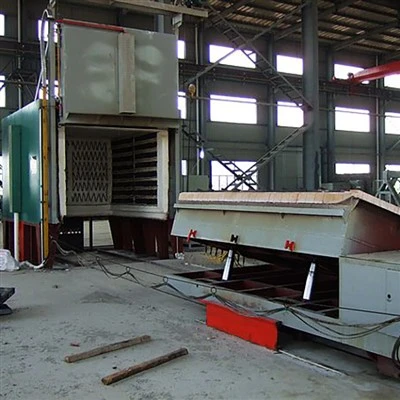
First, let’s talk about the messy, human side of annealing before automation existed. Back in the day, operators would stand by the furnace, staring at analog dials, scribbling notes on clipboards, and guessing when to open the doors. If the heat was off by 20 degrees, a whole run of axles or electrical wires would be too soft or still too hard, and they’d get tossed. If someone opened the door too soon while the metal was still hot, the rapid cooling would ruin hundreds of dollars worth of stock. And don’t even get me started on batch-to-batch variation. One operator might hold a 1,000-pound steel coil for 2 hours; the next might hold it for 3, and suddenly you’ve got parts that pass a stress test one week and fail it the next. That’s not just inefficient—it’s a huge waste of materials, time, and money.
Automation fixes most of that mess, but it’s not just “set it and forget it” tech. It’s tailored to what your parts actually need. Let’s start with temperature control, the foundation of good annealing. Manual furnaces rely on operator readings, which can be off by 10-15 degrees, depending on where the thermocouple is placed. Automated systems use multiple thermocouples spaced all through the furnace chamber—for batch furnaces, that means near the top, bottom, and center of the load; for continuous furnaces, that means every foot along the belt. The system adjusts gas burners or electric heating elements in real time to keep temperature within ±5 degrees, no matter how many parts are inside. For a steel coil used in car body panels, that tiny temperature difference makes the difference between a panel that bends smoothly in a crash and one that cracks. For copper wire used in electronics, consistent annealing prevents weak spots that cause a product to fail years down the line.
Then there’s the hold time and cooling cycle, two steps that are just as critical as the heat step. If metal doesn’t stay at the target temperature long enough, the internal grain structure doesn’t fully relax. Too long, and you’re wasting energy—heating a furnace for an extra hour adds up when you run 10 batches a day. Automated annealing furnaces calculate hold time based on the load size and metal type, not a generic rule of thumb. A 500-pound aluminum load needs 45 minutes at 550°C; a 2,000-pound steel load needs 2 hours at 850°C. The system doesn’t stop the clock until all thermocouples in the load hit the target temperature, not just one. For cooling, manual operations often open the door too early, which causes uneven cooling—hot parts on the top cool fast, cold parts on the bottom cool slow, leading to warping. Automated controls regulate the cooling rate: they pull fresh air in gradually, or adjust the flow of cooling gas, so the whole batch cools at the same speed. I’ve seen shops cut their reject rate by 30% just by switching to an automated cooling cycle, no fancy equipment other than a good control system.
Another big one is data tracking and compliance, which is non-negotiable for a lot of industries these days. If you make parts for medical devices, aerospace, or automotive, you have to track every step of the process for audits. Manual systems mean a lot of lost or illegible clipboard notes, or an operator guessing what temperature was when. Automated furnaces log every temperature reading, hold time, cooling rate, and even door open/close times, timestamped down to the second. That data is stored securely, and you can pull a report for any batch in 10 seconds. Some of our customers use that data to tweak their process even more—like noticing that a 5-degree adjustment to heat cuts their reject rate in half, or that a 10-minute faster cooling time doesn’t affect part quality at all, so they can run an extra batch a day.
Don’t sleep on safety, either. Annealing furnaces get really hot—some run over 1,000°C—and if a door is opened too soon, there’s a risk of hot gas or steam exploding. Automated systems have interlocks: the door won’t unlock until the furnace is below a safe temperature, and the heating elements shut off instantly if the door is opened mid-cycle. No more operators leaning over a furnace to pull parts, no more risk of burns or explosions. That’s a huge win for shop safety, which also cuts down on downtime if someone gets hurt.
Now, I know what you’re thinking: automation is expensive, right? Yeah, upfront costs are a little higher than a basic manual furnace, but let’s do the math. A shop I worked with last year was running a manual batch furnace, and they were throwing out 15-20% of every batch because of inconsistent annealing. They switched to an automated furnace, and their reject rate dropped to 3%, just because of better temperature and cycle control. They also saved 15% on energy costs, because the system only heats the parts that need to be heated, no overshooting temperature. Within 6 months, they made back the extra cost of the automation, and every month after that is pure profit. For small shops that run continuous annealing lines for wire or strips, the numbers are even better—automation keeps the belt moving at a consistent speed, so they don’t have to slow down or stop to fix temperature issues, boosting their output by 20% easy.
Wait, but automation isn’t one-size-fits-all. Some metal parts need a controlled atmosphere during annealing—like stainless steel, which can oxidize if it’s heated in regular air. Automated furnaces can manage that, too: they regulate the flow of nitrogen or argon gas, making sure the atmosphere is the right mix to prevent oxidation, without wasting gas. Manual furnaces would have operators guess how much gas to add, leading to either too much (wasting money) or too little (ruining the parts). That’s one of the biggest advantages of working with a supplier that builds automation into the furnace, not just adds it as an afterthought. We don’t just throw a screen and a few thermocouples on a basic box—we design the controls to work with the furnace’s heating system, load capacity, and the specific metals you run.
I’ve also seen a lot of myths about automation: that it’s too complicated for operators to learn, or that it breaks down all the time. Yeah, if you buy cheap, off-the-shelf controls, that’s a risk. But the automated furnaces we build have simple, touchscreen interfaces that any operator can learn in a day. We also have remote diagnostics, so if a sensor goes wonky, we can check it in real time, send a replacement part overnight, and get you back up and running in hours, not days. No more waiting for a technician to drive to your shop, no more guessing what’s wrong with the furnace.
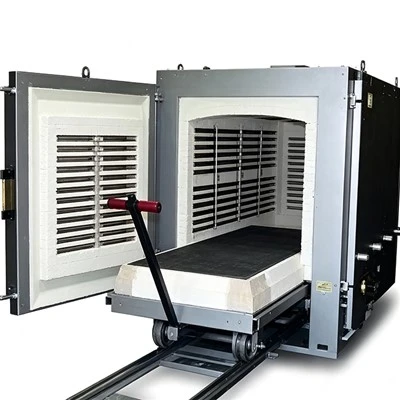
At the end of the day, annealing is about making metal parts that are reliable, consistent, and profitable. Automation turns a process that’s dependent on a single operator’s skill into something predictable, repeatable, and safe. Whether you’re a small fab shop running a few batch furnaces, or a large plant with a continuous line for aluminum coils, the right automation system pays for itself fast by cutting rejects, saving energy, and increasing output.
Carburizing Furnace If you’re tired of throwing away good parts, wasting energy, or dealing with inconsistent batch after batch, let’s talk. We can walk through your specific operations, figure out what kind of automation fits your needs, and get you set up with a furnace that works for your parts, not against them. No generic solutions, no overpriced add-ons—just a system that makes your annealing process easier and more profitable.
References
- ASM International, “Annealing of Metals,” ASM Handbook, Volume 4: Heat Treating, 2020.
- Metal Powder Industries Federation, “Automation and Control Systems for Industrial Furnaces,” Industrial Heating Magazine, 2021.
- NPTEL (National Programme on Technology Enhanced Learning), “Fundamentals of Heat Treatment of Metals,” IIT Kharagpur, 2019.
- Industrial Heating Association, “Energy Efficiency in Annealing Processes,” 2022.
- Occupational Safety and Health Administration (OSHA), “Process Heating Furnace Safety Guidelines,” U.S. Department of Labor, 2021.
Jiangsu Fangwei Furnace Industry Co., Ltd.
Jiangsu Fangwei Furnace Industry Co., Ltd. is one of the most professional annealing furnace manufacturers and suppliers in China. With abundant experience, we are committed to providing high quality customized products with competitive price. Please feel free to buy advanced annealing furnace made in China here from our factory.
Address: No.168, HuangNian Bridge, DaoShu Town, Danyang City, JiangSu Province, China
E-mail: fangwei@fwfurnaces.com
WebSite: https://www.fwfurnaces.com/
