If you’re a heat treater or someone who runs a production floor with metal parts, you know quenching stress is the silent killer of quality. It’s that thing that pulls your parts out of a quenching furnace, only to find micro-cracks, distortion, or even total failure long before they make it to assembly. As a quenching furnace supplier, I hear this complaint every single day—folks coming to us saying, “Our parts keep warping even after we dial in the quench medium, what gives?” Quenching Furnace
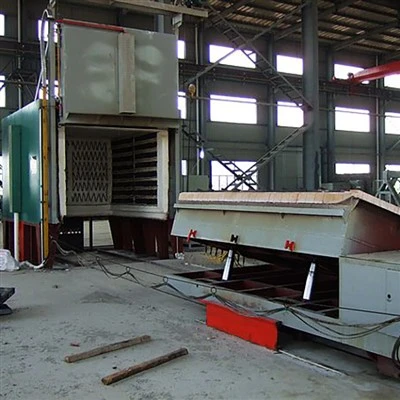
Quenching stress isn’t just one problem—it’s a chain reaction. When you heat a metal part to austenite, then cool it rapidly to turn it into martensite, uneven cooling across the part’s thickness, shape, and composition creates stress. The outer surface cools and shrinks faster than the inside, pulling the core, or vice versa, depending on the steel type. Too much of that stress, and you’re looking at rejected parts, scrap costs, and slowed production. The good news? You don’t have to guess at fixes; most solutions boil down to adjusting what’s happening inside your quenching furnace, how you load parts, and how you choose your quench setup. Let’s break this down with stuff we’ve actually seen work with our clients, no fluff.
First off, let’s talk furnace design—because not all quenching furnaces are built the same. A lot of small to mid-sized shops grab a cheap batch furnace, and it’s got a few flaws that amplify stress. For example, if your furnace’s quench chamber has poor airflow distribution, some parts get blasted with high-velocity quench oil or water, while others get a slow, weak stream. That uneven cooling is the #1 cause of residual stress. Back when we first started building furnaces, we missed this too—we’d get calls from a client making small engine valves saying half their parts were cracking, and the other half were fine. Turned out, their old furnace had a single fan at the back, so parts on the front rack got way less flow. Now, we design all our furnaces with multi-directional airflow systems—you can adjust dampers in each zone to tweak how much quench medium hits every part, not just the hot ones near the fan. Pro tip: if your current furnace doesn’t let you zone the airflow, you can add aftermarket baffles, but be careful—bad baffles can cause flow turbulence, which creates more hot spots. We’ve seen clients waste hundreds of dollars on cheap baffles that made their stress worse, so stick to ones tested for your part size.
Next up is temperature control inside the furnace. Wait, you might be thinking—temperature before quenching? How does that affect stress? Let’s explain: if your furnace has hot spots, some parts reach the exact austenitizing temperature, while others are 20-30°F too low. When you quench them, the parts that are cooler cool slower, and the hotter ones cool faster—again, uneven cooling, more stress. We’ve had a client making automotive gears that switched to our furnace with a uniform heating system (we use ceramic radiant tubes instead of gas burners that can create hot spots) and their gear distortion dropped by 40% in the first month. Another thing: soak time. A lot of heat treaters either skip the soak or overdo it. Soak time is how long you hold parts at austenitizing temp to make sure the carbon is evenly distributed throughout. If you don’t soak, you have parts with slightly different carbon content—some will harden faster, others slower. We usually tell clients: for carbon steel parts, soak for 1 hour per inch of thickness, minimum. For alloy steels, add 30 minutes because they’re more prone to uneven phase changes. I’ve seen guys soak a 2-inch thick part for 2 hours instead of 1, and their stress actually went up—because over-soaking creates a coarse grain structure, which is more brittle and prone to cracking when quenched. It’s a balance, not a longer soak = better.
Then, let’s move to the quench medium itself, and how you circulate it. This is where a lot of people cut corners, and it bites them. First, what medium are you using? Water is super fast, oil is slower, polymer is in between. If you’re quenching a high-carbon steel and using water, that rapid cooling creates a ton of stress. We suggest switching to a high-quench oil or a polymer blend if you’re getting cracking—but it’s not just the medium, it’s how you keep it clean. If your quench tank has metal shavings, burnt oil residue, or dirt, those particles can stick to part surfaces, creating cold spots where the medium can’t flow. We had a shop that was running a 500-gallon quench tank and wondering why their die cast parts were warping 20% more than the spec. They hadn’t changed the oil in 2 years—when we drained it, there was 2 inches of sludge at the bottom. After they filtered the oil and added a circulation system that keeps it moving at 1 gallon per minute per square foot of tank, their warping dropped back to normal. Another trick: quench temperature. If your oil is too cold, it’s thicker, flows slower, and creates stress. If it’s too hot, it loses its quenching power. We recommend keeping quench oil between 120°F and 160°F for most applications, and water-based solutions around 80°F to 100°F. Our furnaces come with built-in temperature control for the quench medium, so you don’t have to guess—no more running cold oil and wasting parts.
Loading parts into the furnace is another big one that people sleep on. I can’t tell you how many times I’ve walked a shop floor and seen parts stacked like cordwood in a quenching furnace. If parts are touching each other, or sitting flat on a rack, the cooling medium can’t flow around every surface. That means the surfaces touching the rack cool slower, and the exposed surfaces cool faster—warping or cracking. We usually tell clients: leave at least ½ inch between parts for small items, and 1 to 2 inches for larger, thick parts. Also, don’t stack parts vertically if they have thin sections—if you quench a long thin shaft standing up, the bottom cools faster than the top, and you get bending. Lay them horizontally in single layers, or use racks with dividers that prop parts up so air/medium flows underneath. We designed our furnace racks with adjustable dividers exactly for this—so clients can tweak loading for different part sizes without buying new racks every time. One client making knife blades was stacking 10 blades per tray, and their blades were twisting. After switching to single-blade loading on our racks, their reject rate went from 18% to 2%—that’s a huge difference just from how you load.
Wait, what about post-quench processes? A lot of people think quenching is the end, but stress doesn’t just disappear after you pull parts out. If you skip tempering right after quenching, residual stress builds up over time, leading to part failure later. We always recommend tempering within 1 hour of quenching—hold parts at 300°F to 500°F (depending on steel type) for 2 hours, and that relieves 80-90% of the residual stress. We’ve had a tool and die shop that forgot to temper a batch of mold cores, and 3 months later, they cracked on the production floor—cost them $10k in downtime. Simple step, huge payoff. Some newer furnaces we build have an integrated quench and temper cycle, so you don’t have to move parts between furnaces, reducing handling stress too. Less movement = less chance of banging parts and causing micro-cracks before tempering.
Let’s be real—sometimes even when you do all this, you still get stress. That’s where real-time monitoring inside the furnace helps. Old furnaces just heat parts, but they don’t tell you what’s happening at the part level during quenching. Our latest furnaces have thermocouples right in the quench chamber, and you can track cooling rates for every part in the load. If one part is cooling way faster than the others, you can adjust the dampers mid-cycle to slow it down. I had a client making aerospace bolts that was using a old furnace with no monitoring, and their bolt heads were cracking 5% of the time. After installing our furnace’s cooling rate monitoring, they noticed the bolt heads were cooling 20% faster than the shanks. They adjusted the damper for the head zone, and that cracking went away completely. It’s not a luxury anymore—if you’re running high-precision parts, you need to see what’s happening inside, not just guess.
Now, let’s talk about common myths that keep people stuck. First myth: “Faster quenching = harder parts, better quality.” No—faster quenching just creates more stress. You need a cooling rate that’s fast enough to get martensite, but slow enough to minimize uneven phase changes. Second myth: “All quench mediums work the same.” Nope—each metal type needs a specific medium. For example, low-carbon steel doesn’t need a super fast quench, so oil is fine. High-carbon steel needs a bit faster, so polymer works better. Third myth: “You only get stress from the quenching step.” Wrong—heating the parts too fast before quenching can create thermal stress too. If your furnace heats parts in 30 minutes, the outside expands faster than the inside, leading to cracks even before you quench. We recommend a slow ramp-up rate for thick parts—100°F per minute max—so the whole part heats evenly.
If you’re still dealing with quenching stress that’s eating into your profits, you’re not alone. Most of the time, it’s not one big mistake, but a bunch of small ones: a bad airflow design, loaded parts too tight, quench oil too dirty. As a quenching furnace supplier, we’ve worked with hundreds of shops to tweak these things, and we’ve seen reject rates drop by 50% or more just by adjusting furnace settings and load. We don’t sell one-size-fits-all furnaces—we help you tailor the setup to your specific parts. Whether you’re making small fasteners, big gear shafts, or mold tools, we can show you how to adjust your quench cycle to cut stress without sacrificing hardness.
If you want to stop dealing with cracking parts, scrap, and downtime, reach out to us to talk through your process. We’ll help you figure out where your stress is coming from, no sales pitch, just real advice from folks who’ve been in the heat treat game for years. Let’s work together to get your parts right, the first time.
Electric Furnace References
- ASM International. (2015). Quenching and Heat Treating of Steel. ASM Handbook, Volume 4: Heat Treating.
- Tselentis, N. (2007). Residual Stress in Quenched Metals: Causes and Mitigation. Journal of Materials Processing Technology.
- Brown, J. R. (2010). Industrial Quenching: Fundamentals and Applications. ASM International.
- Lee, S. (2018). The Effect of Furnace Design on Quench Uniformity and Residual Stress. Heat Treating Progress Magazine.
- Davis, J. R. (Ed.). (2001). Heat Treater’s Guide: Practices and Procedures for Irons and Steels. ASM International.
Jiangsu Fangwei Furnace Industry Co., Ltd.
Jiangsu Fangwei Furnace Industry Co., Ltd. is one of the most professional quenching furnace manufacturers and suppliers in China. With abundant experience, we are committed to providing high quality customized products with competitive price. Please feel free to buy advanced quenching furnace made in China here from our factory.
Address: No.168, HuangNian Bridge, DaoShu Town, Danyang City, JiangSu Province, China
E-mail: fangwei@fwfurnaces.com
WebSite: https://www.fwfurnaces.com/
