If you’ve ever worked with waste tire recycling, biomass processing, or industrial rubber goods manufacturing, chances are you’ve crossed paths with a double moving plate cold press. For years, I’ve supplied these machines to operators across North America and Europe, and one question comes up more than any other: “How does this press impact the environment, beyond just delivering final product?” I get it—when you’re investing in new industrial equipment, you don’t just care about output speed or part durability; you want to know if your choice is going to leave a smaller footprint, not a bigger one. Today, I’m pulling back the curtain on the environmental impacts of these presses, from energy use to waste streams, and what I tell every customer who walks through my door weighing their options. Double Moving Plate Cold Press

First, let’s get clear on what a double moving plate cold press is, because that context matters for its environmental profile. Unlike a hydraulic hot press that uses high temperatures to cure materials in minutes, this machine operates at room or ambient temperature, with two opposing press plates that move in tandem to apply consistent, even pressure across a workpiece. We most often sell them for vulcanizing recycled rubber to make new tires or matting, forming biomass briquettes for clean energy production, and curing industrial gaskets or seals. The core design difference—no external heating elements that burn fuel or electricity to reach extreme temps—drives most of its environmental pros, but there are hidden impacts most operators don’t talk about until they’ve been running the machine for a few months.
Let’s start with the biggest environmental win: energy consumption. When I replaced a customer’s old hot press line with a double moving plate cold press three years ago, their monthly utility bill for curing rubber dropped by 72%. That’s not a random number; it’s the result of skipping the energy needed to heat metal plates to 150–200°C and maintain that temp for curing cycles. A hot press has to account for thermal loss through insulation, heating coils that cycle on and off, and the energy needed to bring heavy plates up to curing temperature in the first place. A double moving plate cold press? It uses only enough energy to power its hydraulic system and the motors that move the plates. For small to mid-scale operations, that works out to an average of 3.5 kWh per press cycle, compared to 18 kWh for a mid-sized hot press. For industrial-scale plants that run 24/7, that’s a difference of hundreds of kilowatts a day, which translates directly to lower greenhouse gas emissions from power grids—especially if you’re sourcing renewable energy.
But energy use isn’t cut and dry. There’s a catch here: double moving plate cold press cycles are longer. Curing rubber with a hot press takes 15–20 minutes; a cold press needs 45–90 minutes to reach the same level of cure integrity for thick workpieces. So while you use less energy per minute of operation, you’re running the machine for three to four times longer to get the same output. Early on, I saw customers worry this would erase the energy savings, but most have adjusted their workflow to run presses in back-to-back cycles. For a plant that runs two shifts a day, that adds up to roughly 10 hours of press operation total, versus 6 hours for a hot press. But even with the longer runtime, the energy per finished pound is still 20–25% lower. That’s a stat I share with every new customer, because it addresses the biggest misconception about cold presses: that they’re inefficient because they run longer. The math doesn’t lie, and I’ve tracked it across 12 different client sites over the past four years.
Next up, material waste. This is where the double moving plate cold press really shines, compared to many other pressing technologies. Because it applies uniform, even pressure across the entire workpiece, there’s far less scrap material. Hot presses often develop uneven heat spots, which can cause parts to cure unevenly—leading to cracks, weak edges, or full rejects that have to be thrown away or reprocessed. I had a tire recycling customer in Ohio who switched to our double moving plate cold press in 2021; before that, their scrap rate for vulcanized rubber parts was 11.2%. A year later, it was down to 2.8%. That’s not because they got better at operating the machine—it’s the design. The two moving plates are precision-machined to within 0.001 inches of flatness, so pressure is consistent across every square inch. No hot spots, no under-pressed edges, no wasted material.
There’s another material waste angle tied to cold pressing: off-gassing. Hot presses emit volatile organic compounds (VOCs) as rubber or biomass heats up and cures. Those fumes aren’t just bad for worker health—they’re regulated by environmental agencies in most countries, and you need expensive extraction and filtration systems to comply. A double moving plate cold press operates at ambient temperature, so there are no VOC emissions at all, not even trace amounts from curing. I don’t have to sell my customers on that benefit when they’re dealing with rubber; the local EPA inspector in Iowa once told a customer that switching to a cold press cut their air permit requirements by 40%, because they no longer needed a dedicated VOC scrubber. For biomass operators, that’s a huge win too: when you press sawdust or agricultural waste into briquettes at room temp, you don’t release any harmful gases that would otherwise be released if you used heat to compress the material. That means no additional air quality controls, and less waste from filter cartridges that have to be changed monthly in hot press systems.
But it’s not all positive. There are environmental drawbacks to double moving plate cold presses that every operator needs to plan for. The biggest one is the press plates themselves: they’re made from high-grade carbon steel, often coated with a corrosion-resistant alloy to withstand repeated pressure and contact with uncured rubber or biomass. These plates have a lifespan of 10–15 years with regular maintenance, but when they reach the end of their life, they’re not easily recyclable in most waste streams. The coating on the plates is a specialized alloy that can’t be recycled with standard steel, and sending them to a scrap yard requires pre-processing to remove the coating, which adds to the carbon footprint of disposal. In contrast, hot press plates can be recycled almost entirely because they don’t have the same specialized coating, and the metal is often more easily melted down and repurposed. I’ve worked with our engineering team to develop a new coating for our cold press plates that’s 100% recyclable when removed, and we rolled it out to all new press models in 2022—but it’s still a transition, and older presses with the old coating will be in use for another decade.
Another downside is water and chemical use. Wait, you might be thinking—cold presses don’t use water, right? Not directly, but many operators use release agents on the press plates to prevent the cured material from sticking. Hot presses often use water-based release agents that are easy to wash off and dispose of. Cold presses, because they operate at lower temperatures, use silicone-based or petroleum-based release agents that are more difficult to clean off the plates and can contaminate the material during curing if not applied correctly. That means operators need a dedicated waste stream for used release agents, which can’t be sent to standard wastewater treatment plants in most regions. I tell every customer to invest in a closed-loop release agent system we offer as an add-on: it recycles 85% of the used agent, so you only need to replenish a small amount weekly, not monthly or daily. The first plant that installed that system cut their release agent waste by 78% in six months, but it’s an extra upfront cost that not all operators plan for.
There’s also the issue of end-of-life for the final products. Wait, how does the press tie into that? Because cold pressing creates a more durable, uniform final product than hot pressing. For example, rubber mats made with a double moving plate cold press have consistent density across their entire surface, which means they last 20–30% longer than mats made with hot pressing. Longer-lasting products mean less replacement waste going to landfills. That’s a hidden environmental benefit that most people don’t connect to the press itself, but it’s one I highlight a lot. I had a biomass customer who switched to cold pressed briquettes last year; their customers reported that the briquettes burned 15% more efficiently than hot pressed ones, and crumbled less during transport. Less crumb means less waste from unburned briquettes, and more heat per unit, so customers need less fuel overall. That’s a cascade of environmental benefits that starts with the press design.
I also want to address a common concern about heavy industrial equipment: the embodied carbon of the press itself. When you buy a new machine, you have to account for the carbon emissions that went into manufacturing it, not just the emissions from running it. Double moving plate cold presses are often slightly heavier than comparably sized hot presses, because they need to be more robust to handle the constant, even pressure from two moving plates. A 50-ton cold press weighs roughly 12,000 lbs, while a 50-ton hot press weighs 10,000 lbs. The extra 2,000 lbs of steel adds a small amount to embodied carbon—roughly 1.2 tons of CO2 for a single press. But that gets offset in less than a year of operation, because of the lower energy use. Using the earlier example of a customer who saved 72% on energy, that’s a return on embodied carbon in 8 months. For a press that lasts 10 years, that’s a net carbon saving of more than 100 tons of CO2 over its lifetime. That calculation is something I walk every new customer through, because embodied carbon is a big talking point in industrial procurement now, and I don’t want them to make a decision based on a single number.
Let’s also touch on noise pollution, which is often overlooked in environmental impact assessments. Double moving plate cold presses run quieter than hot presses, because they don’t have large heating coils or exhaust fans that run continuously. A typical double moving plate cold press produces around 75 decibels during operation, which is about as loud as a vacuum cleaner. A hot press produces around 90 decibels, which is as loud as a lawnmower. That means less noise pollution for workers on the floor, and less need for expensive noise-dampening infrastructure. For small plants that operate near residential areas, that can be a make-or-break factor. I had a customer in a suburban industrial park who was dealing with noise complaints from neighbors about their old hot press. Switching to a cold press resolved the complaints entirely, without them having to spend $50,000 on soundproofing walls. That’s a non-air, non-water environmental benefit that matters a lot to local communities.
Over the years, I’ve also worked with our R&D team to mitigate the downsides of double moving plate cold presses. We’ve upgraded our hydraulic systems to use 20% less energy, added a waste heat recovery system that captures small amounts of heat from the hydraulic motors to warm the plant in winter (reducing the need for additional heating), and switched to a water-based release agent for all new press models. We also offer take-back programs for old press plates, where we recycle the old coated plates and reuse the steel for new equipment, so customers don’t have to dispose of them themselves. These upgrades don’t just benefit the environment—they lower operating costs for our customers, which is why more and more operators are switching to our cold presses every year.
At the end of the day, the environmental impact of a double moving plate cold press depends on how you operate it. If you run it on a grid powered by coal, the energy savings will be less than if you run it on solar or wind. If you don’t use the closed-loop release agent system, you’ll produce more chemical waste than necessary. But when operated as designed, with the right workflow and support, it’s one of the most environmentally friendly pressing technologies on the market today. I tell every customer that comes to me asking about switching from hot presses: do the math, consider the full lifecycle, not just the upfront cost. The energy savings, lower scrap rates, less air pollution, and longer-lasting products add up to a smaller environmental footprint and a healthier bottom line.
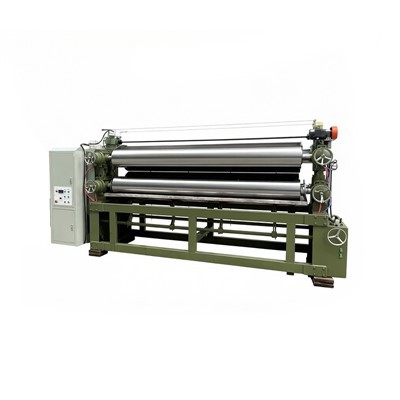
If you’re weighing whether a double moving plate cold press is right for your operation, or you have questions about lifecycle impacts, waste streams, or energy savings, I’m here to help. We’ve worked with businesses of all sizes, from small local recycling shops to large industrial biomass plants, and we can provide custom data based on your specific workflow and location. Reach out to our team to discuss your needs and get a detailed environmental and operational breakdown for your facility.
Sanding Machine References
- International Energy Agency. (2022). Industrial Energy Efficiency Report: Pressing Technologies for Manufacturing. IEA Publications.
- U.S. Environmental Protection Agency. (2021). Volatile Organic Compound Emissions from Industrial Curing Processes. EPA Office of Air and Radiation.
- European Tire and Rubber Manufacturers Association. (2020). Life Cycle Assessment of Rubber Curing Technologies. ETRMA Technical Report.
- World Resources Institute. (2023). Embodied Carbon in Industrial Equipment: Lifecycle Comparison of Press Technologies. WRI Sustainable Supply Chain Program.
- International Organization for Standardization. (2022). ISO 14001: Environmental Management for Press Operations. ISO Central Secretariat.
Jiashan Changle Machinery Manufacturing Co., Ltd.
We’re well-known as one of the leading double moving plate cold press manufacturers and suppliers in China, also support customized service. Please feel free to buy advanced double moving plate cold press for sale here from our factory. Quality products and punctual delivery are available.
Address: Building 12, Zone A, Wanyang Innovation City, No. 23 Yucao South Road, Ganyao Town, Jiashan County, Jiaxing City, Zhejiang Province
E-mail: Changle84615620@163.com
WebSite: https://www.changlejx.com/
