If you’ve ever dug into the specs of an electric scooter, a warehouse AGV (autonomous guided vehicle), or even a high-end drone, you’ve probably seen the label “brushless DC motor (BLDC)” tossed around. As a supplier that’s spent a decade designing and delivering these motors for everything from industrial automation to consumer electronics, I get asked this question at least a dozen times a week: “What does a good BLDC motor actually cost?” The short answer is “it depends,” but the long answer is where the real story lies—and if you’re shopping around, understanding what’s driving that cost difference could save you thousands of dollars in the long run, or lead you to pick a motor that underperforms when you need it most. Brushless Dc Motor
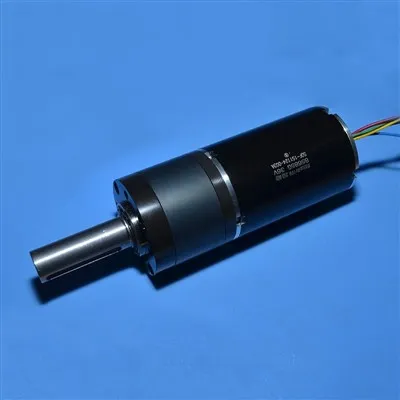
Let’s start with what most people don’t realize: not all BLDC motors are the same. A $5 BLDC motor you find on Amazon for a toy drone is not built to the same standards as a $500 BLDC motor powering a medical pump that has to run 24/7 for five years without a single failure. The cost of a BLDC motor boils down to four core factors: materials, manufacturing precision, design complexity, and volume. Let’s break each down, and throw in some real-world numbers from my company’s order books to make this concrete.
First, materials. The most expensive part of any BLDC motor is the core, which is made of electrical steel laminations. For low-cost motors, manufacturers often use thin-gauge silicon steel, which is cheap but prone to energy loss (called iron loss) when the motor runs at high speeds or under load. For mid-range and industrial-grade motors, we use high-grade non-oriented electrical steel with tight tolerances—this cuts iron loss by 30% or more, which might not sound like much, but for a motor running 16 hours a day, that adds up to hundreds of dollars in saved electricity over the motor’s lifespan. Then there are the magnets. Neodymium magnets, the standard for high-performance BLDCs, come in different grades: N35 is the cheapest, N52 is the strongest. A motor using N52 magnets will weigh less, produce more torque, and operate more efficiently, but those magnets cost twice as much as N35. For context, a 100mm diameter stator core for a small industrial BLDC motor made with N35 magnets might add $15 to the total cost, while N52 adds $30. Wires matter too: low-cost motors use copper-clad aluminum (CCA) wires, which are cheap but have higher electrical resistance, leading to more heat buildup and shorter lifespans. Pure copper wires add $8 to $12 to the same motor’s bill of materials, but the difference in performance is night and day.
Next, manufacturing precision. BLDC motors rely on tight tolerances to run smoothly, with no wobble or vibration. If the stator slots are off by even 0.1mm, the motor’s torque output will drop by 10% and it will generate more noise. Low-cost BLDC motors are often made with stamped cores that have tolerance ranges of ±0.2mm, and they’re assembled semi-automatically, with manual checks that are prone to human error. That cuts manufacturing costs, but leads to high failure rates in high-load applications. At our factory, we use laser-cut stator and rotor cores, which have tolerances of ±0.05mm, and all assembly lines are fully automated with in-process optical inspections that check every single component before it moves to the next step. For a 2kW BLDC motor, that extra precision adds $45 to the manufacturing cost, but it means the motor has a 99.9% first-pass yield, and a mean time between failures (MTBF) of over 50,000 hours—compared to around 10,000 hours for a low-cost motor. If you’re running a production line where a motor failure stops your whole operation, paying that extra $45 per motor is a no-brainer.
Design complexity is another big driver. BLDC motors can be customized for specific use cases, and that customization adds cost, but it adds value too. A standard off-the-shelf 1kW BLDC motor for a general fan will have a simple design: a 2-pole rotor, a 12-stator core, no integrated sensors. That motor costs around $80 for a 1kW output. But if you need that same motor to power a robotic arm joint, you’ll need a higher pole count (usually 8 or 10 poles) for more precise speed control, integrated hall effect sensors for position feedback, and a thermal management system to handle the constant load. That same 1kW motor, customized with those features, jumps to $180. For larger motors, say a 10kW unit powering an electric forklift, the base cost for a standard model is around $1,200, while a custom version with a built-in encoder for precise movement and a water-cooled housing to handle heavy loads is $2,700. The key here is: don’t pay for features you don’t need. If your application only requires general speed control, you don’t need a high-resolution encoder that costs an extra $150. But if you’re building a collaborative robot that has to match its movement to a human’s, that encoder is non-negotiable.
Volume is the final, and often most negotiable, factor. I’ve had small startup clients come to us with orders for 100 custom BLDC motors, and they’re shocked when I quote them $220 each for a 1kW model. But when a major automotive client comes in with an order for 100,000 identical motors, that same motor drops to $130 each. The reason is simple: when you order in bulk, you get volume discounts on raw materials, and you can set up dedicated production lines that lower per-unit labor and overhead. We also offer tooling discounts for long-term partnerships—if a client commits to a 2-year order of 50,000 units, we’ll cover 100% of the tooling costs for their custom design, which can save them thousands of dollars up front. I always tell small businesses that if they can combine their orders with a peer in the same industry (say, two robot companies each needing 50 motors), they can split the volume and get bulk pricing without committing to an order that ties up their cash flow.
Now, let’s get real about what these numbers mean for your bottom line. Let’s take an example from a client of mine: a small AGV manufacturer that was using $60 BLDC motors from a overseas supplier for their 500kg load AGVs. The motor’s low cost made their initial product price competitive, but within six months, they were seeing a 15% failure rate per month. Each failure cost them $1,200 in labor to replace the motor, plus $3,000 in lost production from their clients’ warehouses. They switched to our mid-range $150 BLDC motors, which had a 1% failure rate per month. Their upfront cost per AGV went up by $90, but over a year, they saved over $20,000 in repair and downtime costs, and they were able to offer a 2-year warranty on their AGVs, which helped them win three new major clients. That’s the hidden cost of cheap motors—they look like a good deal at first, but they bleed money over time.
Of course, that doesn’t mean you should overpay for features you don’t need. A customer came to me last year needing motors for a set of commercial fans for a mall. They came in asking for our top-of-the-line N52 magnet, water-cooled BLDC motors that cost $250 each. After talking through their application, I realized their fans only run at a constant low speed, indoors, with no heavy load. They didn’t need the high torque of N52 magnets or the water cooling. We designed a custom motor with N35 magnets, pure copper wires, and no extra cooling features that fit their exact needs, for $95 each. They saved over $15,000 on their order, and the motors have been running without a single issue for 18 months. That’s the sweet spot: a motor priced for your specific needs, not for features you’ll never use.
There are also a few additional costs that don’t show up on the motor’s price tag, but you should factor in. Most low-cost BLDC motors come without a controller, which means you’ll have to source a separate electronic speed controller (ESC) that can cost $30 to $100, depending on the motor’s size. Many mid-range and industrial-grade motors come with a matched controller, calibrated to work with the motor’s torque curves, which means easier installation and better performance. That’s a $30 to $100 value you might have to pay extra for if you go with a cheap motor. Lead time is another hidden cost: low-cost motors from overseas often have lead times of 4 to 8 weeks, or even longer if there’s a supply chain delay. Our standard lead time for off-the-shelf motors is 2 weeks, and custom motors are 4 weeks, which means you can get your product to market faster, avoiding lost sales.
So, to circle back to the original question: what is the cost of a brushless DC motor? The short answer ranges from $10 for a tiny, low-performance motor for toys up to $5,000 or more for custom, high-torque motors for industrial or aerospace applications. But the right cost for you depends on your application, your performance requirements, and your long-term needs. As a supplier, I’ve seen clients win big by investing in the right motor, and I’ve seen others lose big by cutting corners on a cheap motor that doesn’t meet their needs.
If you’re shopping for BLDC motors and you want to cut through the noise of generic online pricing, feel free to reach out. I’ve worked with startups, small manufacturers, and large corporations to design and source BLDC motors that fit their exact needs, without overpaying for unnecessary features. No generic quotes, no hidden fees—just honest, transparent pricing based on your application, volume, and performance requirements. Let’s talk through your project and find the right motor for you.
Personal Care Brushless Motor References:
- Bose, B. K. (2002). Modern Power Electronics and AC Drives. Prentice-Hall.
- "Brushless DC Motor Basics and Applications." Motion Control Tips, 2021.
- "Electrical Steel Laminations for Electric Motors: Material Selection and Performance." IEEE Transactions on Industrial Applications, vol. 56, no. 3, 2020, pp. 2891-2899.
- "Mean Time Between Failures (MTBF) for Electric Motors." Machinery Lubrication Magazine, 2019.
- Neodymium Magnet Grades: Performance and Cost Tradeoffs. Magnetics Association International, 2022.
Shenzhen HengDrive Technologies Co., Ltd.
Shenzhen HengDrive Technologies Co., Ltd. is one of the most professional brushless dc motor manufacturers and suppliers in China, specialized in providing high quality customized service. We warmly welcome you to buy the newest brushless dc motor in stock here from our factory.
Address: Building A & F, FuNing Hi-Tech Park, XinTian Road, FuHai Street, BaoAn District, ShenZhen, GuangDong Province, China.
E-mail: Marketing001@hengdrive.com
WebSite: https://www.hengdrivemotor.com/
