If you’ve ever stepped foot on a working mine site—even just a remote section of an open-pit operation or an underground drift—you already know mining isn’t just big machines and heavy labor. It’s a web of unseen, lifeline systems that keep everything running, and at the center of that web is our product: mining cables. As someone who’s been selling mining cables for 12 years now, I’ve seen way too many projects go sideways because teams cut corners on installation tools. A cable is only as good as how you put it in, right? Drop a multi-conductor power cable during pull-in and you’re looking at hours of downtime, not to mention the cost of replacing a cable that costs a small fortune to source. Over the years, I’ve worked with mine superintendents, riggers, and electrical foremen across three continents, and the biggest mistake I see new crews make is treating mining cable installation like any other cable job. These cables aren’t the thin Romex you run in a suburban house; they’re armored, oil-resistant, built to withstand extreme heat and constant flex, so the tools to work with them need to be just as robust. Let’s break down the real, on-site tools you actually need to get the job done right, no fluff. Mining Cable
First, let’s talk about the unsung workhorse: cable pulling and routing tools. Mining sites are chaotic—dust covers every surface, uneven terrain abounds, and there’s almost never a straight line between the substation and the equipment you’re powering. I once had a client in Western Australia try to pull a 1,000-foot high-voltage mining cable with nothing but a front-end loader and a handful of guys hauling rope. They got 200 feet in before the cable’s outer armoring snagged on a bedrock outcrop, shredded, and had to be scrapped. That’s a $15,000 cable gone in five minutes because they skipped basic pulling tools. The first must-have here is a heavy-duty cable puller, specifically rated for mining use. Not a small, consumer-grade puller for residential jobs—mining pullers need to handle loads of 5,000 to 20,000 pounds, depending on your cable’s size, and they have to be explosion-proof (EX) rated if you’re working in underground mines with gas pockets. Exposed wiring or a spark from a cheap puller could be a disaster, so never skimp on that rating.
Next up, cable rollers and stands. Open-pit mines usually have cable running along the ground or on low racks, but underground, you’ve got drift walls, pipe racks, and tight corners. I always recommend two types of rollers: fixed-position rollers for straight, flat stretches and pivoting roller stands for corners and uneven ground. The pivoting ones are a game-changer because they swivel to match the cable’s path, so you don’t have people manually repositioning rollers every ten feet, which slows the job down and risks damaging the cable. For cable stands, make sure they’re rated for the outer diameter of your mining cable—these cables are often 3 to 6 inches thick, so a stand designed for 1-inch THHN cables will collapse under the weight. Also, get stands with non-marring padding on the contact points; mining cable outer jackets are tough, but a scratch could leave a weak spot that lets moisture seep in over time, leading to failure. If you’re running cable underground, don’t forget cable tractors too—electrically powered, remote-controlled units that pull the cable through narrow drifts, past ventilation ducts and supports. They’re more expensive, but for long, complex routes, they cut installation time by 70% and eliminate the risk of human error when pulling heavy loads.
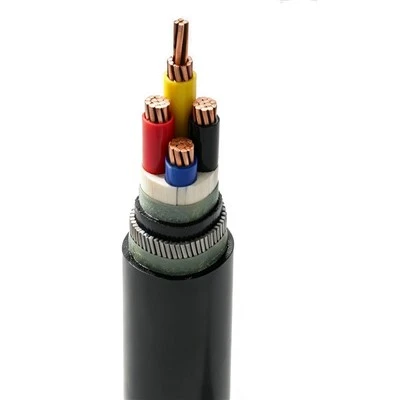
Once you’ve got the cable in place, you need to prepare the ends for connection—this is where a lot of mistakes happen, and bad preparation means a cable that works for a week or a year, not its full 10+ year lifespan. The number one tool here is a hydraulic cable cutter, specifically sized for mining cables. You can use a hacksaw, but I’ve seen hacksaws take 45 minutes to cut a single armored mining cable, and they often nick the inner conductors, which leads to hot spots and eventual failure. Hydraulic cutters are fast, clean, and if you get an EX-rated one, they’re safe for underground use. For stripping the outer jacket and armoring, you need a cable stripper designed for mining cable construction. Mining cables typically have three layers: outer jacket, steel armoring, and inner insulation, so a standard wire stripper won’t work—those will either slice too deep and damage conductors or not cut through the tough outer layer. Look for a stripper with adjustable blades so you can set it to the exact depth of the jacket, so you only remove what you need without harming the inner components.
If you’re working with high-voltage mining cables (above 5kV, which is common for large shovels and draglines), you’ll need a cable slicer for the armoring. The steel armoring is there to protect the cable from impact and rodents, but you can’t leave it exposed when you terminate the cable. A cable slicer makes a clean, straight cut around the armoring without leaving sharp burrs that can puncture the inner insulation. Speaking of insulation, after stripping the outer layers, you need to prepare the conductor ends for crimping or terminating. That’s where a hydraulic crimping tool comes in, paired with die sets rated for your conductor size. Mining cable conductors are usually stranded copper or aluminum, so a manual crimping tool won’t give you enough pressure to make a reliable connection. A good hydraulic crimp will create a seal that prevents moisture and corrosion, which is critical for mines where humidity is often high. Also, don’t forget thermal glue guns for sealing the connection points—mining sites have temperatures that swing from 110°F during the day to below freezing at night, so a sealed connection won’t flex or crack as the cable moves with equipment vibration.
Now, let’s get to safety tools, because mining is no place for shortcuts. I can’t tell you how many times I’ve seen a crew skip basic safety and almost get hurt. First and foremost are voltage testers, specifically non-contact high-voltage testers. Never assume a cable is de-energized—even if someone says they shut off the circuit, double-check with a rated tester. For cables above 15kV, you need a contact voltage tester with insulated probes, and it should be tested and calibrated annually, per OSHA and MSHA standards. Lockout/tagout (LOTO) tools are non-negotiable too—hasps, locks, and tags that ensure no one accidentally turns the power back on while you’re working on the cable. I once had a client in Chile who skipped LOTO and a crane operator turned on a power cable while two guys were splicing it. It was a horrific accident, and it all could have been prevented with basic LOTO tools.
Another safety tool specific to mining cable installation is a cable damage locator. This is a handheld device that uses frequency testing to find nicks, cuts, or insulation weaknesses in the cable before you even energize it. A lot of mine sites only test cables after they’re installed, but catching damage during installation saves you from having to dig up or pull out a cable that’s already in place. Look for a locator that can handle both low- and high-voltage cables, and that works in dusty, noisy environments—standard locators don’t work well on mine sites with heavy machinery running nearby. Personal protective equipment (PPE) matters too, but not just the generic stuff: heavy-duty leather gloves rated for abrasion and cuts (mining cable edges are sharp), steel-toe boots with slip-resistant soles (mine sites are muddy and oily), and arc flash suits if you’re working with high-voltage cables. Arc flash is a real risk when splicing or terminating high-voltage mining cables, so don’t skip the suit—even if you think you’re being careful.
Wait, I should mention one more tool that a lot of people overlook, especially on open-pit mines that move equipment around a lot: cable protection devices. Once you’ve installed the cable, you need to protect it from being run over by trucks, hit by equipment, or damaged by falling rock. Heavy-duty cable ramps, made of rubber or steel, are perfect for short stretches where trucks will cross over the cable. For longer runs along the ground, cable guards made of galvanized steel or high-density plastic will hold up to extreme weather and impact. I once had a client in South Africa install a mining cable without a ramp, and a haul truck ran over it, cutting the cable in half and causing three days of downtime. The ramp cost $200; the downtime cost over $200,000. That’s a no-brainer.
Now, let’s talk about common mistakes I see with these tools. For example, a lot of crews will borrow a puller from a friend that’s not rated for mining use—those consumer-grade pullers don’t have the torque to handle heavy mining cable, and they can snap, sending the cable flying. Another mistake is not calibrating hydraulic tools regularly. A hydraulic cutter that’s not calibrated won’t cut through the armoring cleanly, leading to nicked conductors. I recommend keeping a calibration log for all your tools, and sending them in for service every six months. Also, don’t buy cheap cable strippers or crimpers from a hardware store—mine sites are hard on tools, and cheap ones will break after a few jobs, leaving you stranded mid-install. We supply all our customers with a recommended tool list, and we’ve noticed that crews that use those tools have 30% less installation-related cable failure, which means less downtime and lower costs.
As someone who’s spent years working side-by-side with mine teams, I can tell you that the best tools in the world won’t make up for bad technique, but the right tools will eliminate 80% of the problems that come with mining cable installation. You don’t need a warehouse full of fancy gear, but you do need the right tools for the job, rated specifically for the harsh conditions of mining operations. Whether you’re working in an open-pit gold mine, an underground copper drift, or a remote lithium site, cutting corners on installation tools is a recipe for expensive downtime, safety risks, and early cable failure.

If you’re planning a mining cable installation project, or if you’re dealing with frequent cable failures and want to get the job done right, our team is here to help. We’ve worked with mine operators of all sizes around the world, and we can provide guidance on the exact tools you need, along with high-quality mining cables built to handle even the toughest conditions. Reach out to us to discuss your project requirements and get a customized recommendation.
Solar PV Cables References
- Mine Safety and Health Administration (MSHA). 2022. Electrical Installation and Maintenance Standards for Metal and Nonmetal Mines. U.S. Department of Labor.
- International Electrotechnical Commission (IEC). 2021. IEC 60228: Conductors of insulated cables. Geneva, Switzerland.
- National Fire Protection Association (NFPA). 2023. NFPA 70: National Electrical Code, Article 500 (Hazardous Locations). Quincy, MA.
- Copper Development Association (CDA). 2020. Installation Practices for Medium-Voltage Mining Cables. New York, NY.
- Underground Contractors Association (UCA). 2021. Best Practices for Cable Pulling and Routing in Underground Mining Operations. Denver, CO.
Huayu Cable Group Co., Ltd.
As one of the most professional mining cable manufacturers and suppliers in China, we are committed to providing high quality custom service and OEM&ODM service to global clients. Please rest assured to wholesale bulk durable mining cable made in China here from our factory.
Address: High-tech industrial Zone, Wuwei, Wuhu City, Anhui, China
E-mail: sales@huayucablegroup.com
WebSite: https://www.huayucablegroup.com/
