As a supplier of horizontal milling machines, I’ve had the privilege of closely observing these remarkable pieces of equipment. Horizontal milling machines are a cornerstone in the manufacturing and machining industries, offering unique capabilities that set them apart from their vertical counterparts. In this blog, I’ll delve into the main components of a horizontal milling machine, shedding light on how each part contributes to the overall functionality and performance of the machine. Horizontal Milling Machine
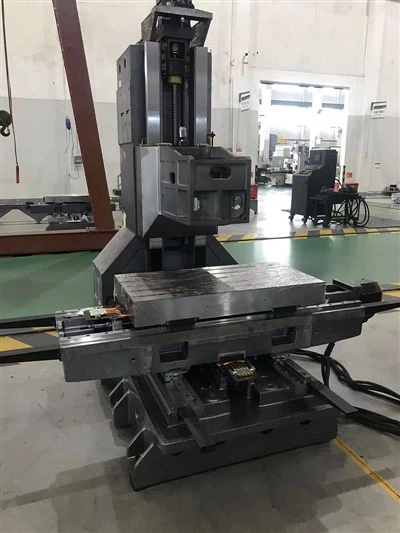
1. Base
The base of a horizontal milling machine is the foundation upon which the entire structure rests. It is typically made of cast iron, a material chosen for its excellent damping properties and high rigidity. The base serves multiple crucial functions. Firstly, it provides a stable platform for the machine, ensuring that it remains firmly in place during operation. This stability is essential for achieving accurate and precise machining results, as any movement or vibration can lead to errors in the workpiece.
Secondly, the base houses the coolant reservoir. Coolant is a vital component in the milling process, as it helps to reduce heat generated during cutting, lubricates the cutting tools, and flushes away chips and debris. The base is designed to hold an adequate amount of coolant, allowing for continuous operation without the need for frequent refilling.
2. Column
The column is a large, vertical structure that is mounted on the base. It is also usually made of cast iron to provide the necessary strength and stability. The column serves as the support for the other major components of the horizontal milling machine, such as the spindle and the knee.
Inside the column, there are various mechanisms and components that control the movement of the machine. For example, the column houses the drive system, which includes the motor, belts, and gears. The motor provides the power necessary to drive the spindle and other moving parts of the machine. The belts and gears are responsible for transmitting the power from the motor to the spindle at the appropriate speed and torque.
3. Spindle
The spindle is one of the most critical components of a horizontal milling machine. It is a rotating shaft that holds the cutting tool. The spindle is driven by the motor through the drive system in the column. It rotates at high speeds, typically ranging from a few hundred to several thousand revolutions per minute (RPM), depending on the specific requirements of the machining operation.
The spindle is designed to be highly precise and rigid. It must be able to maintain a consistent rotational speed and axis of rotation to ensure accurate cutting. The cutting tool is mounted on the spindle using a tool holder, which is designed to securely hold the tool in place. Different types of tool holders are available, depending on the type of cutting tool being used.
4. Knee
The knee is a movable component that is mounted on the front of the column. It can be raised or lowered along the column using a lead screw and a handwheel or a power feed mechanism. The knee provides vertical movement to the worktable, allowing the operator to adjust the height of the workpiece relative to the cutting tool.
The knee is an important part of the horizontal milling machine because it allows for precise control of the cutting depth. By adjusting the height of the knee, the operator can determine how deeply the cutting tool will penetrate the workpiece. This is crucial for achieving the desired machining results, as different materials and machining operations require different cutting depths.
5. Saddle
The saddle is mounted on top of the knee and can move horizontally along the knee. It provides horizontal movement to the worktable in one direction, usually perpendicular to the axis of the spindle. The saddle is moved using a lead screw and a handwheel or a power feed mechanism, similar to the knee.
The horizontal movement provided by the saddle allows the operator to position the workpiece accurately relative to the cutting tool. This is essential for performing operations such as milling slots, grooves, and keyways. By moving the saddle, the operator can control the position of the workpiece along the X-axis of the machine.
6. Worktable
The worktable is the surface on which the workpiece is mounted. It is attached to the saddle and can move horizontally in two directions, along the X-axis (perpendicular to the spindle axis) and the Y-axis (parallel to the spindle axis). The worktable is usually made of cast iron and has a flat and smooth surface to ensure proper alignment of the workpiece.
The worktable is equipped with T-slots, which are used to secure the workpiece using clamps or other fixtures. The T-slots allow for easy and flexible positioning of the workpiece on the worktable. The worktable can also be equipped with a power feed mechanism, which allows for automatic movement of the workpiece during machining, improving productivity and accuracy.
7. Overarm
The overarm is a horizontal structure that is mounted on top of the column. It extends over the worktable and provides support for the arbor. The arbor is a shaft that holds the cutting tools, such as milling cutters, and is driven by the spindle.
The overarm can be adjusted horizontally along the column to accommodate different lengths of arbors and cutting tools. It also provides a stable platform for the arbor, ensuring that it remains in a fixed position during operation. The overarm is an important component of the horizontal milling machine because it helps to prevent vibration and deflection of the arbor, which can lead to poor machining results.
8. Arbor
The arbor is a crucial component that connects the spindle to the cutting tools. It is a long, cylindrical shaft that is inserted into the spindle and held in place by a drawbar. The arbor has a series of mounting positions for the cutting tools, allowing for multiple tools to be used in a single setup.
The arbor is designed to transmit the power from the spindle to the cutting tools. It must be able to withstand the high torque and forces generated during machining. Different types of arbors are available, depending on the specific requirements of the machining operation. For example, some arbors are designed for use with large-diameter milling cutters, while others are suitable for smaller, more precise cutting tools.
9. Cutting Tools
Cutting tools are the components that actually remove material from the workpiece. There are various types of cutting tools used in horizontal milling machines, including end mills, face mills, slot mills, and form cutters. Each type of cutting tool is designed for a specific machining operation.
End mills are used for milling slots, grooves, and profiles. They have cutting edges on the end and the sides of the tool. Face mills are used for machining flat surfaces. They have a large number of cutting teeth on the face of the tool. Slot mills are used for cutting narrow slots in the workpiece. Form cutters are used for creating complex shapes and profiles.
The choice of cutting tool depends on several factors, such as the material of the workpiece, the desired machining operation, and the surface finish requirements. It is important to select the right cutting tool for the job to ensure efficient and accurate machining.
10. Control Panel
The control panel is the interface through which the operator controls the operation of the horizontal milling machine. It typically includes a variety of controls, such as switches, buttons, and dials, that allow the operator to start and stop the machine, adjust the speed and feed rate of the spindle and the worktable, and control other functions of the machine.
Modern horizontal milling machines may also be equipped with a computer numerical control (CNC) system. A CNC system allows for automated control of the machine, using pre-programmed instructions. This provides greater precision and repeatability in machining operations, as well as the ability to perform complex machining tasks that would be difficult or impossible to achieve manually.
In conclusion, a horizontal milling machine is a complex and sophisticated piece of equipment, consisting of multiple components that work together to achieve efficient and accurate machining. Each component plays a crucial role in the overall performance of the machine. As a supplier of horizontal milling machines, I understand the importance of these components and strive to provide high-quality machines that meet the needs of our customers.
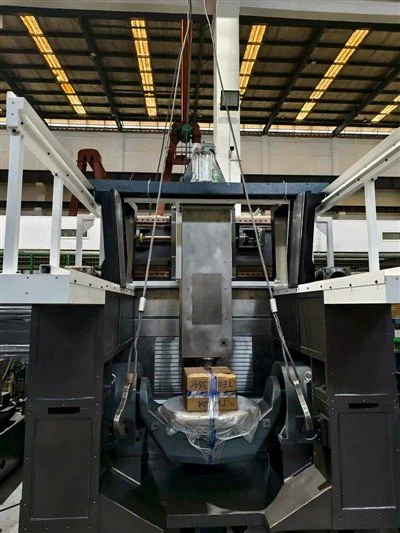
If you are in the market for a horizontal milling machine or have any questions about our products, I encourage you to reach out to us. We are here to assist you in finding the right machine for your specific requirements and to provide you with the best possible service and support.
5 Axis Machining Center References:
- "Machining Fundamentals" by John A. Schey
- "Modern Manufacturing Technology" by Thomas G. Dickson
- "Milling Operations Handbook" by Eugene A. Avallone
Smartech Machinery & Equipment Co., Ltd.
As one of the most professional horizontal milling machine machine manufacturers and suppliers in China, we also support customized service. Please rest assured to buy bulk horizontal milling machine machine made in China here from our factory. Contact us for more details.
Address: Room 2832, Changping Commercial Mansion, Shihua Road, Futian Free Trade Zone, Shenzhen, China
E-mail: smartech@smartechcnc.cn
WebSite: https://www.smartech-cnc.com/
