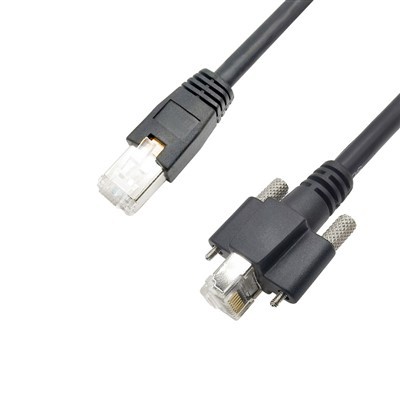
When it comes to Industrial Ethernet cables, one of the most frequently asked questions we encounter as a supplier is the difference between shielded and unshielded options. These cables are the lifeblood of industrial communication networks, and choosing the right type can significantly impact the performance and reliability of your system. In this blog post, we’ll dive deep into the characteristics, advantages, and suitable applications of both shielded and unshielded Industrial Ethernet cables. Industrial Ethernet Cable

Understanding the Basics
Let’s start by clarifying the fundamental difference between shielded and unshielded cables. Unshielded Industrial Ethernet cables, also known as UTP (Unshielded Twisted Pair) cables, consist of pairs of insulated copper wires twisted together. The twisting helps reduce electromagnetic interference (EMI) and crosstalk between the pairs to some extent. Meanwhile, shielded cables, or STP (Shielded Twisted Pair) cables, have an additional layer of shielding material around the twisted pairs or the entire cable bundle. This shielding is typically made of metallic foil or braid and is designed to protect the signals within the cable from external EMI and prevent the cable from radiating its own electromagnetic fields.
Advantages of Unshielded Industrial Ethernet Cables
- Cost – effectiveness: One of the biggest advantages of UTP cables is their relatively low cost. Manufacturing UTP cables is simpler as they don’t require the additional materials and manufacturing processes for shielding. This makes them an attractive option for projects with tight budgets or large – scale deployments where cost is a significant factor. For example, in a small – scale industrial automation project in a relatively low – interference environment, using UTP cables can save a substantial amount of money without sacrificing too much on performance.
- Flexibility: UTP cables are generally more flexible than their shielded counterparts. This flexibility makes them easier to install, especially in areas where cables need to be bent or routed through tight spaces. In a factory with a complex network layout and numerous cable runs through racks and cabinets, the flexibility of UTP cables can simplify the installation process and reduce the time and labor required.
- Lightweight: The absence of shielding material also makes UTP cables lighter. This can be an important consideration in applications where weight is a concern, such as in mobile industrial equipment or when long cable lengths need to be supported.
Limitations of Unshielded Industrial Ethernet Cables
- Vulnerability to EMI: The main drawback of UTP cables is their susceptibility to electromagnetic interference. In industrial environments filled with large motors, generators, and other electrical equipment that emit strong electromagnetic fields, UTP cables may experience signal degradation, errors, and reduced data transmission speeds. For instance, in a heavy – duty manufacturing plant where large machinery is constantly in operation, the EMI can disrupt the signals in UTP cables, leading to communication failures.
- Limited Transmission Distance: UTP cables typically have a shorter maximum transmission distance compared to shielded cables. The signal attenuation in UTP cables increases with distance, and beyond a certain point, the signal quality may become too poor for reliable communication. This can be a problem in large industrial facilities where long cable runs are required.
Advantages of Shielded Industrial Ethernet Cables
- High EMI Resistance: The primary advantage of shielded cables is their excellent resistance to electromagnetic interference. The shielding layer acts as a barrier, preventing external EMI from reaching the signal – carrying conductors inside the cable. This makes STP cables ideal for use in harsh industrial environments where EMI levels are high. For example, in a power generation plant, where there are high – voltage transformers and electrical equipment generating strong magnetic fields, shielded cables can ensure stable and reliable data transmission.
- Reduced Signal Radiation: Shielded cables also minimize the electromagnetic radiation from the cable itself. This is important in applications where the radiated electromagnetic fields from the cables could interfere with other sensitive equipment in the vicinity. In a laboratory environment where there are many precision instruments, using shielded cables can prevent interference with the operation of these instruments.
- Longer Transmission Distance: Due to their better signal integrity and lower susceptibility to interference, shielded cables can support longer transmission distances compared to UTP cables. This is beneficial in large – scale industrial installations where cables need to span long distances between different parts of the facility.
Limitations of Shielded Industrial Ethernet Cables
- Higher Cost: The additional shielding material and manufacturing processes required for shielded cables make them more expensive than UTP cables. This can be a deterrent for projects with limited budgets, especially when a large quantity of cables is needed.
- Lower Flexibility and Higher Weight: The shielding layer adds to the stiffness and weight of the cable. Shielded cables are less flexible than UTP cables, which can make installation more challenging, especially in areas with complex cable routing requirements. The increased weight can also be a concern in applications where weight needs to be minimized.
Suitable Applications for Shielded and Unshielded Cables
- Unshielded Cables: UTP cables are well – suited for industrial environments with relatively low electromagnetic interference levels. These include small – scale automation systems, office – like industrial spaces, and applications where cost is a major consideration. For example, a warehouse management system in a modern, well – shielded warehouse may use UTP cables to connect barcode scanners, computers, and other low – power devices.
- Shielded Cables: STP cables are the go – to choice for harsh industrial environments. This includes heavy manufacturing plants, power generation facilities, and areas near high – voltage electrical equipment. In a steel production plant, where there are large furnaces, heavy machinery, and high – current electrical systems, shielded cables are essential to ensure reliable communication between different control systems and sensors.
Choosing the Right Cable for Your Industrial Needs
When selecting between shielded and unshielded Industrial Ethernet cables, several factors need to be considered:
- Environmental Conditions: Evaluate the level of electromagnetic interference in the environment where the cables will be installed. If the area is filled with high – powered electrical equipment, shielded cables are likely the better choice. If the environment is relatively quiet in terms of EMI, UTP cables may suffice.
- Budget Constraints: As mentioned earlier, cost is a significant factor. Determine how much you can afford to spend on the cables without compromising the performance and reliability of your network.
- Installation Requirements: Consider the flexibility and weight requirements of the installation. If the cables need to be routed through tight spaces or in applications where weight is critical, UTP cables may be more suitable. If longer cable runs are required or the environment demands high EMI resistance, shielded cables should be considered.
- Future Expansion: Think about the potential for future expansion of your industrial network. If you anticipate adding more devices or increasing the data transmission requirements in the future, it may be wise to invest in shielded cables that can better handle the increased load.
Conclusion
In summary, both shielded and unshielded Industrial Ethernet cables have their own unique advantages and limitations. The choice between them depends on a variety of factors, including the specific industrial environment, budget, installation requirements, and future expansion plans. As an experienced Industrial Ethernet cable supplier, we understand that making the right cable selection is crucial for the success of your industrial communication network.
USB Cable If you’re still unsure which type of cable is best for your needs, or if you need more detailed information about our products, we’re here to help. Our team of experts can provide personalized advice based on your specific requirements. Contact us for a consultation and let’s start discussing how we can provide you with the ideal Industrial Ethernet cables for your project.
References
- Grob, Bernard. "Introduction to Electronics." McGraw – Hill Education, 2018.
- Stallings, Douglas. "Data and Computer Communications." Pearson, 2020.
Karobert Technology LLC Karobert Trading PTE. LTD.
We’re known as one of the most professional industrial ethernet cable manufacturers and suppliers in China, also support customized service. Please feel free to buy high quality industrial ethernet cable made in China here from our factory. For price consultation, contact us.
Address: 6250 S 196th St, Kent, WA, 98055, USA.
E-mail: karl@karobert-us.com
WebSite: https://www.karobert-us.com/
